
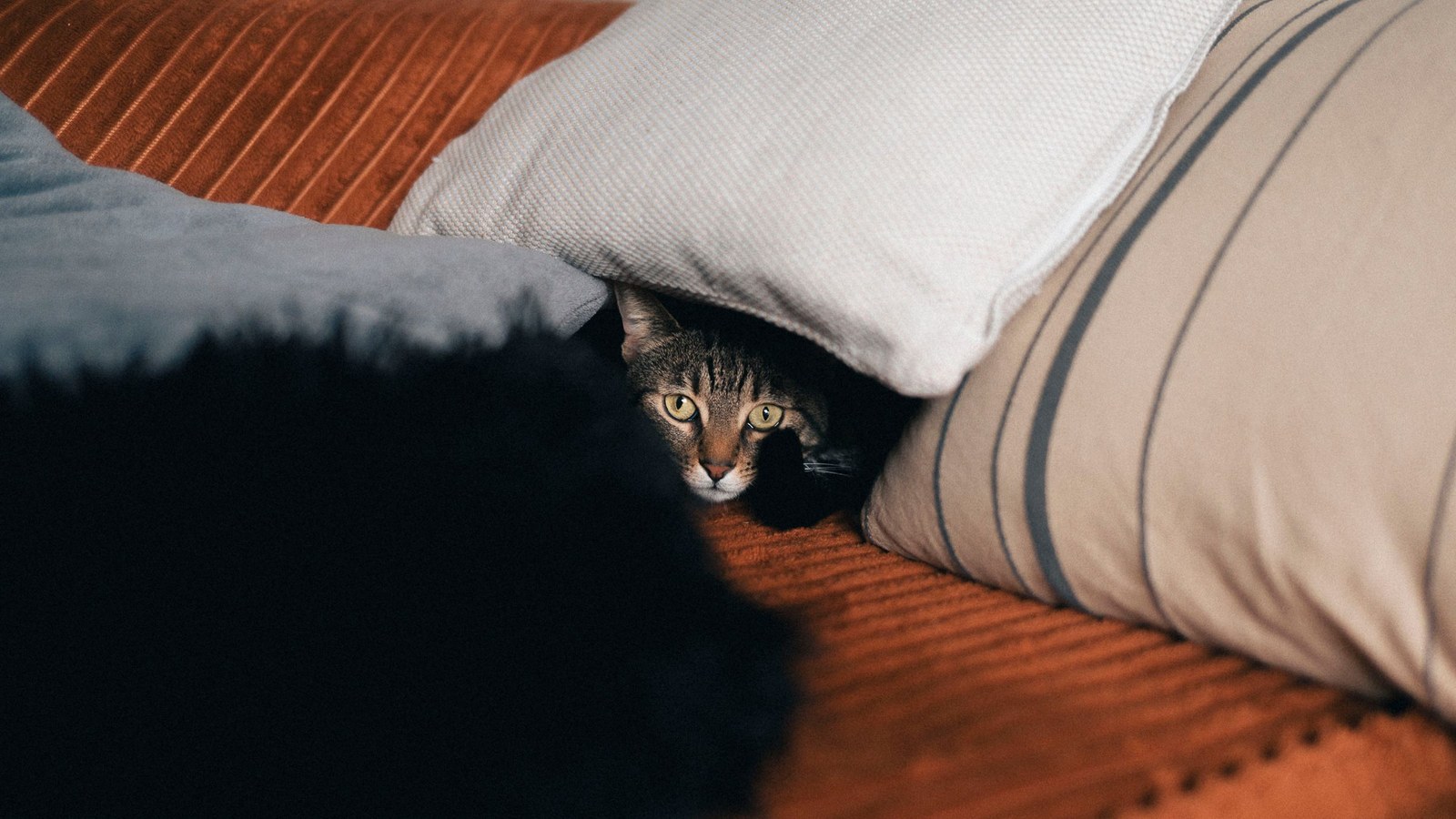
Yes — clicker training is one of the kindest tools you can offer a shy cat, because it gives her predictable wins and a way to interact with people that requires no touching, no grabbing, and no being picked up. Every click says the same reassuring thing: you did that, it was safe, and something good followed. For a cat who experiences hands as weather — unpredictable and occasionally scary — that consistency is the confidence-builder itself.
Why it works for fearful cats specifically
Shy cats are not untrainable; they are usually over-threshold. Their world already contains more stimulation than they can process, so training that adds pressure — looming, reaching, luring them closer than they chose — backfires. Clicker games invert the power balance. The cat works at her own distance, offers behavior when she is ready, and can end any interaction simply by walking away, which is itself information you should honor. Because the reward arrives for actions she volunteered, she learns a radical new lesson: people are predictable, and her choices control what happens. That sense of agency generalizes — cats who learn one game often start investigating other parts of life more bravely.
Starting gently: targets and offered behavior
Begin wherever she already feels safe, even if that is under the bed, with the clicker muffled in your palm or a soft pen-click substitute so the sound never startles her.
- Charge the sound passively: click softly, place a treat at a distance she is comfortable with, and retreat. She does not need to approach you to learn the sound pays.
- Introduce a target stick — a chopstick or pencil — presented at her level, well within her safe zone. Click any nose touch, glance, or half-step toward it at first; shy cats earn for courage in millimeters.
- Reward bravely offered behavior generally: a look at you, ears forward, one step out of hiding. You are paying for confidence itself, not just tricks.
- Keep sessions to a minute or two, several times a day, and always let her be the one to close the distance or end the game.
Building outward, slowly
Over weeks, the target stick becomes a bridge: she can follow it one step farther from her hiding spot, onto a mat in the open, eventually toward a carrier left out in the room. Layer people in gradually — first she plays the game with her favorite person, then with a second family member repeating the identical steps, so new humans arrive pre-explained by the rules of the game. Track what "brave" looks like for her: for one cat it is eating in the open; for another, staying in the room while a guest visits.
If her shyness is sudden, new, or paired with hiding plus appetite or litter box changes, treat it as a health flag first and have your veterinarian rule out pain or illness before assuming it is temperament.
Keeping the whole family in sync
A shy cat unravels fast if one person plays the gentle game and another scoops her up for cuddles. KinsLe Messenger, the per-pet communications hub on her profile, lets you share her progress and comfort cues with family — who she approached today, what distance works, which signals mean stop — so everyone builds her confidence the same gentle way in one thread. The KinsLe Messenger thread on KinsLe can hold each tiny breakthrough — first open-room meal, first guest tolerated — beside the stop signals relatives must respect.