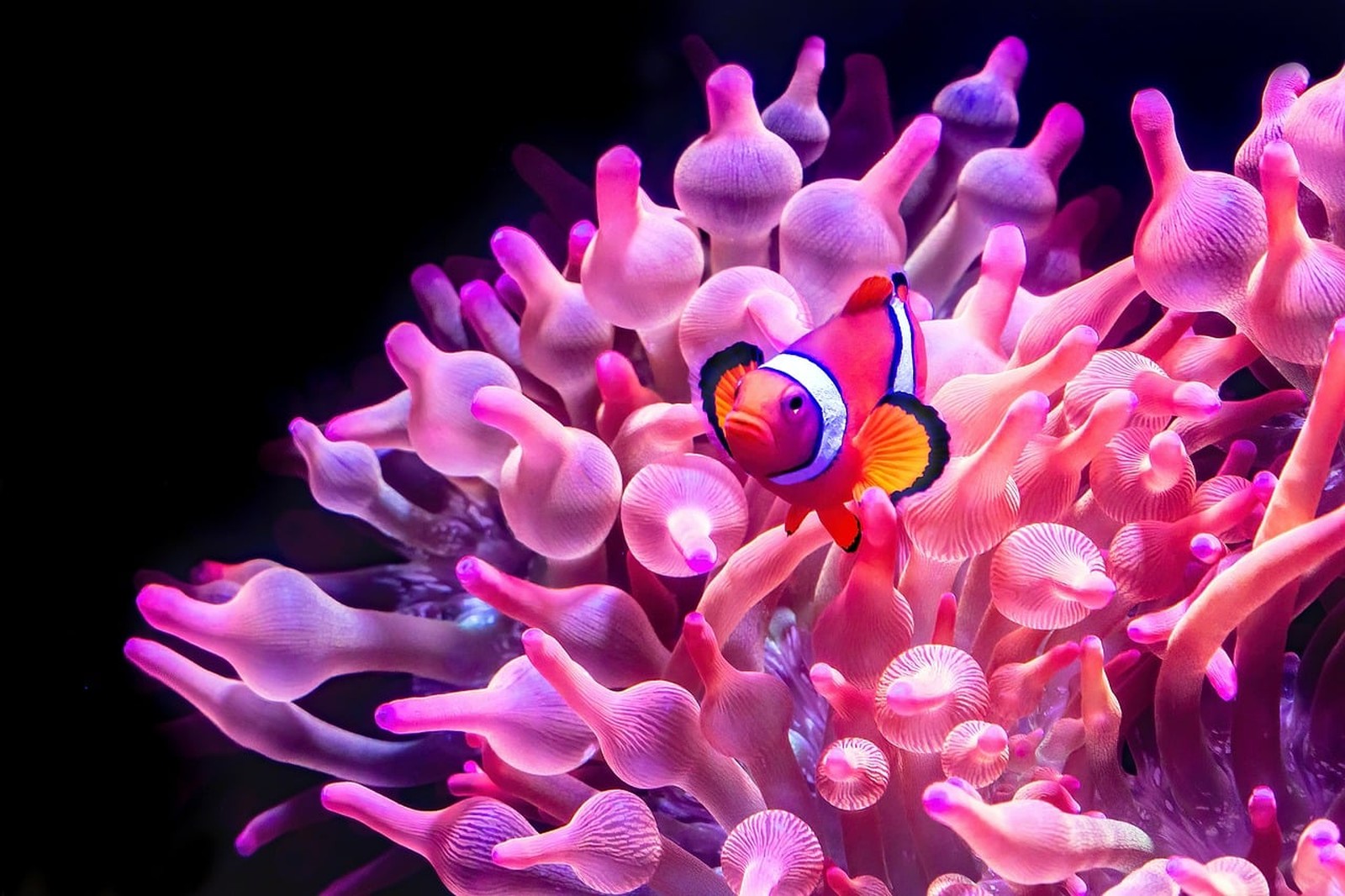
Yes. A clownfish kept in a home saltwater tank does not need an anemone, and leaving the anemone out is often the calmer choice for a first marine setup. The famous partnership is a wild survival arrangement: the anemone's sting guards the fish, and the fish defends and feeds its host. In a tank with no predators hunting it, a tank-bred clownfish loses nothing essential when that partner is absent.
What Clownfish Do Instead
A clownfish without an anemone still looks for a home base, and it usually picks one within days. Owners regularly see the same substitutes:
- A soft coral with long, swaying polyps that the fish nestles into at night
- A cave or overhang in the rockwork where the fish hovers and retreats
- One fixed corner of the tank, often near the surface or near a return flow
- A broad, fleshy coral that tolerates gentle contact
This behaviour is called hosting, and the fish performs it whether the host stings or not. A clownfish that rubs against a coral, sleeps in the same spot nightly, and darts back there when a hand enters the tank is behaving normally. Give the tank rockwork with at least one sheltered overhang and a few calm perching places, and the fish will choose for itself.
Why Skipping the Anemone Can Be Wiser
Anemones are the more demanding partner in the pairing. A commonly kept bubble-tip anemone needs an established tank, strong and suitable lighting, steady salinity, and clean water with low waste levels. It can also walk. A moving anemone may settle against a coral and sting it, drift into a powerhead, or park itself in shade and decline. None of that helps a clownfish, and a dying anemone fouls a small tank quickly.
For a new keeper, the order matters. Learn to hold salinity, temperature, and feeding steady for the clownfish first. If you later want an anemone, add it only when the tank has run stably for months, the lighting suits it, and you have a plan for protecting intakes and for moving corals out of its path. Never try to push a fish into an anemone or to pair a small fish with a large, hungry anemone species; species fit matters, and a reputable seller can tell you which anemones the fish's own species uses in the wild.
What a Clownfish Actually Needs
Food, shelter, and steady water matter far more than a host. Feed a varied marine diet in small amounts the fish finish promptly, keep tankmates peaceful and suitably sized, and avoid crowding a small tank with a second clownfish unless you understand pairing behaviour, because two juveniles usually sort out a dominant fish while two mature females will fight. Provide rockwork cover, gentle flow areas for rest, and a tight-fitting lid, since clownfish can jump when startled. Test salinity and temperature on a regular rhythm, change water in small, steady amounts, and watch appetite daily, because a clownfish that stops coming out to feed is telling you something has shifted long before water looks cloudy.
Choosing a Healthy Fish
Ask the seller how long the fish has been in the shop, whether it is tank-bred, what it is eating, and how it behaves with its current tankmates. Look for clear eyes, smooth fins, steady swimming, and eager feeding, and pass on a fish that gasps at the surface, hides with clamped fins, or shows white spots or a dusted, velvety sheen. Those are questions about feeding, origin, and behaviour, not about vaccination, which does not apply to aquarium fish. Note the arrival date, the source, and the foods accepted in your records from day one.
When feeding, testing, and water changes are shared around a household, a missed week can quietly undo that steadiness, so KinsLe Care Teams lets you assign each tank duty to a named person and see it marked complete with a timestamp, keeping your clownfish's routine steady even when you are away.