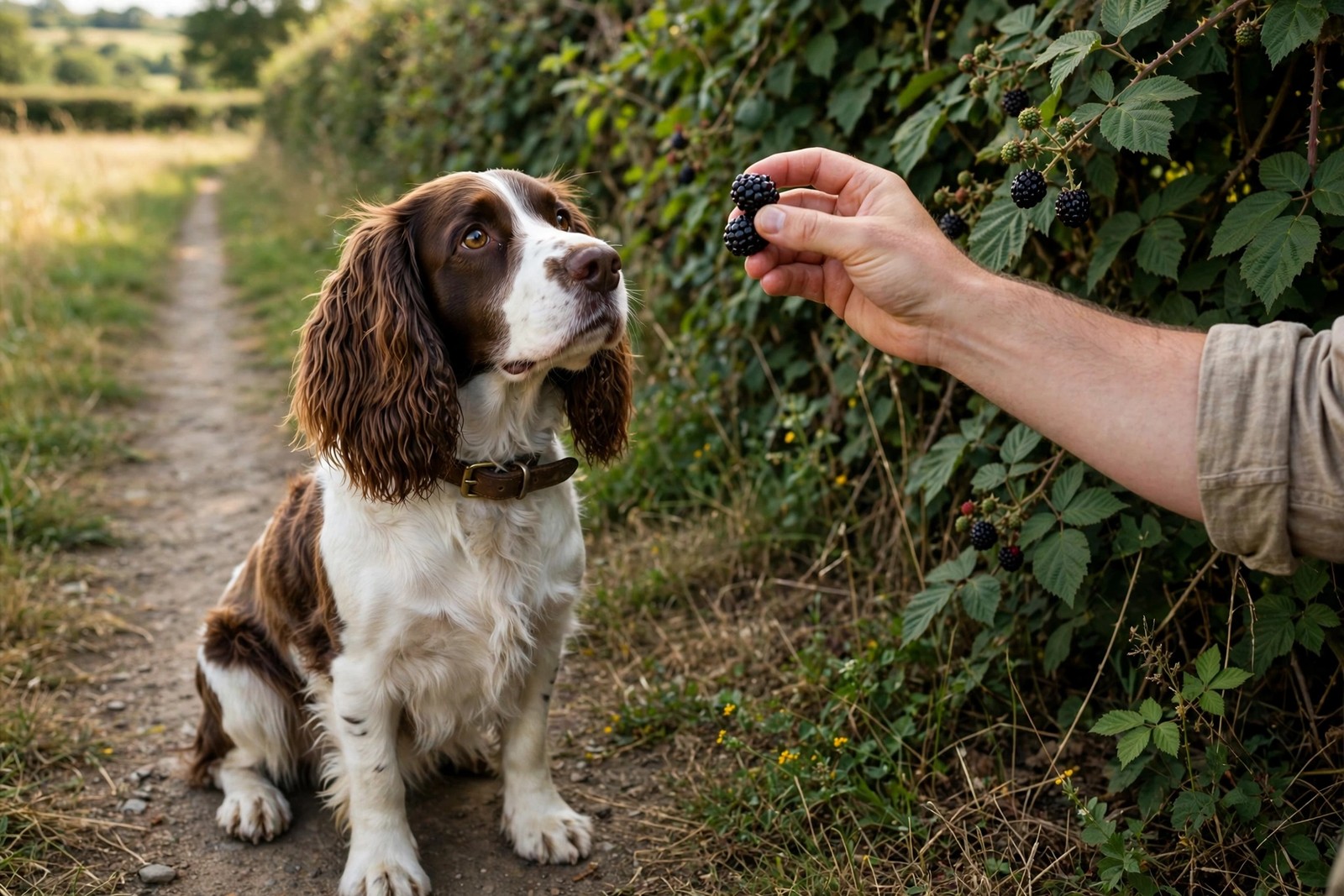
Yes, blackberries are a safe, sensible treat for most dogs in small amounts. They are soft, portion themselves naturally berry by berry, and most dogs enjoy them fresh, though the details of washing, sizing, and where the berries came from decide whether they stay a good idea.
Wash First, Then Size the Berry
Shop berries and garden berries alike can carry dust, spray residue, and grit in their clustered drupelets, so rinse them under running water and discard any that are moldy, fermented-smelling, or squashed flat. For a small dog, a puppy, or any dog that inhales treats, halve each berry: a whole blackberry is just round enough to be swallowed carelessly. A few berries is a serving: two or three for a small dog, a small handful for a large one. Their natural sugars are modest compared with banana, but a dog allowed to graze a whole punnet can still end up with loose stool and a sticky chin.
Fresh, Frozen, and What to Avoid
Frozen blackberries are a genuinely useful variation. They take longer to eat, feel cooling on a warm day, and their firmer texture discourages gulping, though you should still halve them first for small dogs and let very hard berries soften slightly. What does not belong on the menu is blackberry in processed form: jam, syrup, cordial, pie filling, and flavored yogurts concentrate sugar, and sugar-free versions may contain sweeteners that are dangerous for dogs. Dried berries are similarly concentrated. If it comes from a jar or a baking dish rather than the fruit bowl, skip it.
The Wild Berry Problem
Hedgerow blackberries create a different risk from shop fruit. Dogs that learn to pick their own berries on walks may also sample lookalike fruit, and not every dark wild berry is a blackberry. Bramble patches are also sprayed in some areas and grow along busy roadsides. The practical rule is simple: berries come from your hand, never self-served from a bush. Train a reliable leave-it for fruiting hedges, keep your dog on a lead past heavy bramble in season if self-serving is a habit, and wash even garden-picked berries before offering them. If your dog eats an unknown wild berry and then drools, vomits, or seems unsteady, call your veterinarian and describe the plant as best you can.
Introducing Them Without the Upset
Offer one berry the first day and watch the stool before making blackberries a regular summer treat. Dogs with diabetes or a weight target can still have a single berry as a high-value reward on occasion, but it should come out of the treat allowance, not in addition to it. Some dogs dislike the slight tartness and the seedy texture, and a refusal needs no persuasion. Noting the verdict, the portion, and the no-self-serving rule in KinsLe through Care Teams means a dog walker or family member knows blackberries are a hand-fed treat only, not permission to let your dog browse every bramble on the route.