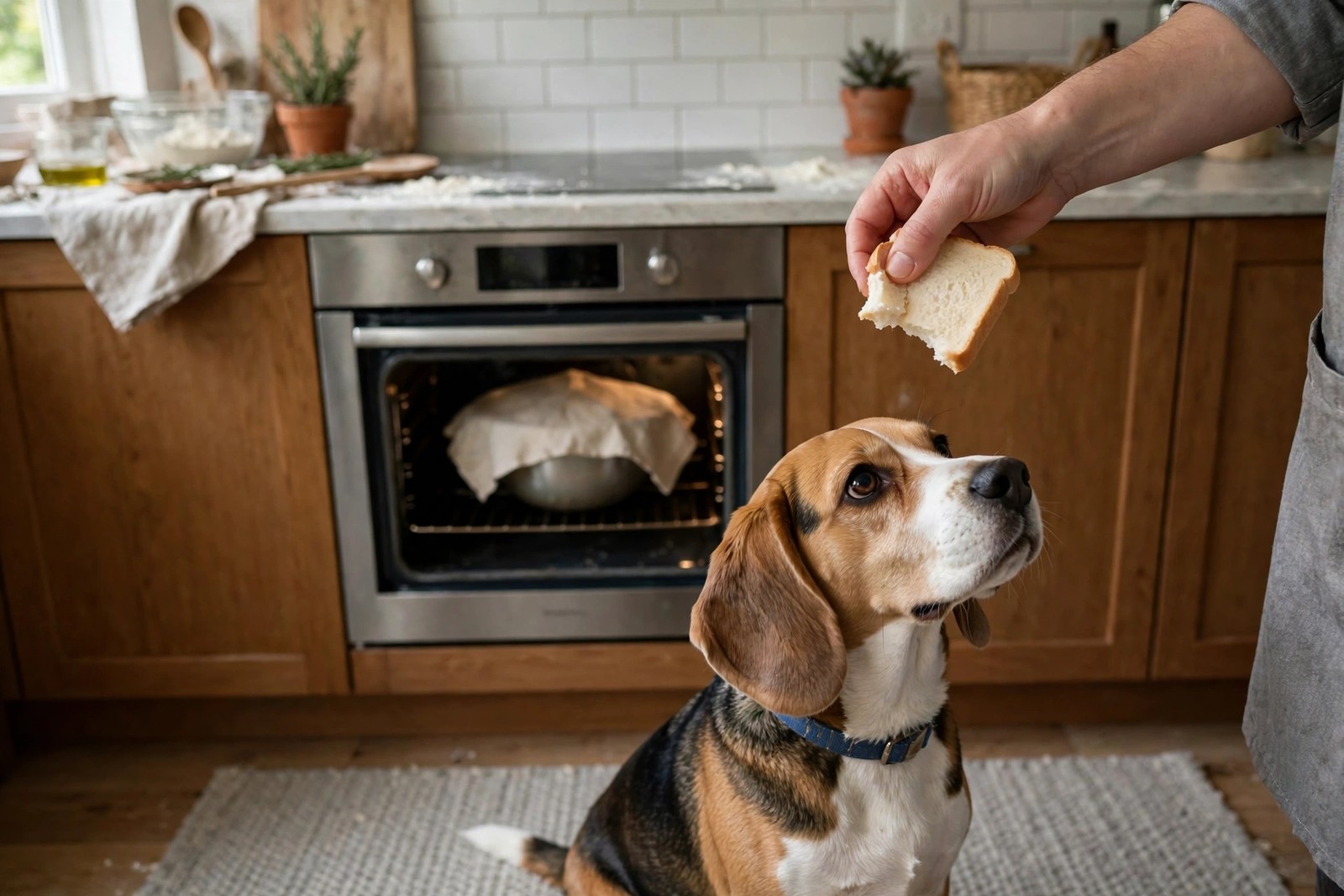
Yes, dogs can eat plain baked bread in small amounts as an occasional treat. It will not harm a healthy dog, but it will not help one either, and bread comes with one serious hazard that has nothing to do with the finished slice: the raw dough it starts as.
Raw Dough Is the Real Emergency
Yeast dough swallowed by a dog continues to expand in the warm stomach and produces alcohol as it ferments. That combination can cause a dangerously bloated stomach and alcohol poisoning, and it can escalate quickly. A dog that has eaten rising dough may show a swollen belly, retching without bringing much up, restlessness, drooling, or wobbliness, and that dog needs a veterinarian immediately, not monitoring at home. Prevention is mostly kitchen geography: let dough rise inside a cold oven, a closed microwave, or a room the dog cannot enter, and never leave a proving bowl on a low counter while you answer the door. Tell anyone who bakes in your house that this rule exists before their first loaf, not after a scare.
Which Baked Breads Are Acceptable, and Which Are Not
A small piece of plain white or wholemeal bread is the acceptable end of the scale: a thumbnail-sized piece for a small dog, a torn corner of a slice for a large one, now and then. Wholemeal adds fiber but also fills a dog quickly, and both kinds add calories with little protein or micronutrient value, so bread should displace other treats that day rather than join them. The avoid list is longer and matters more. Raisin and fruit loaves carry raisins, which are dangerous for dogs even in small numbers. Garlic and onion breads contain ingredients that can damage red blood cells. Chocolate-filled pastries, heavily salted focaccia-style tops, and sweetened or sugar-free bakes with artificial sweeteners are all unsuitable. Moldy bread from the bin is also a genuine hazard, since some molds produce toxins that can make dogs seriously ill, so stale bread goes in a closed bin.
Bread Is Not a Stomach Remedy
Owners sometimes offer bread to settle a stomach or to pad out a swallowed object, and both instincts deserve caution. Bread does not treat vomiting or diarrhea, and a dog that is off food, retching, or has eaten something sharp or large needs veterinary advice, where bread may not be what the veterinarian wants in the stomach. A tiny piece of soft bread used to hide a tablet is a reasonable use if your veterinarian approves that method for that medicine, but use the smallest piece that does the job. Dogs with wheat sensitivity, weight problems, or diabetes are better served by skipping bread entirely and using a slice of cucumber or a piece of their normal food as the small extra instead.
Keeping the Rule Straight at Home
Bread is where household consistency fails most often, because toast corners and sandwich crusts feel too trivial to count. Agree that crusts go in the bin, not over the shoulder, and that children understand the dough rule during baking days in particular. Writing the flavored-loaf and raw-dough warnings into KinsLe through Care Teams puts them on the same duty list a sitter reads for feeding and walks, so the bread rules survive even when the household baker is away.