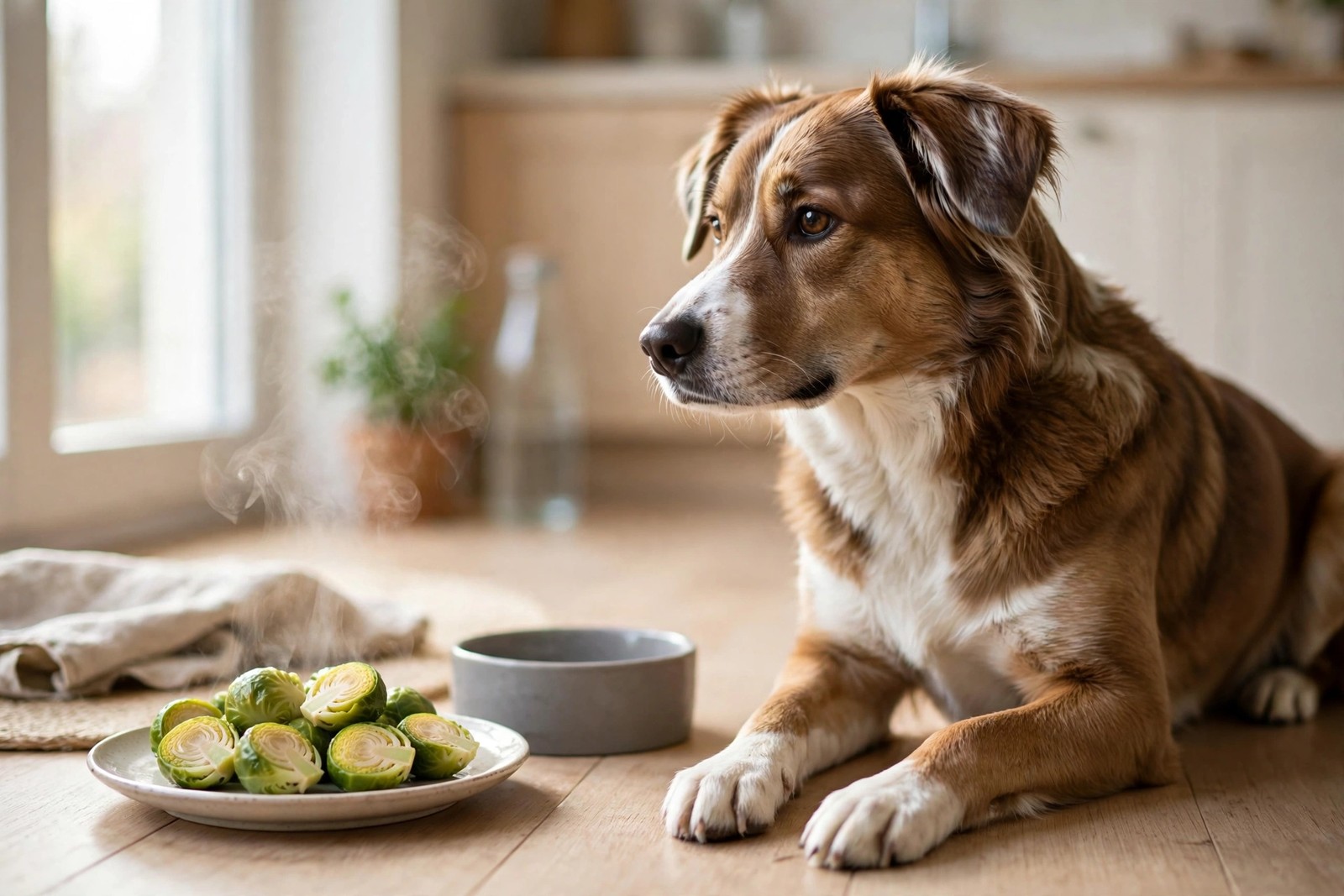
Yes, Brussels sprouts are safe for dogs, cooked plain and served in the small quantities their reputation demands. A sprout is a compact bundle of fibre and nutrients from the cabbage family, and dogs handle a little of it well. The two cautions are built into the vegetable itself: its round shape is a choking geometry for a dog that gulps, and its fermentable fibre reliably produces gas. Both cautions are managed by the same habits — cook it, cut it, and count it.
Preparing Sprouts So They Are Safe to Swallow
Steam, boil or roast the sprouts with nothing added until they are tender, then let them cool before serving. Trim the hard stem end, which stays tough even after cooking, and slice each sprout in half for a large dog or quarters for a small one, so no piece keeps the smooth round profile that can slip down whole. Raw sprouts are not poisonous, but they are harder, denser and more likely to be gulped unchewed, and they deliver the same gas with worse digestion, so cooked is the sensible default. A dog that has never eaten sprouts should meet a quarter of one first, mixed into food, with the rest of the experiment postponed until the next day's evidence is in.
Portions and the Gas Question
Treat the sprout as a strong seasoning rather than a vegetable side. One sprout suits a small dog, one or two suit a medium dog, and two or three are plenty even for a large dog, offered occasionally rather than daily. The gas is not a myth or a sign of harm: sprouts carry fibre and natural sugars that gut bacteria ferment, and the by-product is wind, sometimes impressive wind, plus occasionally a looser stool if the portion outran the dog. A dog that becomes visibly uncomfortable, paces, drools or vomits after sprouts has exceeded its own tolerance whatever the portion chart says, and sprouts simply leave that dog's menu. Puppies and dogs with already-sensitive digestion are better served by gentler vegetables.
The Festive Plate Problem
Sprouts reach many dogs at celebration meals, and the celebration version is the problem version. Sprouts fried with bacon, glazed in butter, roasted in goose fat or mixed with chestnut and onion stuffing carry fat, salt and often onion, none of which a dog needs and some of which a dog must not have. A rich, fatty helping is also the kind of meal that can leave a dog vomiting the next day. If sprouts are on the human menu, cook the dog's one or two separately and plainly before the trimmings go on, and set them aside in the dog's bowl rather than improvising from the serving dish at the table.
Keeping the Experiment Honest
Because the feedback from sprouts arrives hours later as wind or a changed stool, households often misjudge which food caused it, especially when several people share leftovers with the dog across a day. Serve sprouts on a planned day, in a counted portion, and write down the result once; your dog's personal verdict then replaces guesswork at every future meal. KinsLe's Care Teams makes that record part of the feeding routine, letting you assign the sprout serving as a named duty and mark it complete with a timestamp, so nobody repeats the trial at the next meal by mistake.