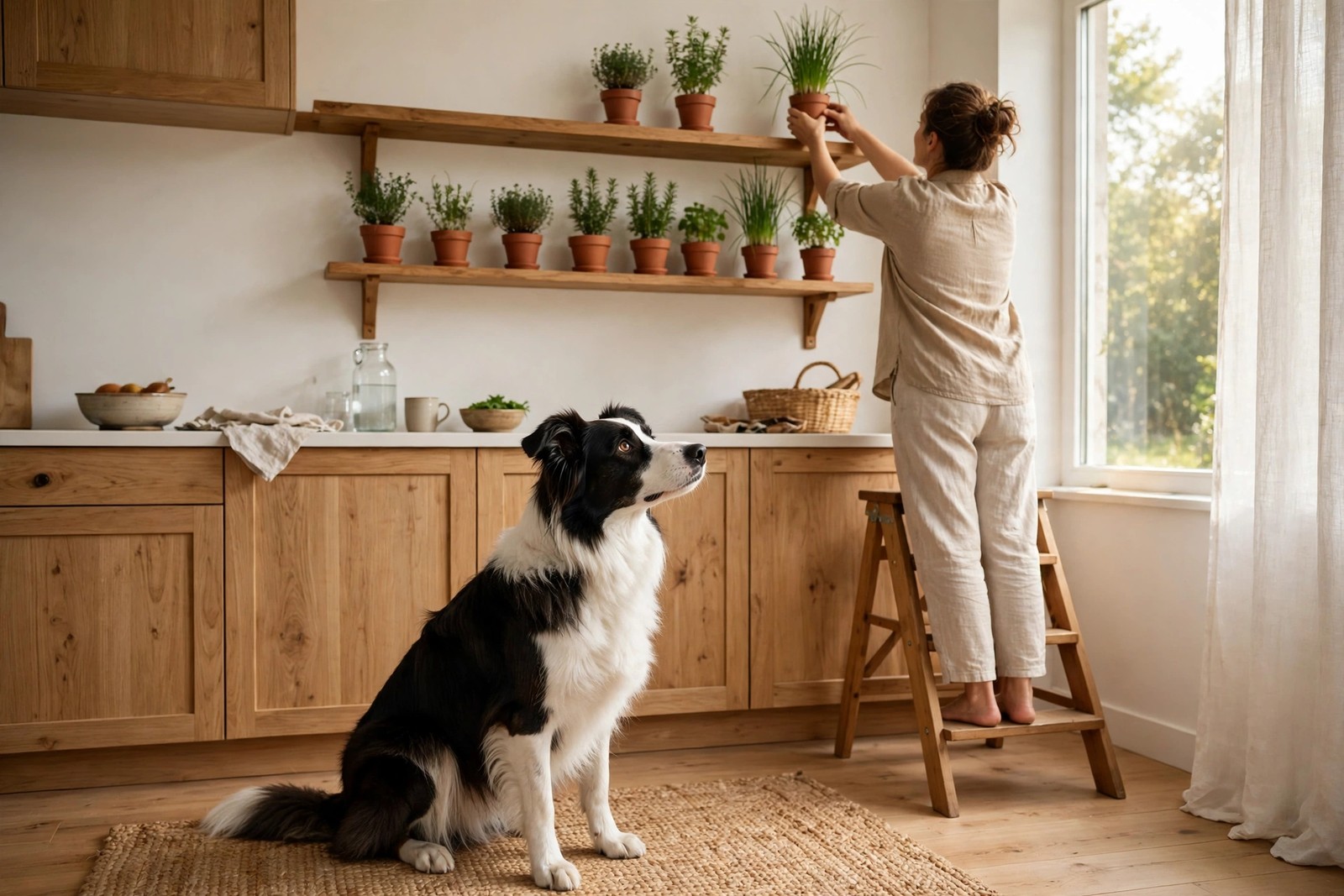
No — dogs must never eat chives, in any form. Chives belong to the allium family alongside onion, garlic, and leeks, and alliums carry compounds that damage a dog's red blood cells. There is no safe nibble to plan around, no cooking trick that fixes the problem, and no reason to test your own dog's tolerance. The correct portion is none, every time.
Why Chives Harm Dogs
The allium compounds attack red blood cells from the inside. The damaged cells break down faster than the body can replace them, and the result can be a form of anaemia in which the blood carries less oxygen than the dog needs. A dog may eat chives on Monday and look completely normal, because the cell damage builds over days rather than minutes. When signs do arrive, they typically include tiredness out of proportion to the day, pale or dull gums, faster breathing, a racing heart, and urine that looks dark or reddish. Earlier and milder signs can include drooling, vomiting, diarrhoea, and a dog turning away from food it usually enjoys. Small dogs have less margin because the same mouthful of chives is a larger dose for their body weight, and dogs that graze in herb beds can return to the patch again and again.
Where Chives Hide
The bunch in the fridge is only the obvious source. Chives are folded into scrambled eggs, baked potatoes, sour cream dips, soups, salads, dumplings, and savoury baked goods, and dried chive or onion-and-chive seasoning blends bring the same risk in concentrated form. A dog that would never be handed a raw chive can still lick a plate of chive-topped eggs or snatch a dropped dumpling. Garden chives are another quiet route, since the grassy clumps invite grazing and the bulbs sit at ground level. Treat any food seasoned with chives as off limits entirely, rather than picking the green pieces out, because the flavouring has already spread through the dish and small fragments are easy to miss.
If Your Dog Eats Chives
Call your veterinarian the same day, even if your dog looks well. Say what was eaten, roughly how much, and when, and keep the packaging or a photo of the dish if the chives came from a prepared food. Do not wait for pale gums or tiredness to confirm the problem, because the delay built into this poisoning means early advice matters more than visible signs. Do not make your dog sick at home unless your veterinarian tells you to, and do not offer milk, oils, or home remedies in place of that call. Write down the time of the meal and note appetite, energy, gum colour, and urine colour over the following days, and share that note at any follow-up visit. If a large amount was eaten, or your dog is very small, very young, old, or already unwell, treat the call as urgent rather than routine.
Keeping Chives Out of Reach
Store fresh chives inside the fridge rather than in a countertop jar, keep seasoning blends in a closed cupboard, and clear plates promptly after meals that use them. In the garden, fence the herb bed or grow chives in a raised pot a dog cannot browse, and lift fallen clippings instead of leaving them on the soil. The household rule needs to be simple enough for guests and children to repeat: no chives, no onion-family scraps, and no plate licking after seasoned meals. KinsLe's Care Teams lets you attach that never-feed list to your dog's care duties, so whoever feeds, walks, or watches your dog works from the same written rule instead of relying on memory.