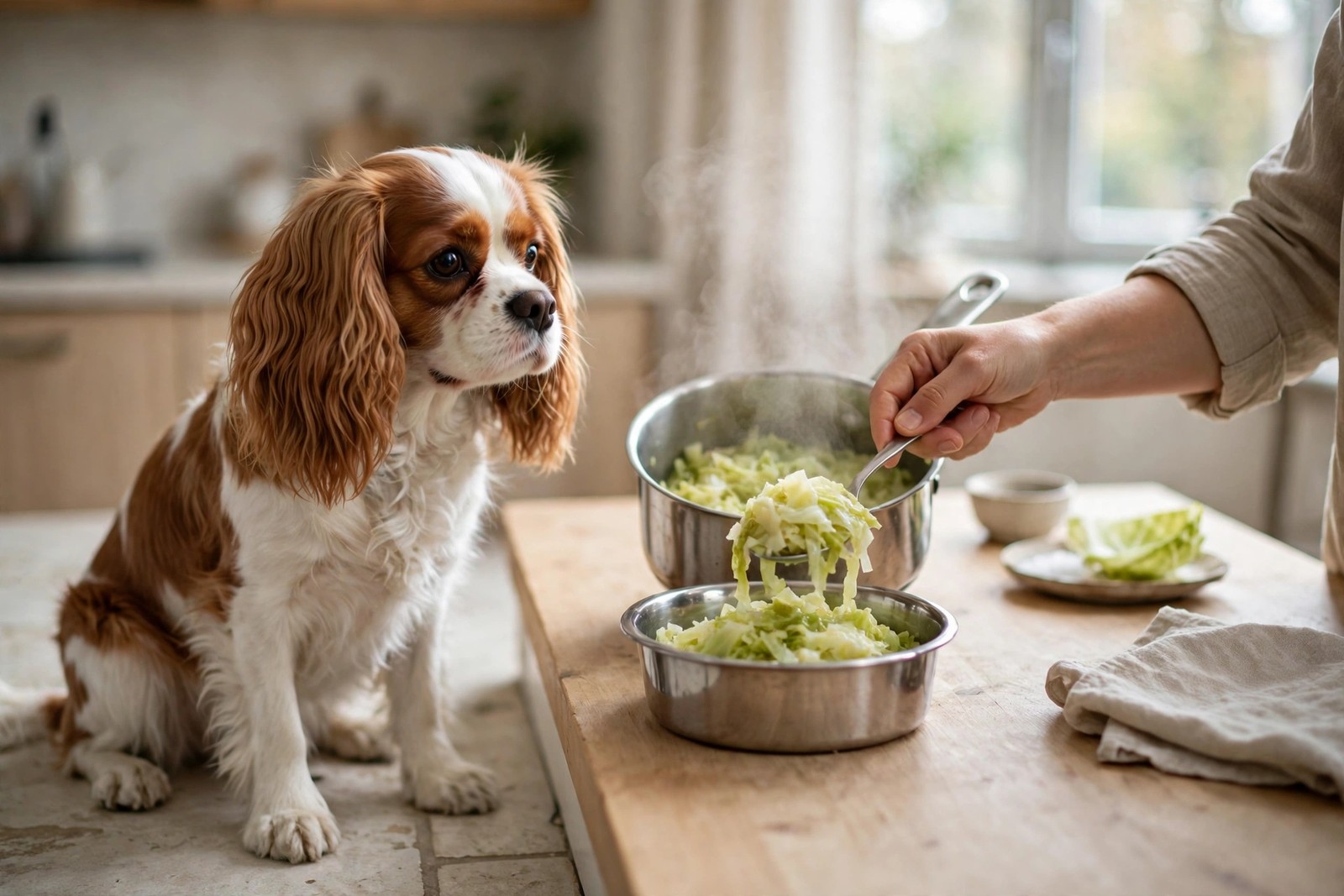
Yes — dogs can eat cabbage cooked plainly, in small amounts. Steamed or boiled cabbage is a soft, fibrous vegetable extra that many dogs enjoy stirred through their normal food. About 1 tablespoon of chopped cooked cabbage suits a small dog, and 2 to 3 tablespoons suit a large dog. Serve it as an occasional extra, not as a way to bulk out every meal.
Why Cooking Changes the Answer
Heat softens cabbage's tough cell walls, so a cooked spoonful is easier to chew, easier to digest, and less likely to sit heavily than the same amount raw. The raw vegetable is not poisonous, but it is crunchy, fibrous, and much harder on the stomach, and dogs that bolt it often swallow airy chunks that return as gas or loose stool. Cooking also tames the sharp flavour, which is why a dog that spits out raw shreds may happily eat the steamed version. What cooking does not fix is seasoning: cabbage boiled with stock, butter, bacon fat, onion, or garlic stops being a plain vegetable and should stay off the dog's plate entirely.
The Gas Question and the Thyroid Note
Cabbage carries fermentable fibres that gut bacteria work on enthusiastically, and the by-product is wind. A modest portion usually means a modest effect, but a bowlful can produce a very gassy evening and sometimes loose stool the next morning. Cooking the cabbage until it is properly soft, rather than barely wilted, also reduces the fermenting workload and makes the portion kinder on the stomach. Dogs new to cabbage should start with half the suggested portion, and owners should judge the result over the following day before offering more. The thyroid point matters only at the extremes: cabbage belongs to a plant family whose compounds can interfere with iodine use when eaten in large amounts day after day. An occasional spoonful is no concern for a healthy dog, but cabbage should never become a daily filler, and owners of dogs with thyroid conditions should ask their veterinarian before feeding it regularly.
How to Prepare and Store It
Wash the leaves, remove the thickest part of the core, and chop the cabbage before cooking so the pieces soften evenly. Steam or boil it in plain water until tender, drain it, and let it cool before mixing a measured spoonful through the meal. Green, red, and pointed varieties all follow the same rules, and frozen plain cabbage cooks to the same result as fresh. Refrigerate cooked leftovers in a sealed container and use them within 3 days, discarding anything that smells sour or feels slimy. Skip the human versions: coleslaw carries mayonnaise, sugar, and often onion; pickled cabbage and fermented cabbage dishes are salty and acidic, and stuffed cabbage leaves usually hide onion, garlic, and seasoned meat inside.
When Cabbage Is a Poor Choice
Leave cabbage out for a dog recovering from stomach upset until your veterinarian is happy for extras to return, because extra fibre can muddy the picture while you are watching the stool. Dogs that produce dramatic gas from even a teaspoon are telling you this vegetable does not suit them, and there is no nutritional gap to fill by persisting. Watch for repeated vomiting, diarrhoea that lasts beyond a day, or a dog that stops eating, and call your veterinarian rather than blaming the cabbage and waiting. KinsLe's Care Teams lets you record the cabbage portion and the day it was tried as a feeding duty for each dog, so the person who feeds next can see exactly what was given and how that dog responded.