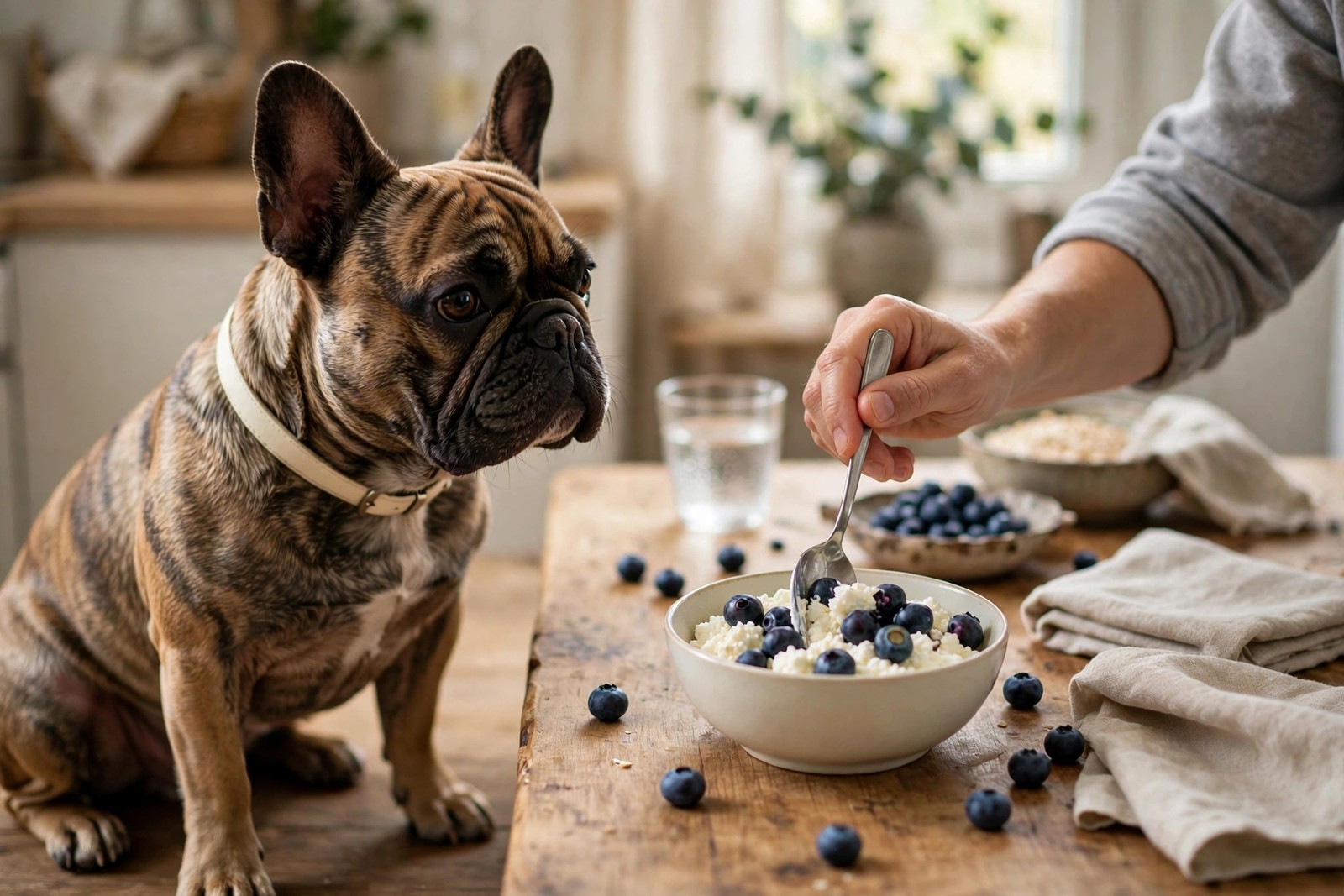
It depends entirely on the fruit. Plain cottage cheese, served in spoonfuls, suits most dogs, and plenty of fruits can join it safely in small pieces. Other fruits turn the same bowl into a genuine hazard, and ready-mixed products hide which kind you are holding. Build the bowl yourself and the answer stays simple: 2 tablespoons in total for a medium dog, made of 1 tablespoon of plain cottage cheese and 1 tablespoon of chopped safe fruit.
Fruits That Can Join the Bowl
Blueberries are the easiest addition, halved for small dogs and otherwise served whole, since their size and softness need no preparation. Banana brings sweetness dogs love, but it is sugary, so a few thin slices count as the full fruit share rather than a base layer. Apple works when it is peeled or well washed, cored, and cut small, with every seed removed, because the seeds and core do not belong in a dog's bowl. Strawberries, hulled and quartered, and small cubes of ripe melon with the rind and seeds removed also fit the safe list in the same modest amounts. Fresh or frozen-and-thawed fruit both work, and frozen blueberries double as a cooling summer extra.
Fruits That Must Never Appear
Grapes are the hard line, and raisins and currants sit on the same line, because all of them can seriously damage a dog's kidneys even in small amounts. That rules out most commercial fruit blends, trail mixes, and bakery toppings at a stroke, since grape-family fruits are common in all three and are easy to miss among other pieces. Never pick through a mix and serve the pieces you believe are safe, because one overlooked raisin defeats the whole exercise. Cherries bring a different problem: the flesh is not the issue, but the stones are a choking hazard and the stones, stems, and leaves carry compounds a dog should not chew. Citrus segments and rhubarb are poor additions too, more likely to upset the stomach than to add anything useful. If a dog eats grapes, raisins, or currants in any amount, call your veterinarian promptly rather than watching and waiting.
Why Ready-Mixed Tubs Fail the Test
A shop-bought cottage cheese with fruit is built for human tastes. The fruit layer is usually sweetened, sometimes heavily, and may be a syrup or jam-style preparation rather than recognisable fruit pieces, so you cannot judge the fruit content by looking at the tub. Labels also use umbrella terms such as mixed berries or fruit preparation that leave the exact contents unclear, and unclear is reason enough to skip a product for a dog. Making the bowl at home takes a minute, costs less, and gives you a fruit list you can actually defend. Wash the fruit, cut it to a size your dog cannot gulp, and stir it through just before serving, because a dressed bowl left standing turns watery and unappealing to everyone.
Serving It Well
Offer the bowl as an occasional extra, not a daily dessert, and halve the amounts for a small dog. Introduce one new fruit at a time, in a few pieces, so that if the stool loosens you know which addition caused it. Dogs that react to dairy itself should skip the whole idea and take their fruit pieces plain, since the cheese is the ingredient their stomach objects to, not the fruit. Rinse the bowl promptly afterwards, because dairy residue sours quickly at room temperature and draws flies in warm weather. KinsLe's Care Pass lets you write the safe-fruit list, the banned fruits, and the 2-tablespoon serving into the instructions a sitter or boarder follows, so the rule travels with your dog instead of living in your head.