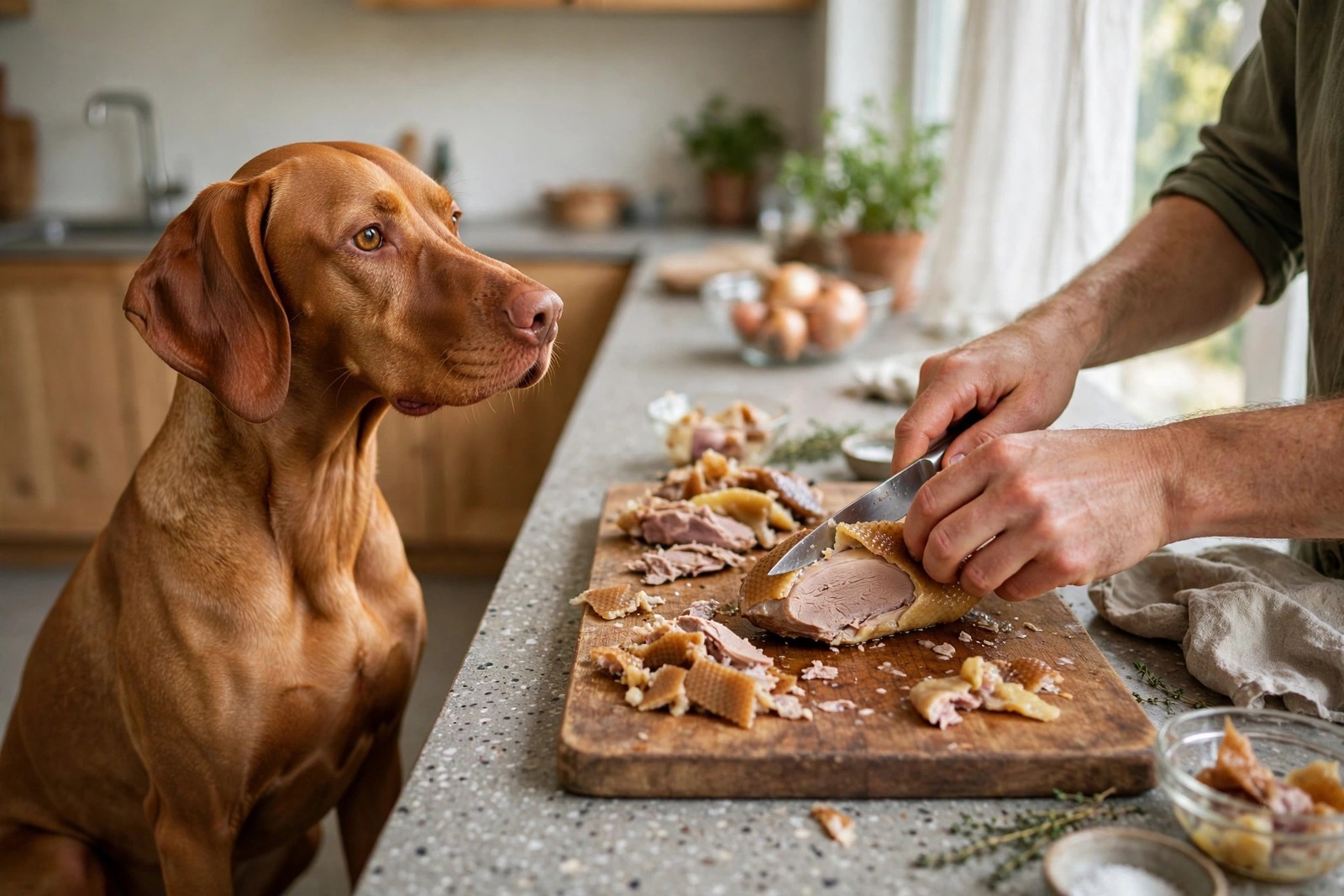
Yes — plain cooked duck is a safe protein for most dogs, and its rich flavour makes it a high-value treat. It is also a meat that rewards careful preparation, because duck carries far more fat than chicken and is usually sold in forms built for human celebrations rather than dog bowls. Serve it boneless and skinless, cooked thoroughly with no seasoning: a few bite-sized pieces as a treat, or 2 to 3 tablespoons of chopped duck stirred through a medium dog's meal.
Trimming the Fat Is the Main Job
A duck wears its fat in a thick layer under the skin, designed to insulate a bird that swims in cold water. That layer renders into the meat as it roasts, so the skin and the fat beneath it hold most of the richness owners need to remove. Pull the skin off before serving, trim visible fat with a knife, and let cooked meat rest on kitchen paper so surface fat drains rather than soaking into the portion. Fatty meals are a common trigger for stomach upset, with loose stool and vomiting the usual result, and owners whose veterinarian has flagged a dog as sensitive to rich food should ask before serving duck at all. A lean, trimmed piece of breast is a very different food from a spoonful of skin, dripping, and dark meat, and dogs experience that difference even when owners do not.
Bones, Glazes, and Holiday Duck
Cooked duck bones must never be offered. Cooking dries poultry bones until they splinter into sharp fragments, and duck bones are small enough to be crunched and swallowed before an owner can intervene. Check every portion with your fingers as you chop, because breast portions can hide slender bones and the carcass of a roasted bird sheds fragments into the meat around it. Holiday preparations fail on other grounds too: roasted skin is salty and fatty, glazes add sugar, and sauces served with duck often carry onion, garlic, or rich stock. The dog's portion should be set aside plain before any of that reaches the bird, or cooked separately and simply.
Duck as a Less Common Protein
Duck sometimes appears in a dog's life because the dog reacts to more common meats, and owners reach for a protein the dog has not eaten before. Used that way, duck deserves a tidy trial: serve the plain trimmed meat as the only new food for several days, watch skin, ears, and stool, and note the outcome. If your veterinarian is running a structured elimination trial, do not add duck treats or duck-based extras on the side, because a trial only works when every ingredient is accounted for, and one unrecorded handful can invalidate weeks of patience. Tell the veterinarian duck is among the proteins your dog has already eaten, since a protein with a history cannot serve as the novel ingredient in a future trial.
Cooking, Storing, and Serving
Roast, poach, or bake duck plainly until the meat is cooked through with no pink remaining, then cool it before trimming and chopping. Refrigerate the dog's portion in a sealed container and use it within 3 days, or freeze chopped portions and thaw them in the fridge overnight. Warm leftovers only to room temperature, and discard meat that smells sharp or feels slippery. Serve the pieces one at a time to a dog that gulps, or scatter them in grass to slow the meal down. KinsLe's Pet Passport lets you keep a dated record of duck as a protein your dog has eaten and tolerated, which gives your veterinarian a reliable history if skin, ear, or digestive problems are ever worked through.