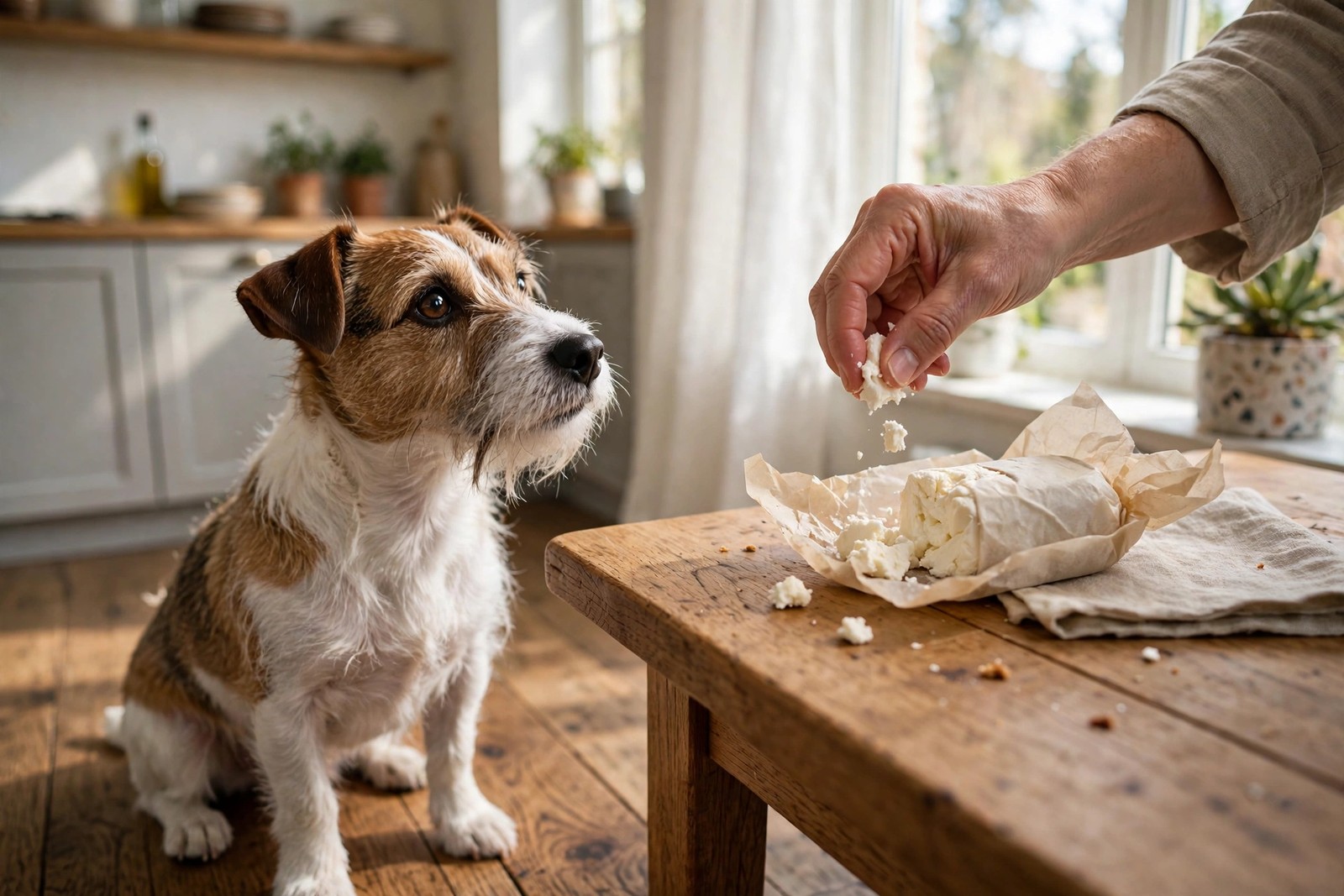
Yes, but only a small taste of plain goat cheese: a pea-sized piece for a small dog and a thumbnail-sized piece for a larger dog, given occasionally. Goat cheese earns its reputation as the gentler cheese because goat's milk contains somewhat less lactose than cow's milk and its fat forms smaller, softer curds. Gentler is not the same as harmless, though. Goat cheese is still a salty, fatty, energy-dense food, and plenty of dogs meet even a modest piece with rumbling gas or a loose stool the next morning.
The Lactose Question, Answered Honestly
Most adult dogs produce less lactase, the enzyme that digests lactose, than they did as puppies, so dairy tolerance varies widely from dog to dog. Goat cheese sits lower in lactose than many cow's milk cheeses, but it is not lactose-free, and soft fresh goat cheese retains more lactose than firm aged styles. Aged goat cheese flips the trade-off, because longer ageing means less lactose but usually more salt and a more concentrated flavour. Neither style becomes a free pass. The only reliable test is a single small trial piece followed by a day of watching what comes out in the garden: normal stool and no extra gas mean the occasional taste is fine, while loose stool means goat cheese joins your dog's personal no list.
Which Goat Cheese, and Which to Refuse
Choose plain, fresh goat cheese with a short ingredient list, and crumble the piece rather than handing over a slice from your own plate. Refuse anything flavoured. Herb-coated logs often include garlic or onion seasoning, chilli varieties add irritants a dog does not need, and sweetened dessert cheeses bring sugar or honey that serve the dog nothing. Blue-veined and rind-ripened styles are also poor choices, because rich mould-ripened cheese is fatty and can carry a stronger salt load. At the table, the bigger trap is the vehicle rather than the cheese itself: crackers, cured meats and chutney turn a pea-sized taste into a salty, fatty mouthful, so the dog's piece should come straight from the plain cheese, before anything is added to yours.
Portions, Storage and Sensible Frequency
Keep the portion exactly as stated: a pea-sized piece for a small dog, a thumbnail-sized piece for a larger dog, and only occasionally, as a treat rather than a routine topper. Crumbled over a meal, that piece can tempt a picky eater for a day, but using cheese daily to fix pickiness hides appetite changes that are worth noticing. Store goat cheese wrapped in the fridge, serve your dog's piece straight from the packet rather than from a cheeseboard that has sat out, and throw soft goat cheese away if it grows mould, because soft cheese cannot be rescued by trimming the way a hard block can. Salt matters in its own right. A salty extra makes a dog drink more, which is trivial for a healthy dog once, but it is a real consideration for any dog whose salt intake a veterinarian already controls. If you use the piece as a reward, crumble it into two or three fragments rather than enlarging it, because the stated piece is the whole allowance whether it arrives in one bite or three. The dog experiences the fragments as repeated rewards, the portion never grows, and the cheese stays what it should be: a taste, not a course. Dogs with weight problems, a history of pancreatitis, or kidney or heart conditions managed with a controlled diet should skip cheese entirely unless their veterinarian says otherwise. If that first trial goes well, a note in your dog's KinsLe Pet Passport can record the date and the result, so the tolerance is documented rather than remembered.