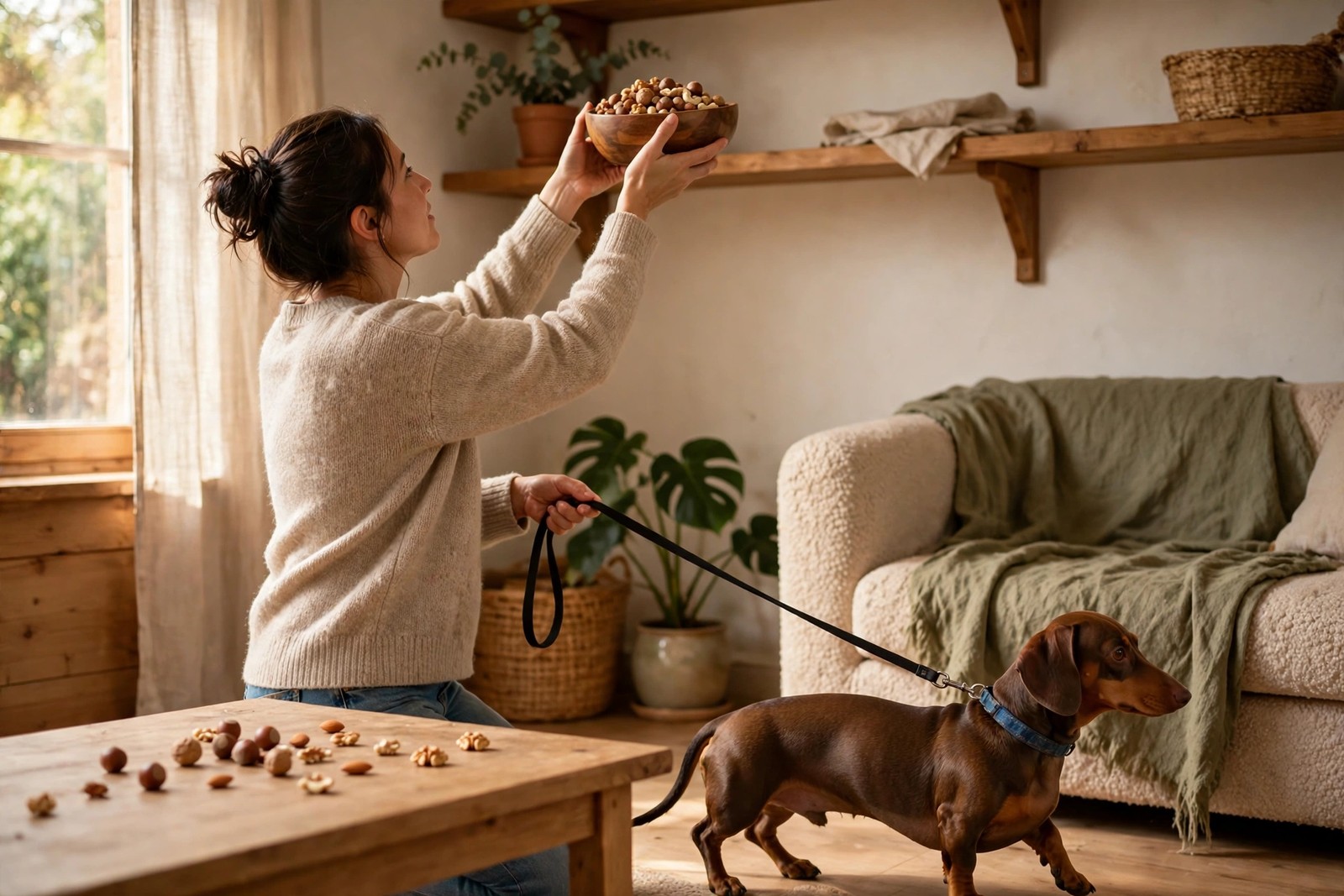
Best avoided — hazelnuts are not classed as toxic to dogs, but almost everything else about them argues against offering one. A hazelnut is hard, smooth and round, roughly marble-sized, which makes it exactly the shape a small dog can choke on and a greedy dog can gulp down whole before you react. It is rich in fat, it resists digestion, and dogs that do eat several commonly pay with vomiting, diarrhoea or a sore, gassy stomach. A treat with that profile and no nutritional gap to fill is a treat a dog does not need.
The Mould Problem Hiding in Stored Nuts
Hazelnuts keep for a long time, and that long storage is where a quieter risk lives. Hazelnuts kept in warm or damp conditions can grow moulds, and some moulds produce toxins that are dangerous to dogs, causing tremors and serious illness in bad cases. The nut that rolled behind a sofa weeks ago, the bag at the back of a baking cupboard, and windfall hazelnuts rotting under a garden tree are all more suspect than a fresh nut from a newly opened packet. A dog that becomes wobbly, trembly or unwell after raiding stored or fallen nuts needs a veterinarian the same day, not a wait-and-see evening, because mould toxins act on the nervous system. Freshness you cannot verify is a reason to bin a nut, not to pass it to the dog.
The Mixed-Bowl Trap
Hazelnuts rarely sit alone. Bowls of mixed nuts can include macadamias, which are genuinely toxic to dogs and cause weakness, tremors and overheating, and a dog gulping its way through a spilled bowl does not sort one nut from another. Roasted hazelnuts bring added salt and oils, chocolate-coated hazelnuts bring chocolate, and hazelnut spreads combine sugar, fat and sometimes sweeteners that have no place in a dog's bowl. Nut butters deserve a label check for xylitol before any dog tastes them, as a general rule for sweetened spreads. The practical answer is to treat the whole category as human food: keep nut bowls on high surfaces, sweep up spills promptly, and pick up windfalls under garden nut trees before the dog patrols them.
Garden Hazel Trees and Fallen Nuts
Garden hazel trees produce a seasonal version of the same problem, twice over. The nuts fall ripe inside their green husks, dogs learn to strip and crunch them where they land, and the nuts nobody collects mould where they lie, so an autumn lawn can hold fresh nuts and spoiled ones side by side. Rake windfalls into a lidded garden bin during nut season, and check a dog that has been crunching under the tree for shell fragments lodged in its mouth or between its teeth. Treat the whole harvest as you would the nut bowl indoors: human food, gathered promptly and stored closed away.
If Your Dog Eats One Anyway
A single fresh, plain hazelnut swallowed by a large dog will usually pass through with nothing worse than a loose stool, so keep the response proportionate. The urgent moments are different: a dog that is coughing, gagging or struggling to breathe after bolting a nut needs immediate veterinary help, because that is a choking emergency, not a feeding question. Watch for repeated vomiting, a swollen or painful belly, or nuts that never reappear alongside worsening appetite, and call your veterinarian if any of those appear. The simplest safeguard is written down in advance: the KinsLe Care Pass your sitter works from names nuts as forbidden, so the bowl on their counter never becomes an offer.