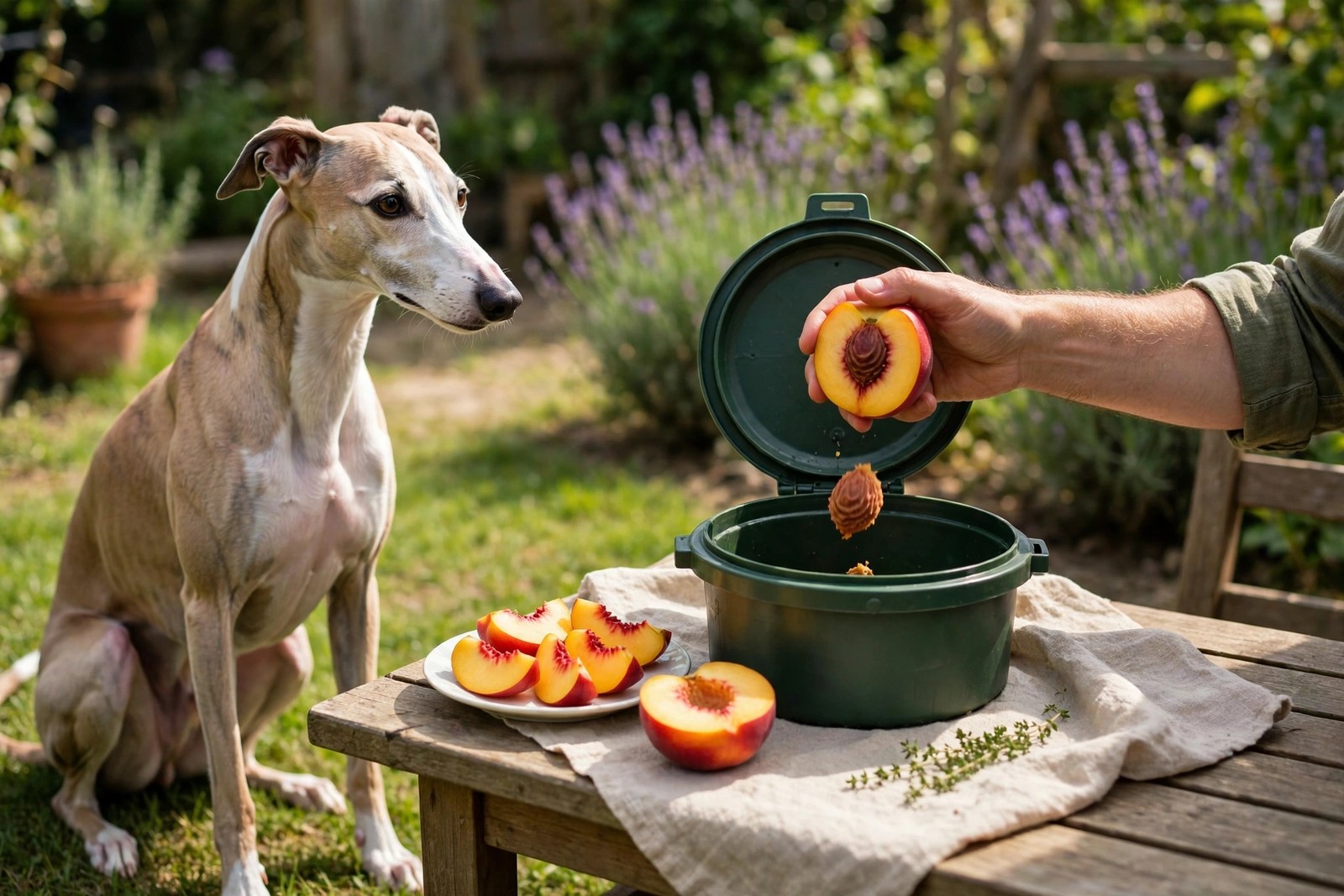
Yes — dogs can eat nectarine flesh in small amounts once the stone is removed: one slice cut smaller for a small dog and two or three slices for a larger dog. The ripe flesh is soft, sweet and juicy, and its smooth skin is far easier for a dog to handle than a peach's fuzz, so a washed nectarine needs no peeling. Everything about this fruit's safety hangs on the stone in the middle, because the flesh is the treat and the stone is a hazard with three distinct mechanisms, each worth understanding separately rather than lumping into a vague warning.
The Stone's Three Separate Risks
First, chemistry: inside the hard stone sits a kernel that contains cyanide compounds, and a dog that cracks the stone open and chews the kernel can release them. A single kernel is a small dose, but it is a dose no dog needs, and it is entirely avoidable. Second, teeth: the stone is hard enough that a determined biter can crack or fracture a tooth on it, an injury that often goes unnoticed until eating becomes painful. Third, blockage: a stone swallowed whole is roughly the size and shape to lodge in a dog's intestine, especially a small dog's, and a gut blockage is a surgical emergency that announces itself with repeated vomiting, a painful or swollen belly, no stool and a dog that stops eating. A dog showing those signs after any fruit raid needs a veterinarian promptly, not observation at home.
Preparing Nectarines the Safe Way
Wash the fruit, halve it, twist the halves apart and lift the stone out, then slice the flesh into pieces a dog can manage without gulping. Cut the stated slice smaller still for a small dog, and hand pieces over one at a time rather than setting down a bowl a greedy dog can inhale. The stone goes straight into a lidded food-waste bin or a bin a dog cannot tip, never into an open compost caddy and never onto the ground under the tree. Fallen nectarines in a garden deserve the same discipline as stones: windfalls ferment, grow mould and attract wasps, and a dog that eats several whole fruits in the grass has eaten several stones too. Pick windfalls up daily in fruiting season if your dog has garden access.
Sweetness, Syrup and Dried Fruit
Nectarines are sugary even by fruit standards, and the stated few slices already deliver a full treat's worth of sugar. Tinned nectarines in syrup are not suitable, because the syrup multiplies the sugar and the fruit sits saturated in it; tinned fruit in plain juice is a lesser problem but still sweeter than fresh, so fresh remains the answer. Dried nectarine concentrates the sugar further and turns sticky and dense to chew, so it is best skipped entirely rather than portioned. Overripe, bruised fruit should go in the bin rather than the dog's bowl, because fermenting fruit upsets stomachs. Dogs carrying extra weight, and dogs whose blood sugar is managed with their veterinarian, should have nectarine rarely and at the smallest stated portion. Choose fruit that is ripe but still firm, because an overripe nectarine is messier, sweeter and harder to slice cleanly away from its stone. Serve the pieces from a small dish rather than from your fingers over the grass, where dropped pieces and the stone itself are harder to keep track of. Written into a KinsLe Care Pass, the preparation steps for nectarines travel with your dog, so a sitter knows to wash the fruit, remove the stone and serve only counted slices.