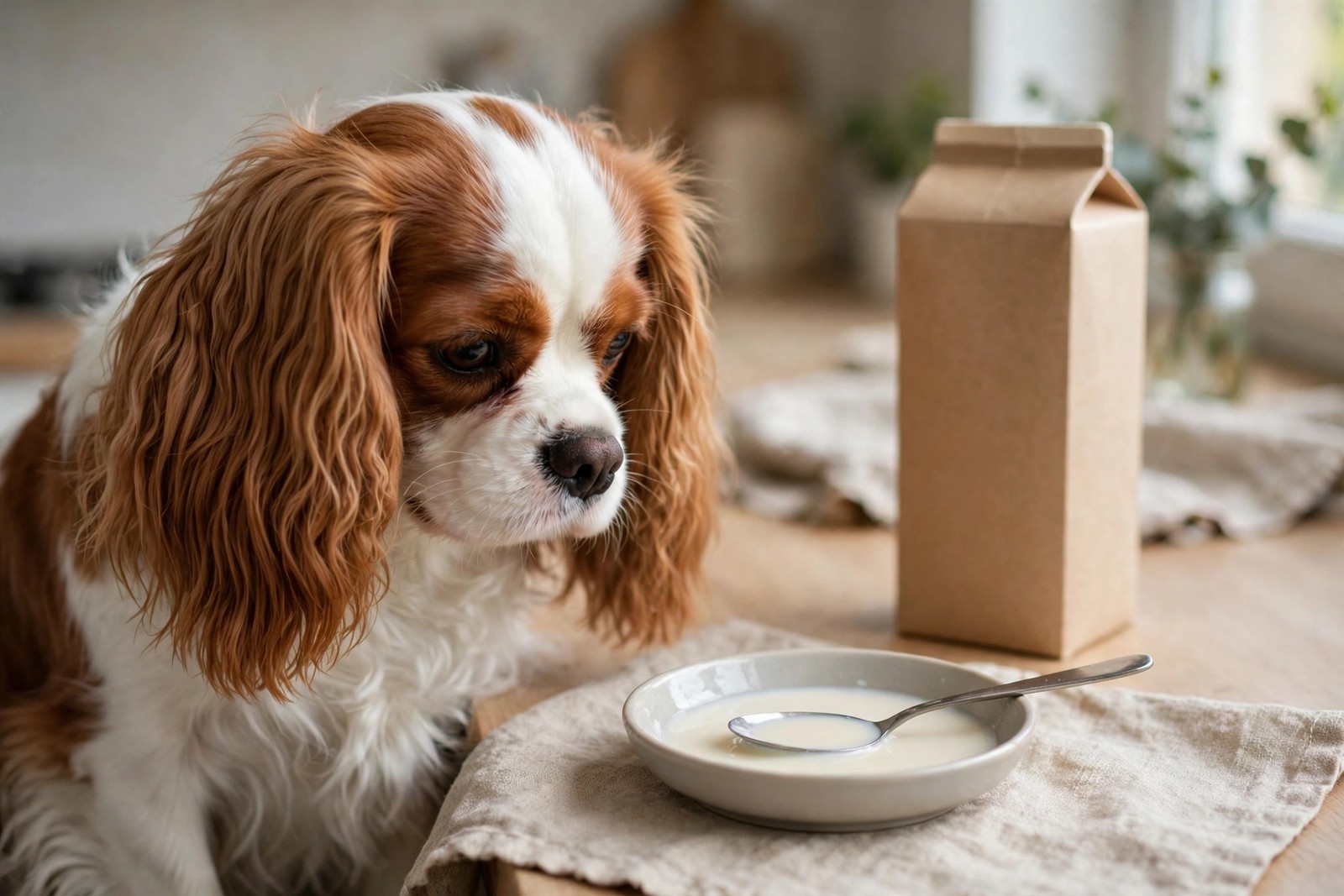
Only a small splash, if at all: one tablespoon for a small dog and up to three tablespoons for a large dog, always of the plain, unsweetened kind. Oat milk is not toxic to dogs, and it avoids the lactose question entirely, because it is a plant drink rather than a dairy one. That clean starting point is also where its virtues end. An oat milk splash offers a dog almost nothing nutritionally, and the honest reason to pour one is novelty: a lap of something different, a splash over food for a dog that enjoys it, or the dregs of your own breakfast shared in a measured amount rather than by accident.
What Is Actually in the Carton
Plain oat milk is mostly water and oats, but the carton decides the details, and cartons vary more than owners expect. Many contain added oils to mimic milk's richness, gums and stabilisers for texture, and added vitamins aimed at human diets. Those additions are not balanced for a dog and they are not needed by one, and the oils and gums are the usual suspects when a plant milk produces a loose stool in a dog that handles dairy without trouble. Barista versions are the richest of all, built to foam, and flavoured versions add cocoa, vanilla or sugar. Sweetened cartons deserve a specific label check for xylitol, a sweetener that is dangerous to dogs and that appears in some reduced-sugar products; that is a general label-reading rule for any sweetened food, and oat milk is no exception. If the ingredient list is long and sweet, the carton stays yours.
Serving It Without Creating a Habit
Pour the stated tablespoon measure into a small dish rather than letting a dog lap from a bowl of it, because laps become gulps and the portion disappears. A splash poured over dry food can soften it, which suits some older dogs, but use that trick thoughtfully: a dog that suddenly needs its food softened or flavoured to eat may be showing sore teeth or fading appetite, and masking that change with oat milk delays the vet conversation that matters more. Never use oat milk as a milk substitute for puppies, because a growing puppy needs its mother's milk or a properly formulated plan from a veterinarian, and no plant drink comes close. Once opened, keep the carton refrigerated, respect its use-by date, and do not leave a poured splash sitting in a warm room, because plant milks sour and a dog's bowl should be washed rather than topped up.
Water First, and Knowing When to Stop
The nutritional bottom line is simple: after weaning, no dog needs milk of any species or any plant, and fresh water is the only drink that belongs down all day. Treat oat milk the way you would treat any novelty extra, offered occasionally, watched once, and dropped without regret if the stool loosens, the dog seems gassy, or enthusiasm is plainly one-sided. Dogs on controlled diets for weight, digestion or other conditions managed with a veterinarian should skip extras like this unless their vet is happy for them to stay. Keep a multi-dog household honest by serving the splash separately, because the dog it suits and the dog it loosens are often in the same kitchen. Over time, notes in the KinsLe Pet Passport about oat milk servings and the stool that followed build a useful picture of what this dog tolerates and what to leave alone.