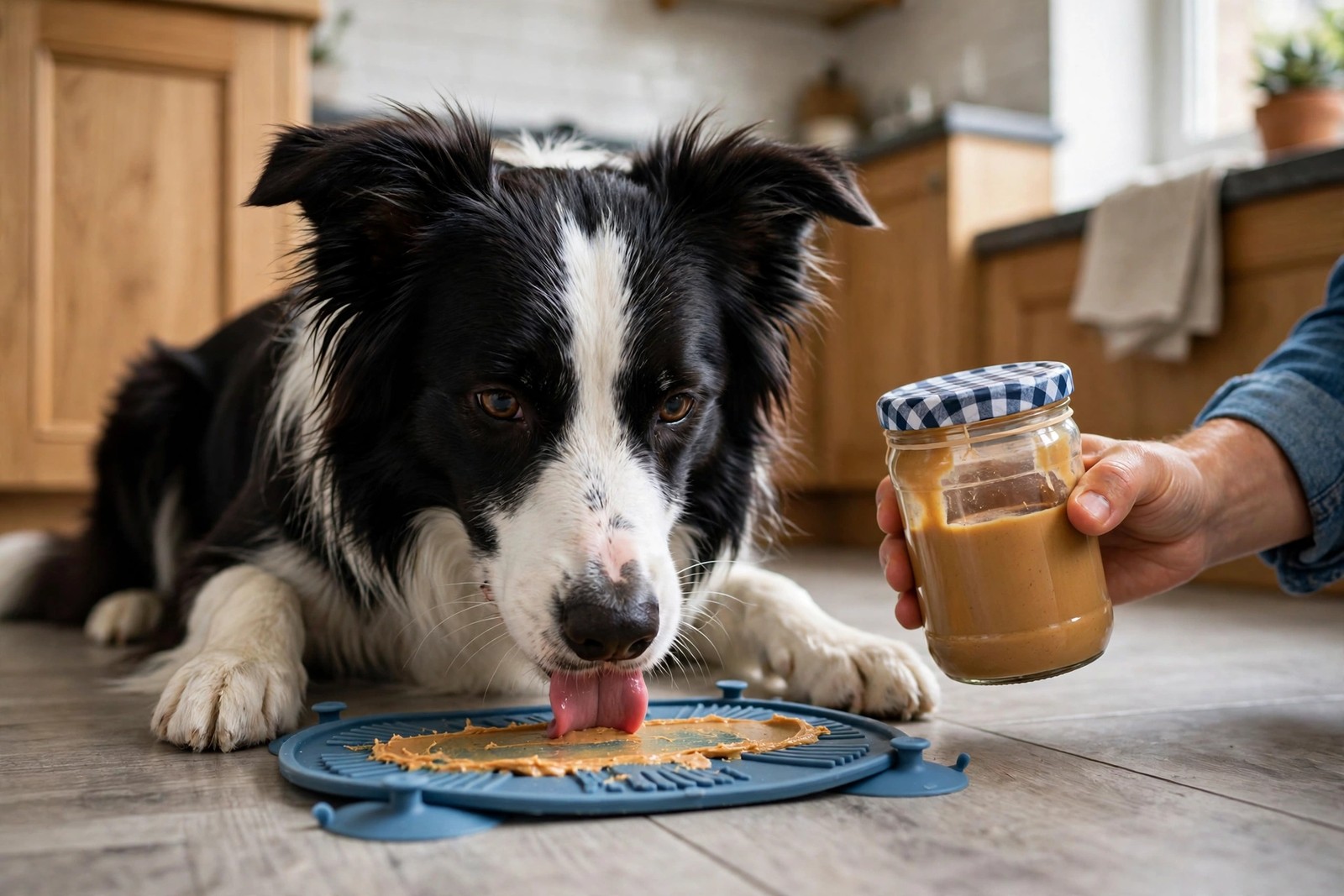
Most dogs can enjoy plain peanut butter as an occasional treat, and its strong smell makes it useful for hiding a tablet or filling a food toy. The safety of this food rests almost entirely on one label check. Some peanut butters are sweetened with xylitol, also listed as birch sugar, which is extremely toxic to dogs even in small amounts. Read the ingredients every time you open a new jar, even from a familiar range, because recipes change.
Choosing a Safe Jar
Pick a peanut butter whose ingredients are simply peanuts, or peanuts with a little oil. Avoid added sugar, syrups, chocolate, and any mention of xylitol or birch sugar. Unsalted is better for dogs, since salty spreads add sodium a dog does not need. If the label is unclear or the jar was decanted with no ingredients list, do not guess: keep that jar for people only. Store the dog-safe jar in the same place so family members and sitters are not choosing between three similar pots at treat time.
If your dog does eat peanut butter containing xylitol, treat it as urgent and contact your veterinarian or emergency clinic straight away, even if your dog looks well. Early signs can include vomiting, weakness, wobbling and collapse, and this is not a wait-and-see ingredient.
Portions, Calories and Uses
Peanut butter packs a lot of calories into a spoonful, so a little goes a long way. About a teaspoon suits a small dog, two teaspoons a medium dog, and up to a tablespoon a large dog, and not at every meal. Smear a thin layer inside a toy or lick mat rather than offering spoon after spoon, and take that amount out of the day's treat allowance. Dogs who need to lose weight, and dogs your veterinarian has said are prone to pancreatitis, are usually better with a lower-fat reward, because rich fatty foods can trigger a painful flare in sensitive animals.
Warm peanut butter runs and is easier for a dog to wolf down too quickly, while a thick smear slows licking and makes the treat last. Never give a heaped spoonful to a dog who gulps, as a sticky mouthful can be hard to swallow comfortably.
Reactions to Watch For
Peanut allergy is uncommon in dogs but possible. The first time, offer a pea-size taste and watch over the next hours for facial swelling, hives, intense itching, vomiting or breathing difficulty, which need prompt veterinary care. More often, too much simply causes soft stool, gas or a skipped next meal. Stop, return to normal food, and try a smaller amount another week if your veterinarian is comfortable with it.
A shared note prevents the classic double-dose, where two people each hide a tablet in peanut butter. KinsLe Care Teams lets you set the portion, name the one checked jar, and tick off each use with a timestamp, so the next person knows the treat has already been given.