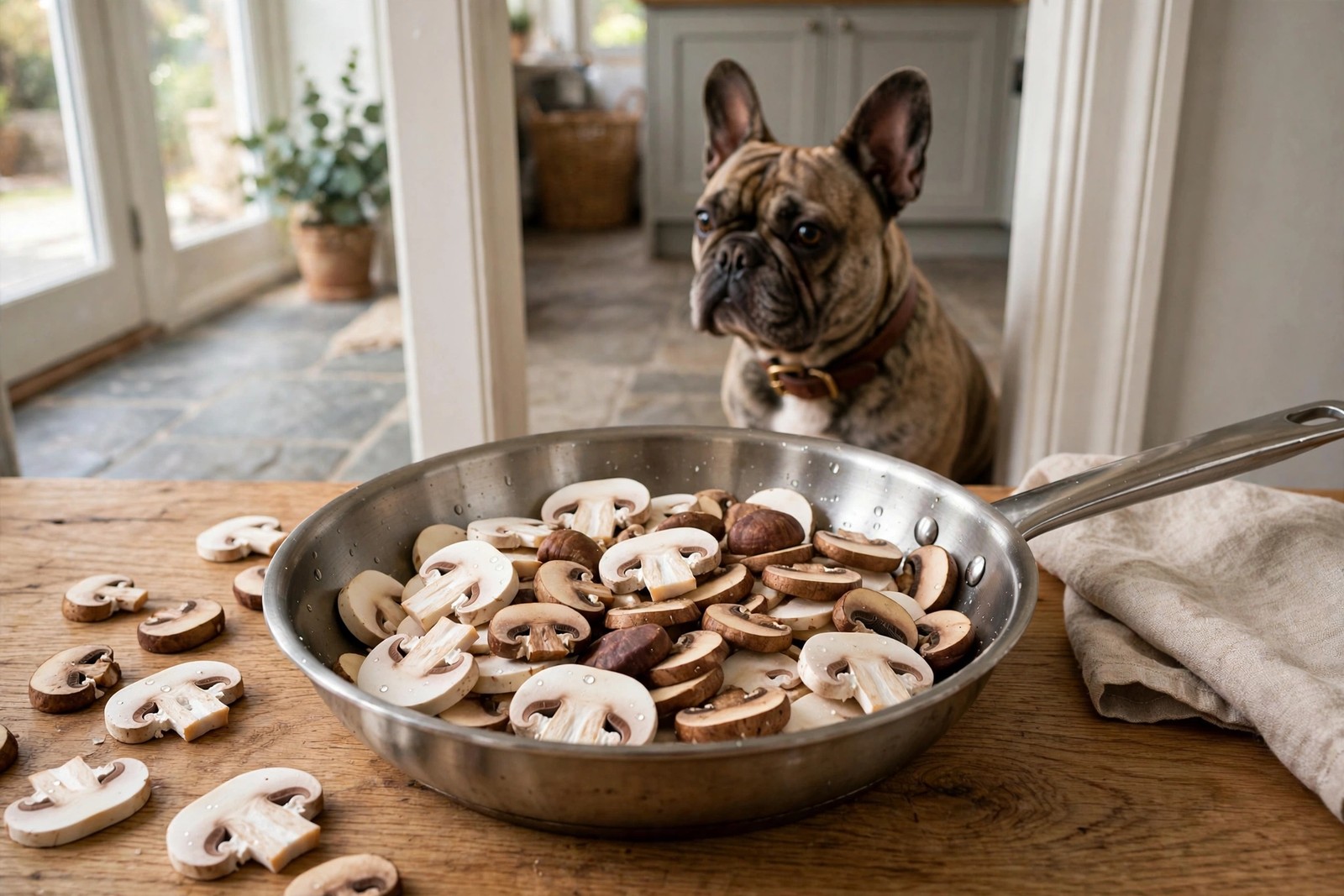
Yes, plain store-bought mushrooms of the culinary types sold for people are safe for dogs in small amounts. Serve 1 to 2 sliced mushrooms for a medium dog, washed and lightly cooked with no butter, oil, garlic or onion. White button, chestnut, portobello and shiitake mushrooms from a shop shelf are the allowed group. Wild mushrooms are never safe to share, in any amount, and that line does not soften for a mushroom an owner feels fairly confident about. Confidence is not identification, and some toxic wild species resemble edible ones closely enough to fool experienced gatherers.
Why Light Cooking Helps
Mushroom flesh has firm cell walls that a dog's digestion handles poorly when the mushroom is raw. A raw serving often passes through largely undigested and can cause gas or a loose stool. Light cooking softens those walls and makes the mushroom easier to digest, so steam or dry-cook sliced mushrooms until tender and let them cool before serving. Add nothing to the pan. Butter and oil add fat the dog does not need, and garlic and onion harm dogs, so mushrooms cooked for the family table almost never qualify for the bowl. Cook the dog's slices in a separate small pan or set them aside before the family seasoning begins. Cut the slices to a size the dog must chew, because a whole small mushroom is a smooth round shape that a keen dog can gulp.
The Wild Mushroom Rule in Practice
Never feed a wild mushroom, never let a dog graze mushrooms growing in the garden or on a walk and never assume that a mushroom is safe because the dog ate one yesterday without obvious harm. Some wild species cause vomiting and diarrhoea, while others can damage the liver or kidneys, and symptoms can arrive hours after the meal. Check the garden after wet weather, remove any mushrooms that push through the lawn and supervise a curious puppy outdoors until the habit of investigating fungi fades. If your dog eats a wild mushroom, call your veterinarian promptly rather than waiting for symptoms, and take a photograph or a sample in a sealed bag if you can do so safely, because identification helps the veterinarian judge the risk. Note the time of the meal and watch for vomiting, drooling, weakness or unusual sleepiness.
Mushrooms in Sauces, Soups and Leftovers
The mushroom itself is rarely the problem on a family plate. The sauce around it is. Mushrooms arrive in cream sauces, wine sauces, gravies, stir-fries with soy and garlic, and soups thickened with onion, and every one of those vehicles disqualifies the serving for the dog. Scraping sauce off a mushroom does not restore it, because the flesh absorbs the cooking liquid. The reliable pattern is the one this article repeats. Decide before cooking that the dog gets mushrooms, set plain slices aside and cook them separately in their own small pan. Leftovers that were cooked plainly keep in the fridge for up to 2 days and can be chopped cold over a meal, while sauced leftovers never convert.
Portions, Storage and a Clear Allowed List
Keep fresh mushrooms in a paper bag in the fridge and use them within 5 days, because plastic wrapping makes them sweat and spoil faster. Wash each mushroom briefly before cooking rather than soaking the whole batch, and discard any mushroom that smells sour or feels slimy. Serve mushrooms as an occasional extra within a meal, not as a daily habit, and introduce a single slice first for a dog that has never eaten them. A dog that produces loose stool after a small cooked serving has answered the question, and mushrooms should leave that dog's menu. Keep two lists straight in the household. Culinary shop mushrooms, plainly cooked, are allowed in small amounts, and wild mushrooms of any kind are never allowed. Write the culinary types your dog tolerates, with the serving size that worked, into KinsLe Pet Passport so the allowed list is documented and the wild ban sits on the same page.