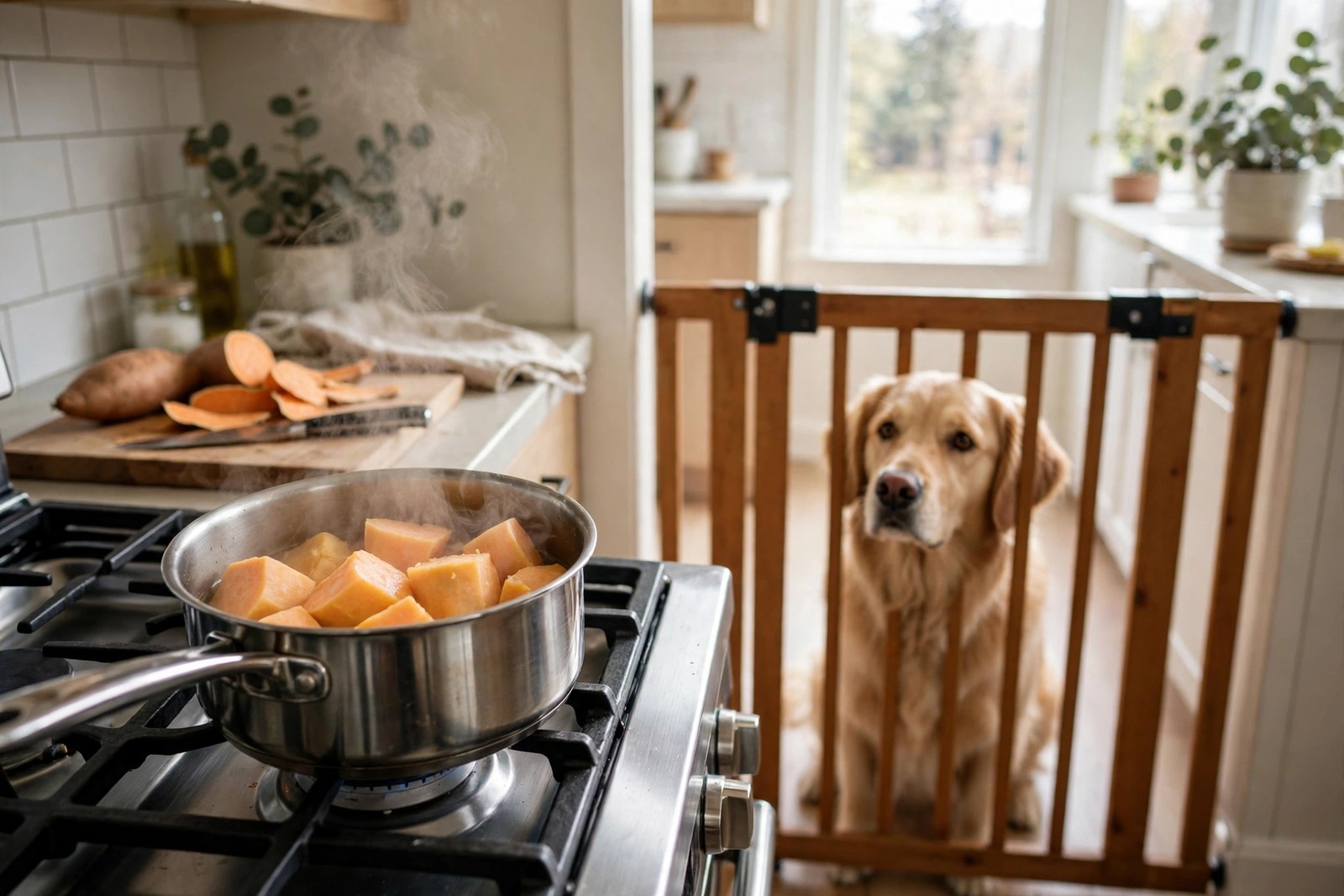
Dogs can eat sweet potato, with one clear adjustment to the question as asked: peel the skin away and serve the cooked flesh. Cooked plain flesh is soft, mild, and easy to digest in small amounts. The skin, by contrast, is tough and fibrous, hard for a dog to chew into safe pieces, and the part most likely to come back up or pass through barely digested. Peel-and-cook is the whole rule, and it is easy to follow.
Preparing sweet potato for a dog
Wash the sweet potato, peel it completely, and cut the flesh into even chunks. Boil, steam, or bake it plain until a fork slides through with no resistance, then let it cool before serving. Mash it or cut it small for little dogs. Serve it exactly as cooked: no butter, no oil, no salt, no brown sugar, no marshmallow, and no spice blends. Holiday casserole versions, candied versions, and fried sweet potato are human dishes and stay human. A spoonful or two stirred into the regular meal suits a medium dog as an occasional extra.
Why raw sweet potato is a no
Raw sweet potato is dense and hard, and dogs tend to bite off chunks rather than chew thoroughly. A hard chunk swallowed whole is a choking worry and, if it passes the throat, a blockage concern in the gut that a veterinarian would need to assess. The same applies to large pieces of raw skin or peelings raided from the trash or compost. Keep peelings in a lidded bin, and if your dog does swallow a large raw chunk and then coughs, retches, drools, or goes off food, contact a veterinarian promptly for advice rather than waiting to see.
Portions, fiber, and first servings
Sweet potato is starchy and high in fiber, so more is not better. Introduce it in a teaspoon-to-spoonful amount, watch stool and comfort over the next day, and increase only slightly if all stays normal. Too much at once commonly means gas or a soft stool, which tells you the portion, not the dog, was wrong. Sweet potato is an extra and a training reward option, never a replacement for a complete dog food, and dogs who need a managed diet for weight or health reasons should get extras only with their veterinarian's agreement.
Storing and serving through the week
A single baked or boiled batch keeps feeding simple. Refrigerate cooked, peeled sweet potato in a sealed container and use it within a few days, or freeze mashed portions in an ice cube tray so one thawed cube becomes a measured extra for a small dog. Reheat nothing for the dog; room temperature or cold pieces are accepted happily and avoid any risk of a too-hot mouthful from uneven microwaving. Check stored portions before serving and discard anything sour-smelling. Batch preparation also makes the household rule self-enforcing, because the dog-ready version is already peeled, plain, and portioned before anyone starts improvising at the stove.
One preparation rule for everyone
Most feeding mistakes happen between people: one person peels and cooks carefully, another tosses the dog a raw end piece while chopping. Write the preparation rule down with the feeding instructions, including the peel step and the plain-cooking step, and store raw sweet potatoes and peelings out of reach as a backup. Through KinsLe, Care Teams writes the preparation rule beside the feeding instructions, so sweet potato arrives in the bowl safely cooked whoever is on kitchen duty.