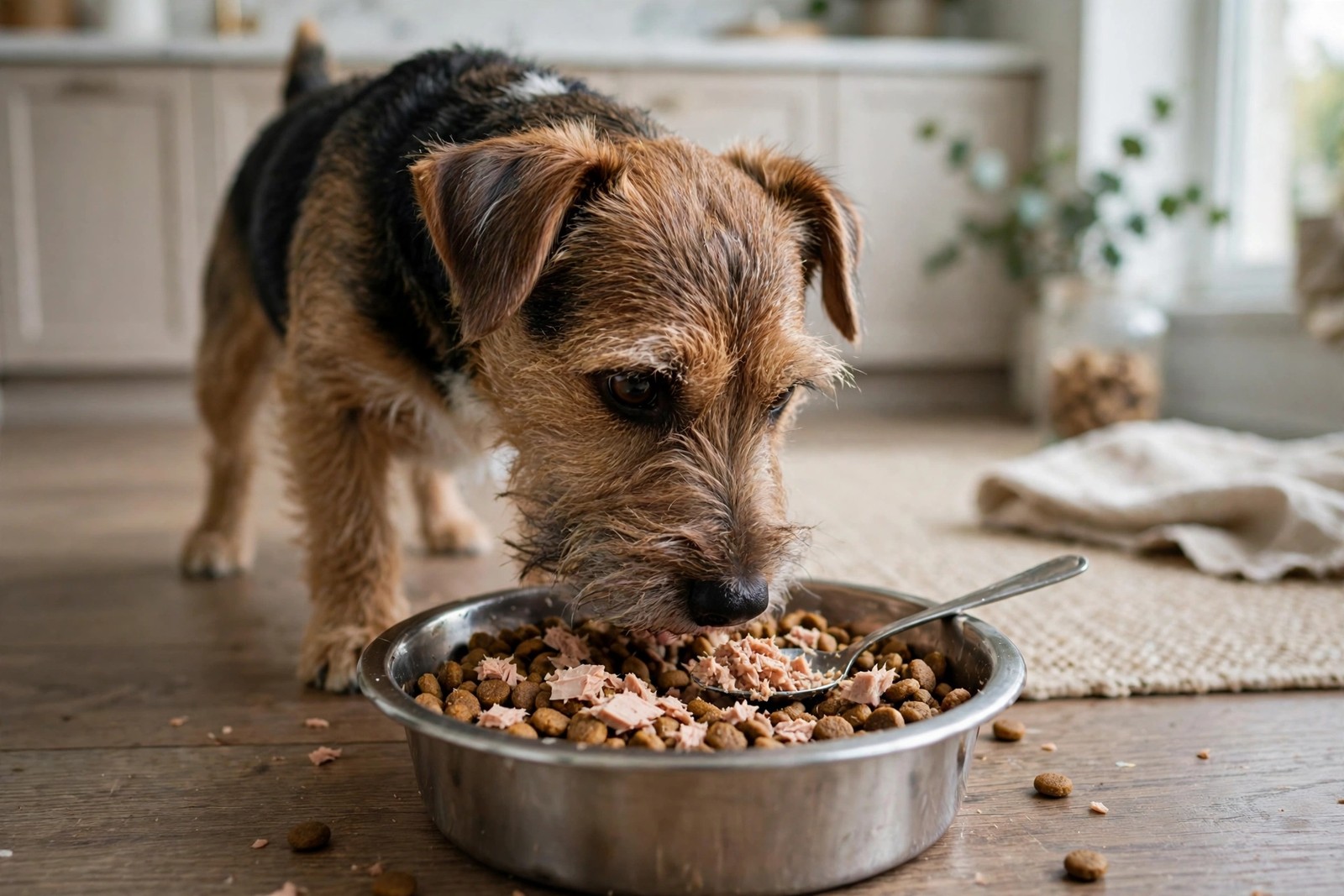
A spoonful of tuna now and then will not harm most dogs, and many dogs love it enough to accept medicine hidden inside it. The catch is frequency. Tuna is a large, long-lived fish, and mercury collects in its flesh over its life. Eaten rarely, that barely matters. Eaten as a routine food, it can build up in your dog's body, and that is why tuna belongs firmly in the rare-treat category.
Which tuna, and how much
Choose plain tuna packed in water, drained well. Tuna in brine is too salty for a dog's kidneys and thirst, and tuna in oil adds a slab of fat that can upset the stomach or, in a dog prone to pancreatitis, do more harm than that. Flavoured tuna with chilli, garlic, herbs, or sauces is out. Raw tuna is also out: it can carry parasites and bacteria, and it offers nothing that the cooked, tinned form does not.
As a guide, a teaspoon for a small dog, a tablespoon for a medium dog, and two tablespoons for a large dog, offered no more than once in a while, is plenty. Flake it over kibble rather than serving a bowl of it. A dog who gets a full tin has eaten a very salty, protein-heavy meal that was never sized for them, and the empty tin itself, with its sharp rim, should go straight into a secure bin.
Why tuna cannot replace dog food
Tuna smells like a complete meal to a dog, but it is not one. It lacks the balance of calcium, vitamins, and minerals a complete dog food provides, and dogs fed heavily on fish can become fussy, refusing their normal food in favour of the stronger flavour. Puppies are the poorest candidates of all: their small bodies take in more mercury per kilo, and their growth depends on properly balanced food, so keep tuna away from puppies except for a vet-approved taste. Pregnant dogs and dogs with kidney trouble are also better off skipping it; ask your vet if you are unsure where your dog stands.
Signs linked with too much mercury build up slowly and are easy to miss, including wobbliness, weakness, and changes in behaviour. You are unlikely to see them from an occasional spoonful, which is exactly the level to keep tuna at. If your dog has been fed tuna daily for a long stretch, mention it at the next vet visit rather than worrying alone.
Better uses for that fishy appeal
Because the flavour is so strong, a little tuna goes a long way. Use the drained liquid, diluted, to moisten kibble for a convalescing dog whose appetite needs tempting, with your vet's agreement. Freeze a teaspoon of flakes into a small ice block for a hot day. Keep a note of when tuna was last offered if several people feed your dog, since three family members each giving a rare treat in the same week is no longer rare.
If your dog eats a large amount in one raid, watch for vomiting, diarrhoea, and heavy drinking from the salt, and call your vet if signs persist or your dog is small, young, or unwell in other ways.
Kept rare, tuna stays a pleasure instead of a problem. In KinsLe, Care Teams lets you make the occasional tuna topper a named, assigned duty and timestamp its completion, which keeps one person's treat from becoming everyone's daily routine.