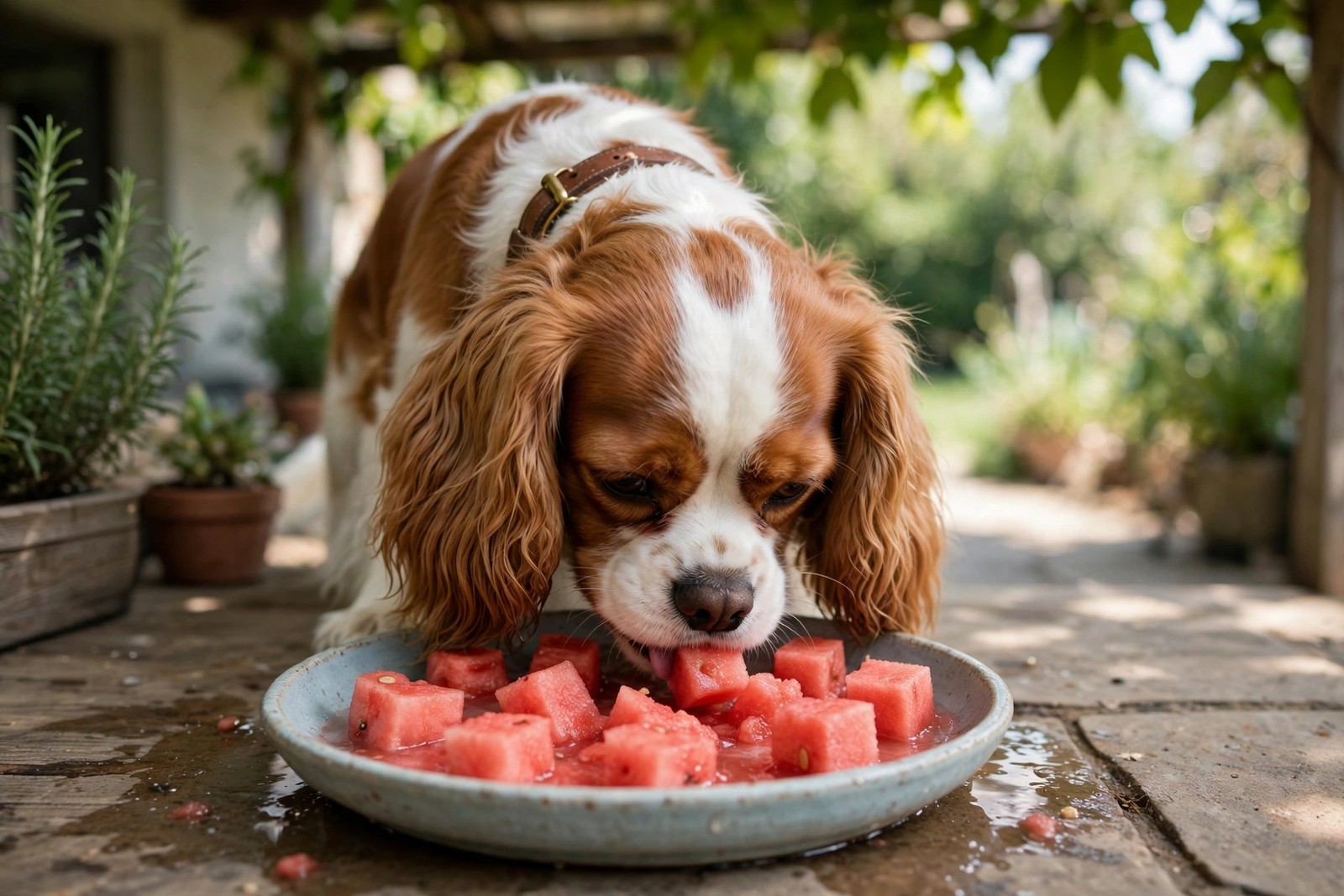
Yes, and on a hot day a few cubes of watermelon may be the treat your dog enjoys most. The flesh is mostly water, gentle on the stomach, and naturally sweet. Watermelon is safe only in its prepared form, though: pink flesh, seeds removed, rind completely cut away. Served as a wedge a dog can tear at, it becomes a different and riskier food.
Preparing it properly
Cut a thick slice, trim away all the white and green rind until only pink flesh remains, then pick out the black seeds and cut the flesh into cubes sized for your dog: pea-sized for a small dog, grape-sized for a large one. Seedless varieties still contain soft white seed traces, which are fine, but check for any hard black seeds anyway. Wash the outside of the melon before cutting, since the knife carries whatever sits on the rind into the flesh.
Serve a couple of cubes to a small dog, a small handful to a medium dog, and up to a cup of cubes to a large dog on a hot day, a few times a week in season. That is a treat-sized amount, not a meal. Dogs new to watermelon should start with two or three cubes, with a check on the stool the next day, since the water and fibre together can loosen things if the first serving is generous.
Why the rind and seeds matter
Rind is dense, fibrous, and barely digestible. A dog who gnaws a rind can swallow a solid chunk, and chunks like that are a known cause of gut blockage. Signs include repeated vomiting, loss of appetite, belly pain, straining, and unusual quietness, and they call for urgent veterinary care. Individual seeds usually pass, but a mouthful of seeds from a dog working through a wedge adds up, and small dogs have less margin. Removing both takes a minute and removes the whole problem.
Do not offer a whole melon as a garden toy, however funny the photos promise to be. A dog left alone with one will eat rind, seeds, and flesh together, in quantities nobody chose.
Watermelon, sugar, and frozen treats
Watermelon tastes very sweet, and while its sugar is diluted by all that water, it still counts. Overweight dogs should get a few cubes rather than a bowl, and diabetic dogs should only have it if their vet is comfortable with it in their feeding plan. Skip watermelon-flavoured sweets, drinks, and ice lollies made for people, which may contain xylitol, sometimes listed as birch sugar, a sweetener that is seriously toxic to dogs.
For a safe frozen version, blend plain flesh with the seeds removed, pour it into small moulds or an ice tray, and freeze. Offer one small block at a time on a surface that can take pink drips, and supervise until it is gone so the last hard piece is not gulped. Watermelon cubes floated in a water bowl also encourage reluctant drinkers on hot days, though fresh plain water must always be available too.
Prepared with a knife and a minute of care, watermelon is a genuinely good summer treat. With KinsLe Care Teams, you can assign melon prep as a clear duty and timestamp its completion, which means the cubes arrive seed-free and rind-free instead of as an untrimmed wedge tossed by a helpful guest.