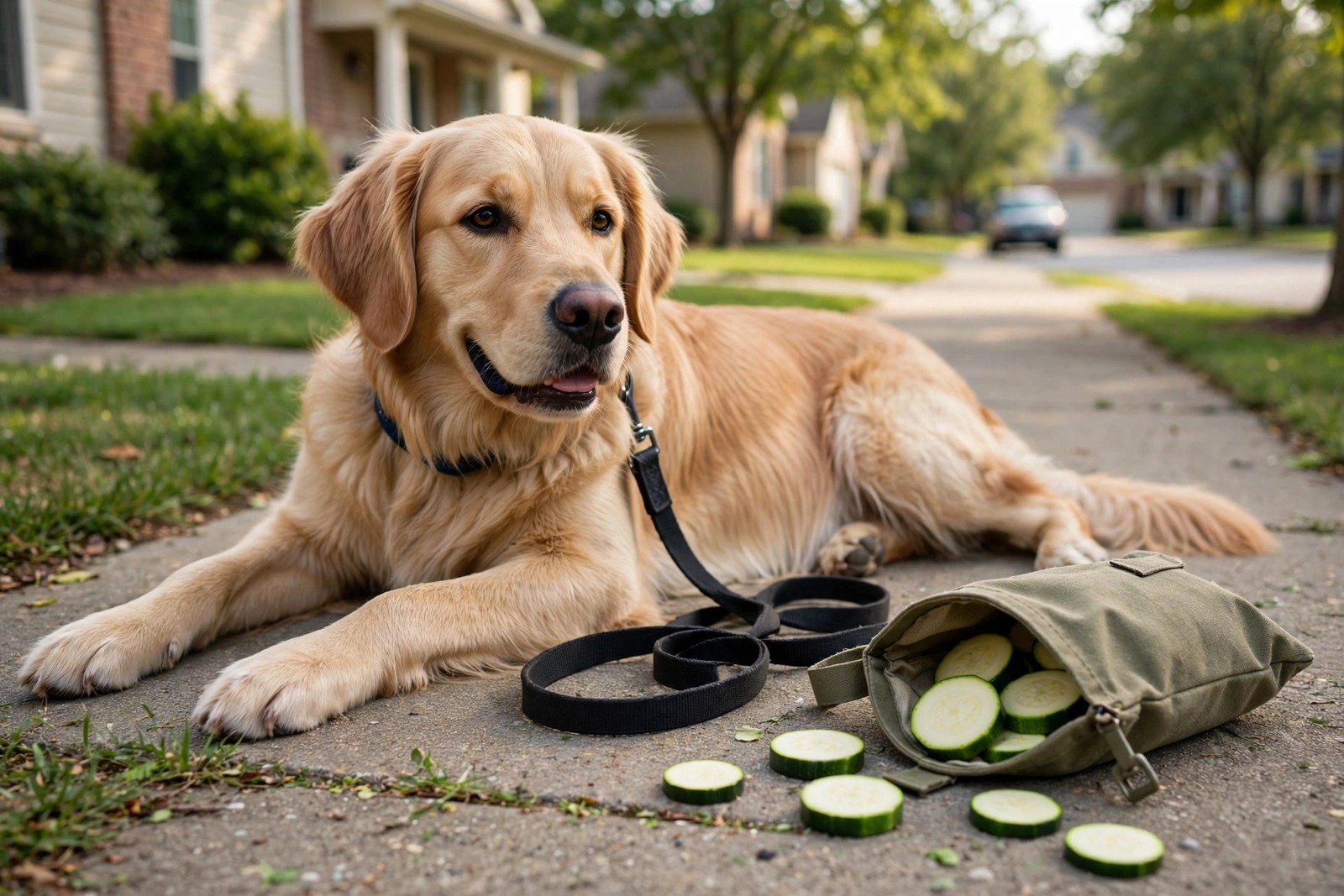
Yes, a dog can eat zucchini, raw or cooked plainly, and the vegetable earns a place in the treat rotation for a practical reason. Zucchini carries very few calories for its volume, so a dog who needs to watch weight can still receive a satisfying handful of pieces without the treat allowance swelling. Wash the fruit, cut the flesh into pieces sized for your dog to chew, and serve the pieces plain. Preparation and portion decide whether the vegetable helps or merely adds a loose stool to the day.
Preparing Zucchini a Dog Can Chew Safely
Rinse the skin under running water and rub away any soil, since the skin can stay on once the fruit is clean. Slice away both ends, then cut the flesh into coins, sticks or ribbons sized to the dog in front of you. A small dog needs thin and small pieces that break down under chewing, while a large dog can manage chunkier sticks and still needs pieces large enough to discourage a single gulp. The soft seeds inside a normal-sized zucchini can stay in, and only an overgrown fruit with hard and mature seeds needs those seeds scooped out before serving. Raw pieces keep a crunch that many dogs enjoy as a training reward or a scatter game in grass. Cooking changes only the texture: steam, boil or bake the pieces with no oil, no salt, no butter and no seasoning, and let cooked pieces cool before serving. Zucchini from a family dish fails the plain test once oil, garlic, cheese, tomato sauce or spice has touched the pan, so cook a dog's portion separately or set raw pieces aside before the family cooking begins.
Portions, Fibre and the Weight Benefit
A few pieces make a serving, and the exact count follows the dog rather than the vegetable. Offer two or three pieces on the first day and watch the stool over the following day, since zucchini brings fibre and water that can loosen digestion when a large serving arrives without warning. Build across a few days toward a small handful for a medium or large dog, and keep the serving smaller for a small dog. For a dog on a weight plan, zucchini works when the pieces replace part of the usual treat ration instead of joining the ration, and the swap only helps when meal portions stay unchanged rather than creeping up beside the lighter treats. A veterinarian who manages the weight plan can say how much total food reduction the dog needs, and zucchini then fills the treat gap inside that plan. Dogs who dislike raw pieces may accept steamed pieces once the texture softens, and dogs who ignore both forms lose nothing, since zucchini is an extra and never a required part of a complete diet.
Storing and Serving Without Waste
Keep whole zucchini in the fridge and cut only what a serving needs, since cut pieces dry and soften quickly. Store cut pieces in a sealed container in the fridge and use the pieces within a couple of days, discarding any piece that smells sour or feels slimy. Freeze raw sticks for a firmer chew on a warm day, and supervise a dog with a frozen piece as you would with any firm treat. Growers with a garden glut can grate zucchini over meals in small amounts, and grated pieces mix through kibble without giving a dog large pieces to bolt. Rotate zucchini with other plain vegetables your dog already tolerates, and variety keeps interest up without raising the treat total. Write the serving size into the feeding notes, because a low-calorie label invites helpers to pour generously. In KinsLe, Care Teams carries the few-pieces serving on the treat duty itself, and a helper can record the serving as done, which keeps the weight plan intact across the whole household.