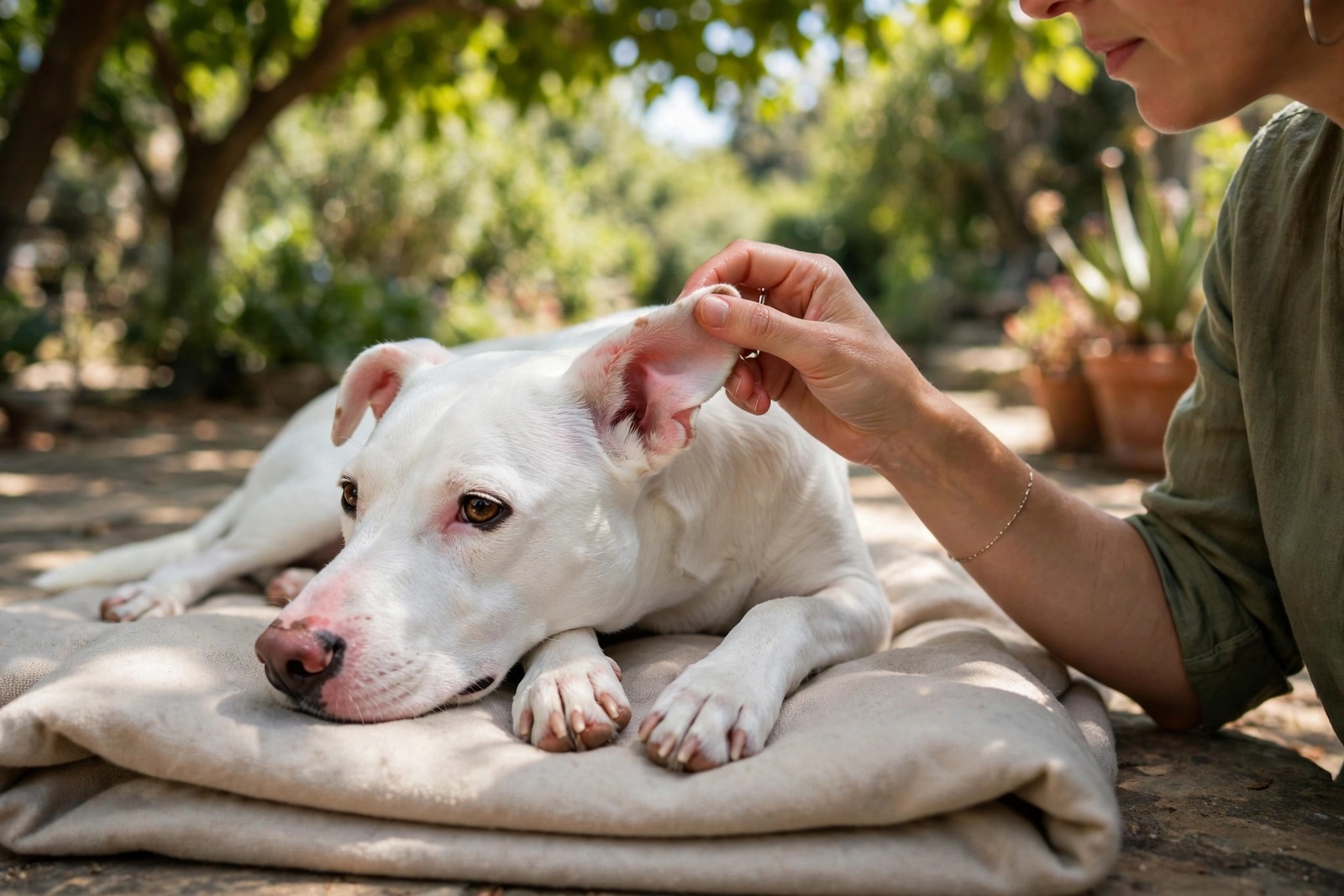
Sunburn is a real risk for dogs, and it lands where the coat leaves skin thinnest: ear tips, the nose, lips, eyelids, belly and groin, plus patches where the fur grows white or sparse, or has just been clipped short. Pale skin under a short coat raises the risk, and so does the habit of sprawling belly-up in the garden to nap. A mild burn looks like pink, warm, tender skin; worse burns can blister, peel, and be genuinely painful, and repeated sun damage over years raises the risk of skin problems a vet should check, including skin cancers.
Which Dogs Are at Risk, and How to Prevent It
Prevention beats treatment. Limit midday sun on very hot, bright days, make sure outdoor dogs always have real shade (not just a kennel roof they can leave), and never shave a double coat down to the skin in summer — that coat is insulation and sun protection at once. Pet-safe sunscreen exists for noses and ear tips; apply it before going out and reapply after swimming, and never use human sunscreen on a dog unless your vet says the specific product is safe, because some ingredients are harmful if licked. If skin is pink and tender, bring your dog in, apply a cool damp cloth gently, and ask your vet before putting anything on it.
Working With Your Vet
For a sunburn question, the useful order is specific: photograph the patch in daylight, note how long your dog was outside and whether the skin feels warm or tender, and let a veterinarian judge anything that blisters, weeps or changes. A single photo can mislead, because colour shifts with light, so a short sequence across two or three days shows whether pinkness is fading or deepening — and that sequence, not a general article, is what guides a proper examination.
Any blistering, oozing, or burn that covers a large area needs a vet the same day. Also book a check for any new lump, sore that does not heal, or patch of skin that changes colour or thickens on a sun-exposed area — those changes deserve a professional look rather than watchful waiting.
A simple sun note earns its place in the record: the date, the patch affected, the hours spent outside, whether pet-safe sunscreen was applied and when, and how the skin looked the following morning. Across a summer, those entries reveal which spots burn repeatedly — often the nose leather or one thin ear tip — and that pattern tells your vet far more than a general memory of one hot week. Update the note after every bright spell and every clip, since a freshly shortened coat changes which skin is exposed.
With Pet Passport in KinsLe, those sun notes, sunscreen details and visit summaries live inside one portable packet for your dog, so the next appointment starts from the record rather than from recollection.