
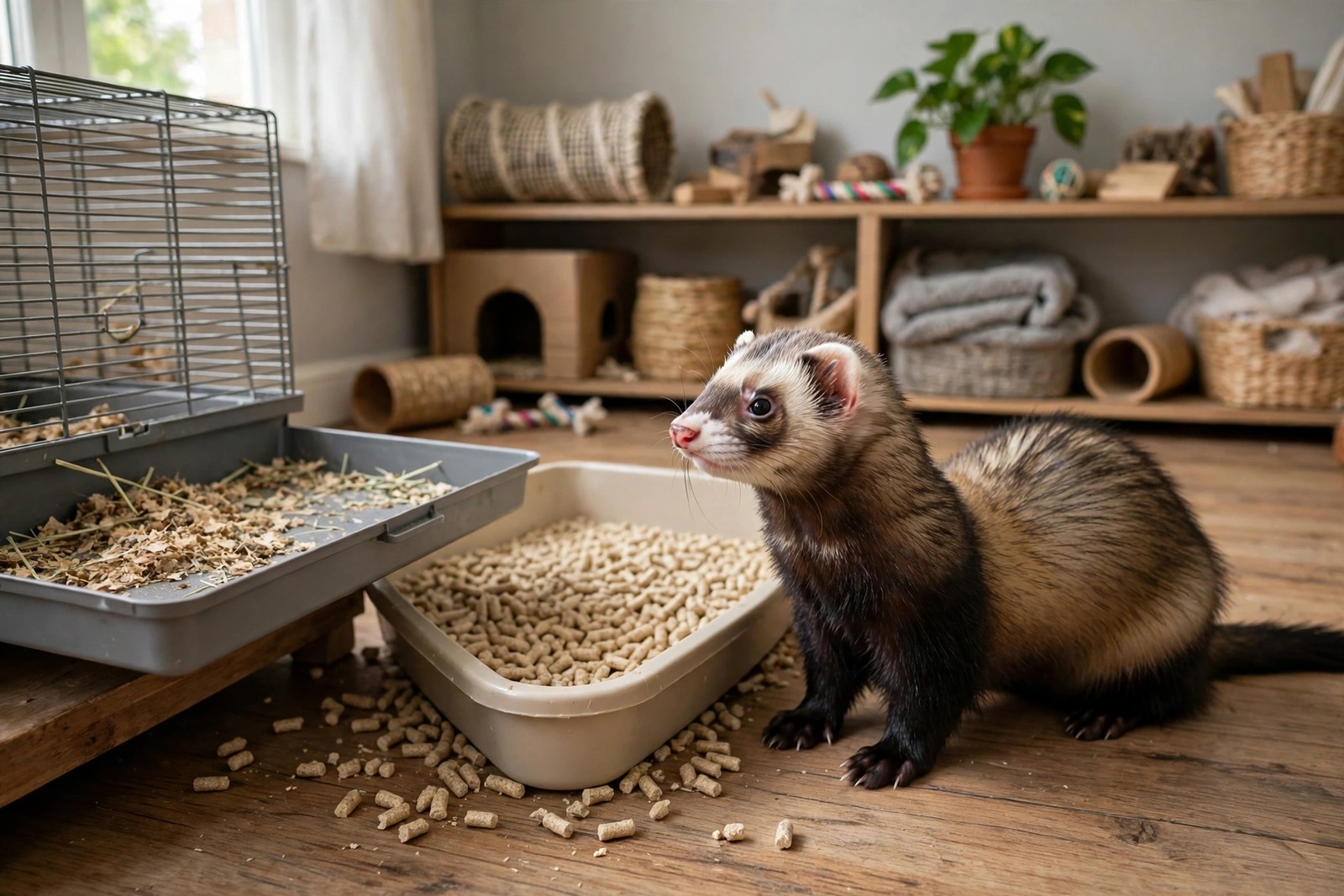
Yes, many ferrets and rats learn to use a litter tray with patience, consistency, and a setup that works with their instincts instead of against them. Neither species will usually be perfect like a cat, but most will reliably use a tray in their chosen corner often enough to make cleaning far easier and their living space fresher.
Start Where They Already Go
Both animals are creatures of corner habit. Ferrets back into corners naturally to toilet, and rats often pick one toilet corner in their cage too. Your first job is observation, not training: for a day or two, note exactly which corner each animal chooses, then place a tray there rather than deciding where the tray should go.
Practical setup basics:
- Use a corner tray that fits the cage corner, with a low entry side for rats and young ferrets.
- Move some droppings into the tray so it smells like the right place.
- Use a pet-safe litter that is clearly different from bedding — paper-based litter often works — and avoid dusty or strongly scented products for sensitive respiratory systems, especially in rats.
- Keep bedding, food, and sleeping areas visually and texturally separate from the tray, so the distinction stays obvious.
Reward early successes with calm praise or a tiny favorite treat, particularly for rats, who respond beautifully to positive reinforcement. Never punish misses; an animal who is scolded near a tray may avoid the tray itself.
Ferret-Specific Tips
Ferrets need trays in two places: the cage and the playroom. A ferret let out for play will not usually travel back to the cage to toilet — their gut is fast and their intentions are immediate — so place corner trays in the rooms where they roam, ideally in the corners they test first. Some ferrets love to dig in litter, so a tray with higher sides or a grate can help, and securing the tray so it cannot be tipped during a war dance saves a lot of sweeping.
Expect a short window after waking and eating when a ferret needs to go. Gently placing them in a tray at those moments builds the habit faster than any amount of after-the-fact cleanup.
Rat-Specific Tips
Rats are often the quicker learners. Many will adopt a tray within days if it sits in their chosen corner with a flat pee stone — a smooth stone some rats prefer to urinate on — placed inside. Clean the rest of the cage while leaving a little scent in the tray during the early training phase, so the cue remains. If rats start sleeping or stashing food in the tray, it is usually too clean, too big, or in a spot they consider prime real estate; shrink it or move sleeping quarters slightly.
Keeping the Habit From Slipping With KinsLe
Training fails most often between helpers: one person cleans the tray daily and rewards successes, another forgets for three days, and the corner habit unravels. KinsLe's Care Teams can assign tray cleaning and training follow-through to specific people, with timestamped completions, so the habit does not slip between helpers. A quick assigned routine — tray checked morning and evening, droppings moved to the tray during training week — keeps everyone consistent without nagging.
Care Teams on KinsLe keep morning and evening tray checks assigned to named helpers, so a training week for a ferret or rat never depends on one person's memory.