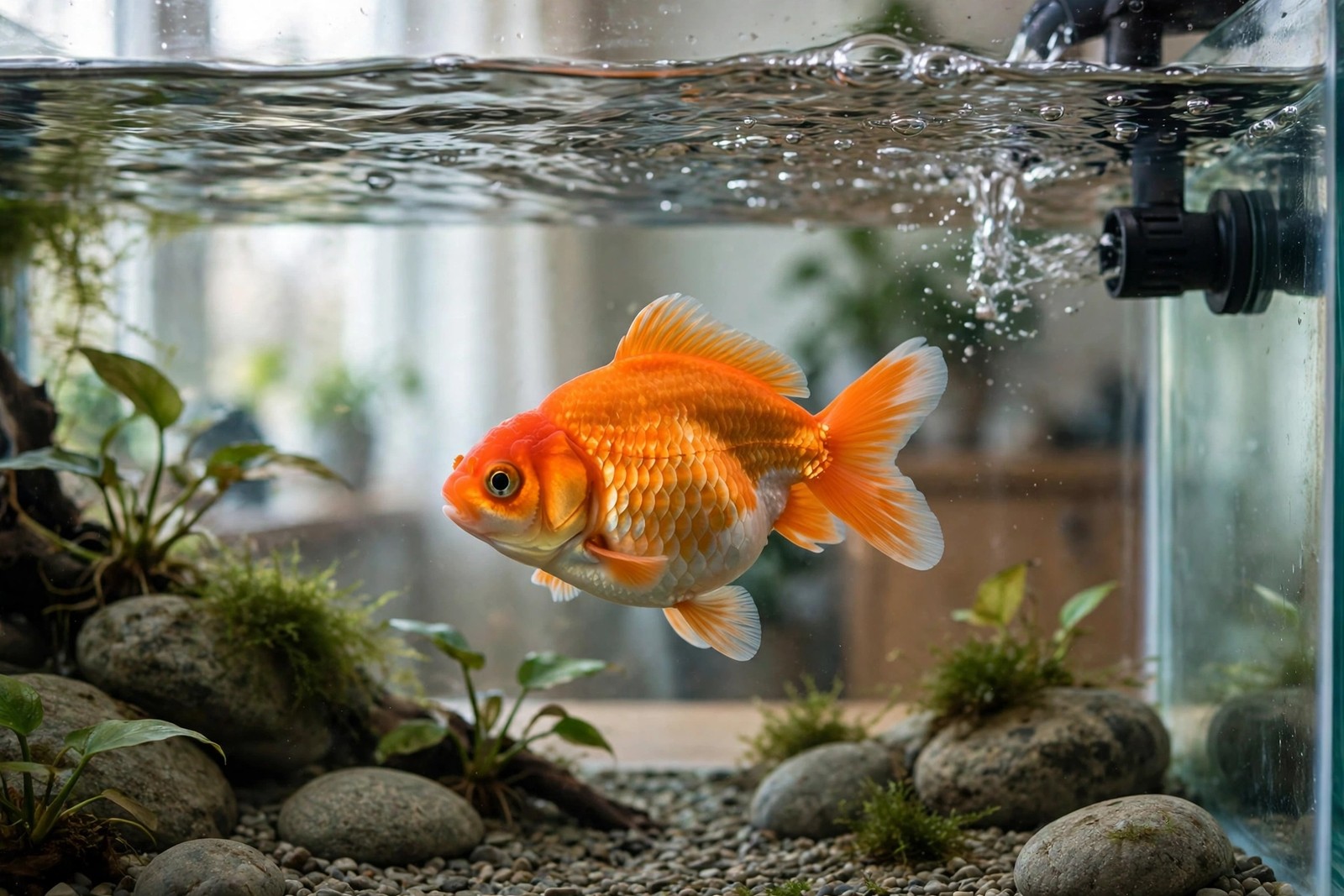
Separate the two halves of this question, because they have opposite answers. Cold water suits goldfish well; they are a cold-water species and do not need a heater in a normal indoor room. A missing filter is the problem. Without filtration, a goldfish tank is a container where waste collects faster than a keeper can reasonably dilute it, and the fish pays for that gap with its gills, fins, and energy.
Why Goldfish Foul Water So Fast
Goldfish eat eagerly, grow large, and produce a great deal of waste for their body size. Uneaten food, droppings, and waste released through the gills all break down into ammonia. In a filtered tank, bacteria living in the filter media convert ammonia first into nitrite and then into nitrate, which is far less harmful and is removed gradually by water changes. That bacterial colony is the real life-support system; the filter is simply its home, with water pushed through it constantly.
Remove the filter and the colony has nowhere stable to live. Some bacteria settle on gravel and glass, but in far smaller numbers, and every deep clean removes more of them. Ammonia therefore rises between water changes, falls sharply when you replace water, and rises again. Those swings stress the fish even when no single reading looks catastrophic. A fancy goldfish with a deep body and flowing fins, kept in a small unfiltered bowl or tank, feels that stress quickly, because fancy types swim less strongly and tolerate poor water less well than slim single-tailed fish.
What Filterless Keeping Actually Demands
Owners sometimes picture a filterless tank as a quiet, natural setup needing an occasional jug of fresh water. The real routine looks very different:
- Large partial water changes on a near-daily rhythm, using dechlorinated water matched closely in temperature
- Water testing for ammonia and nitrite on the same rhythm, not only when the fish looks unwell
- Immediate extra changes whenever ammonia registers above zero
- Very light stocking, with a single small fish in a generous volume of water
- Prompt removal of uneaten food within minutes of feeding
That routine can keep a fish alive through a short emergency, such as a filter breakdown while a replacement arrives. As a permanent plan it fails on ordinary human weeks: one holiday, one illness, or one missed run of changes lets ammonia spike in a tank with no bacterial safety net.
Signs the Water Is Hurting Your Fish
Watch for gasping at the surface, clamped fins, red streaks in pale fins, sitting on the gravel, loss of appetite, and cloudy water with a sharp smell. Treat those signs as a water emergency first: test at once, change a large portion of the water with properly treated water, and check whether a filter is running and cycled. If signs persist after the water reads clean, or if you see sores, growths, or laboured breathing that does not ease, seek advice promptly from a veterinarian who treats fish or from an experienced aquatic retailer who can examine the fish. Do not add medicines on guesswork to water that has not been tested.
A Setup That Works Instead
Choose a tank with generous volume, fit a filter rated for a larger tank than the one you own, and cycle the filter before the fish arrives, or cycle carefully with testing if the fish is already with you. Keep the temperature steady at normal room range, feed measured meals the fish finish within a couple of minutes, and change part of the water weekly even with filtration running. Goldfish kept this way grow, colour up, and behave actively for years; goldfish kept filterless usually stay small because poor water suppresses growth, which is damage, not convenience.
Because tests and changes only protect the fish when they actually happen on schedule, KinsLe Care Teams lets you split those duties across your household and see each one marked complete with a timestamp, so a busy week never silently becomes a missed water change.