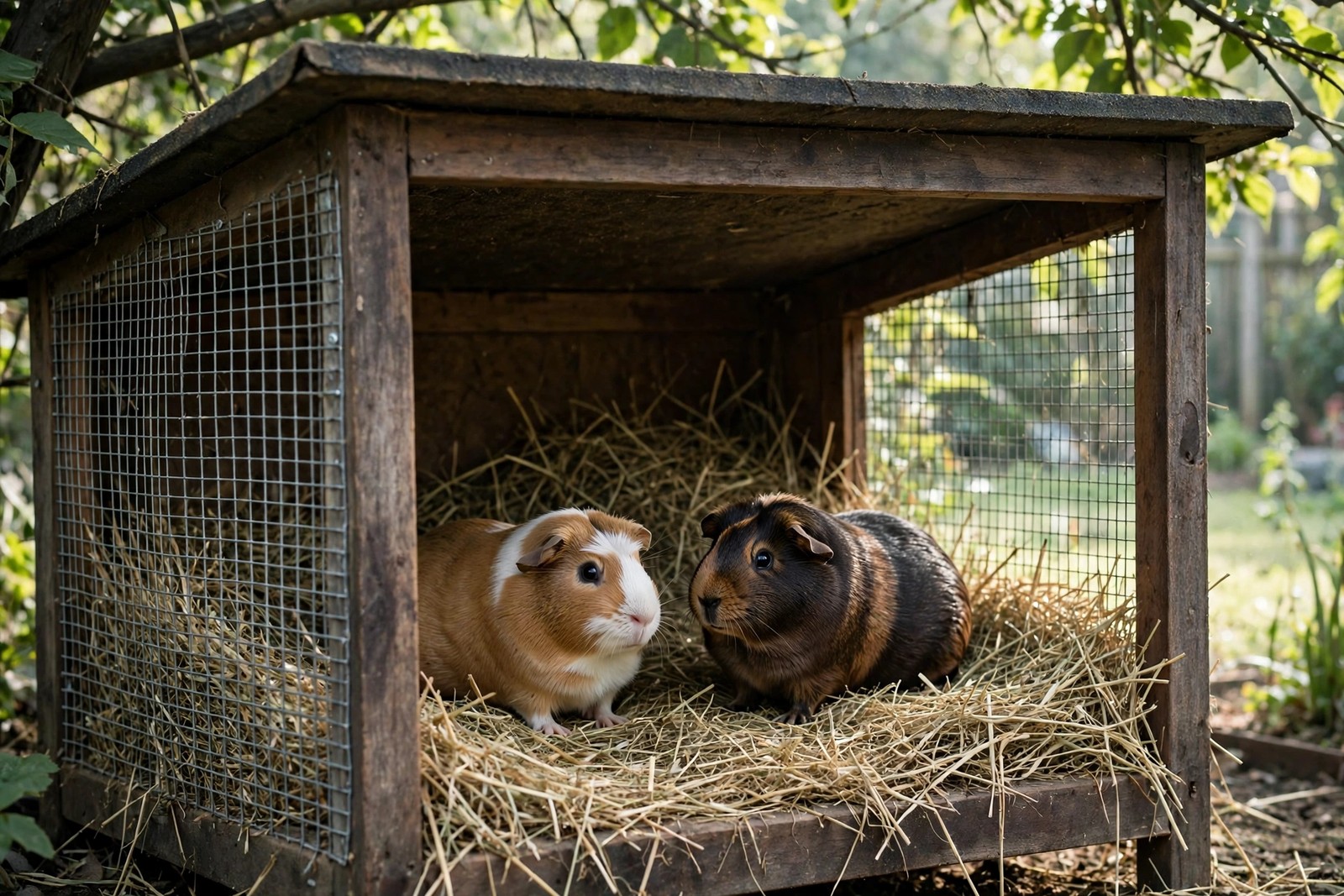
Guinea pigs can live outdoors in a hutch in a mild climate, but the decision turns on three things most hutches get wrong: temperature, damp, and predators. Guinea pigs are small prey animals with a narrow comfort range, and outdoors puts all three pressures on them at once. Work through each one honestly before you move a pair outside.
Temperature Comes First
Guinea pigs cope best at about 65 to 75 degrees Fahrenheit (18 to 24 degrees Celsius). Above that range they risk heatstroke, and they have no useful way to cool themselves: they do not sweat effectively and they cannot pant heat away like a dog. A hutch in direct afternoon sun can become dangerously hot even on a day that feels pleasant to you, so the hutch belongs in permanent shade, with a solid roof, good airflow through mesh, and a frozen water bottle wrapped in cloth offered as a cool spot to lie beside on hot days. Watch for warning signs on warm days: lying stretched out and still, drooling, rapid breathing, or refusing food all mean the guinea pig needs to come into a cool room at once and needs a vet if the signs do not ease quickly.
Cold is the slower problem. Guinea pigs tolerate cool, dry weather better than heat, but damp bedding and draughts at floor level chill them fast, especially older animals and smooth-coated animals with little insulation of their own. A weatherproof hutch needs a raised floor off wet ground, a small, well-insulated sleeping compartment that can hold body heat, and deep dry bedding that you replace as soon as it feels damp rather than on a fixed weekly schedule.
Predator-Proofing Is Not Optional
A guinea pig cannot fight or flee far, and a standard hutch latch is not protection. Foxes, dogs, cats, and birds of prey all test weak points, so the run and hutch need strong welded mesh rather than thin chicken wire, a bolt or padlock that a paw cannot lift or slide, and a secure base or mesh skirt so nothing can dig underneath. Bring guinea pigs into a shed, garage, or the house at night if predators visit your garden regularly, and never rely on a loose cover or a tarpaulin as the main defence.
Daily Life Outdoors
Outdoor guinea pigs still need the same daily routine as indoor ones: unlimited grass hay, fresh water checked twice a day because bottles can freeze in winter and grow algae in summer, leafy vegetables, and a health check when you handle them. Companionship matters as well. Guinea pigs are social and should live in a pair or group, and an outdoor pair still needs daily human contact so that illness, weight loss, or a sore foot is spotted early rather than at the weekend clean-out.
When Indoors Is the Kinder Answer
Choose indoors, or a well-ventilated outbuilding, if your summers bring heat waves, your winters bring hard frosts or driving rain, your garden has regular predator visits, or nobody can check the hutch morning and evening every day. Many owners use a compromise: outdoor grazing time in a secure run on mild days, with sleeping quarters indoors where temperature stays steady.
Keeping the weather plan, the bedding routine, and the twice-daily checks in one shared place means a hot afternoon or a frosty night triggers the same response from whoever is home, and KinsLe Family Sharing keeps that hutch plan, feeding routine, and bring-them-in threshold visible to the whole household.