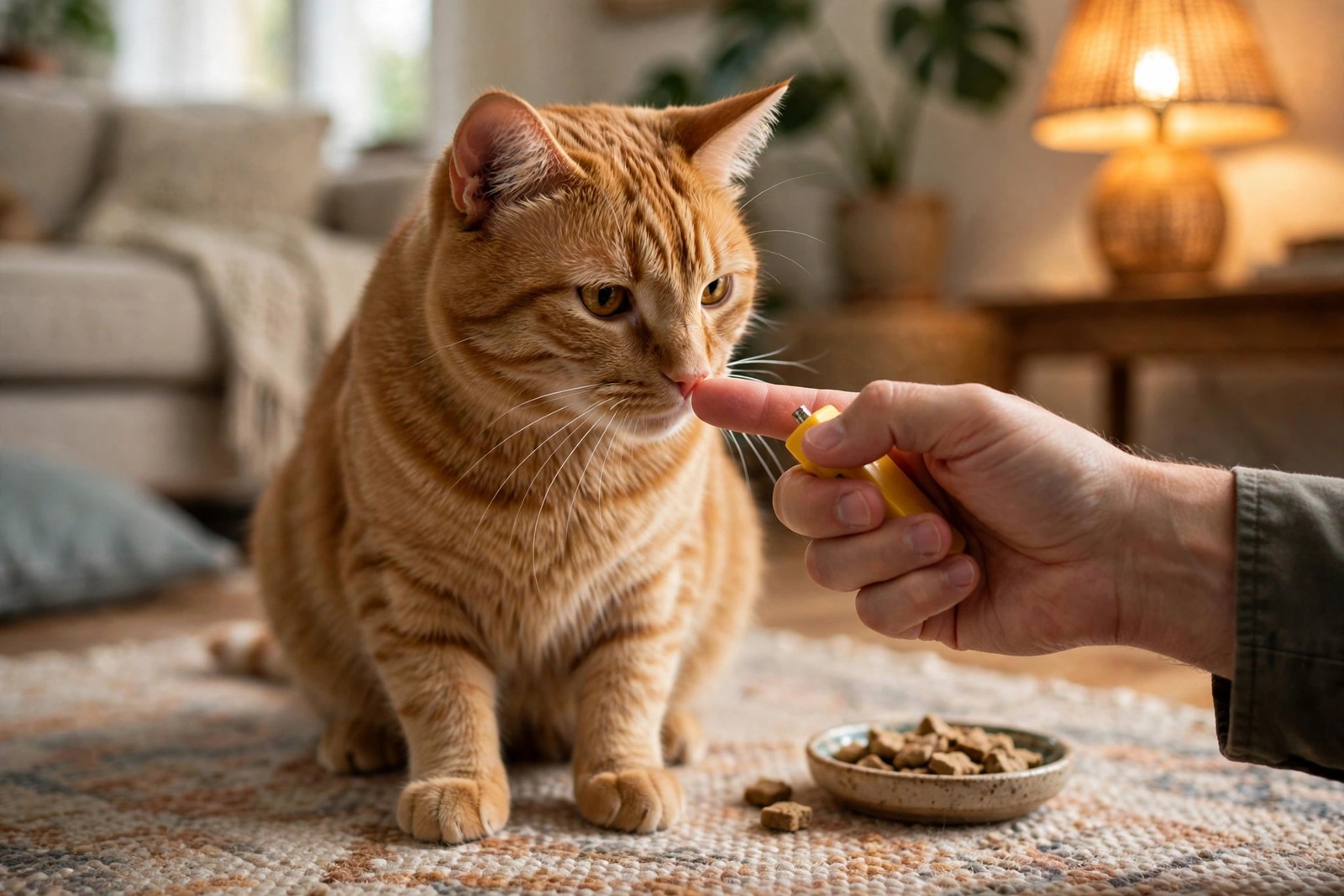
Yes. Cats are excellent clicker students, often quicker than dogs at working out what earned the reward. The clicker is not magic and it is not a remote control; it is a marker. Its short, identical sound tells your cat the precise instant they did the thing you wanted, and that a treat is coming. That precision is what makes small, shy, or easily distracted cats trainable in a way that praise alone rarely achieves.
Step one: charge the clicker
Before teaching any behaviour, teach the sound. Sit with your cat when they are mildly hungry, not ravenous and not fresh from a meal. Click once, then immediately give a treat the size of a pea: a flake of cooked chicken, a lick of meat paste, or whatever your cat genuinely loves. Pause, then repeat. Ten to fifteen pairings per session, two or three short sessions, is usually enough. You know the clicker is charged when your cat, hearing a click while looking elsewhere, turns to you expecting the treat. That look is the foundation everything else stands on.
If your cat dislikes the sharp click, soften it: click inside a pocket, use a quieter marker device, or use a consistent tongue click or a single short word like yes, delivered the same way every time. The sound matters less than its consistency.
What to teach first
Start with behaviours a cat can succeed at in the first minute. Targeting is the classic opener: hold a fingertip, spoon, or target stick near your cat's nose, click the instant they touch it with their nose, treat, and repeat. From targeting you can guide movement without grabbing or luring with your hands, which cats dislike. Next come the genuinely useful skills: coming when called, going to a mat or carrier, stepping onto scales, and offering a paw for nail care. Playful extras like a high-five or a spin can follow once the system makes sense to both of you.
Keep sessions to one to three minutes, and stop while your cat is still interested, ideally right after a success. Cats learn in short, frequent bursts and switch off quickly when drilled. Train before a meal, in a quiet room, with household interruptions kept away.
Timing rules that make or break it
Click during the behaviour, not after you have reached for the treat. A late click marks the wrong thing, and cats notice. Treat after every click, always, even if you clicked by accident; the click is a promise. Once a behaviour is reliable, you can click and treat the best attempts rather than every attempt, but new behaviours always pay every time. Never use the clicker to call your cat for something unpleasant, and never click without treating while your cat is learning, or the marker loses its value.
Frustration has tells: tail lashing, ears flattening, walking away, or suddenly grooming. End the session kindly at the first of them. Training that respects those signals builds a cat who runs toward sessions instead of away from them.
Short, daily, and shared is the pattern that works, and it suits how households actually run. Through KinsLe Care Teams, each practice session can sit as a small assigned duty, timestamped when done, so whoever is home keeps the same cues, the same rewards, and the same steady progress with your cat.