
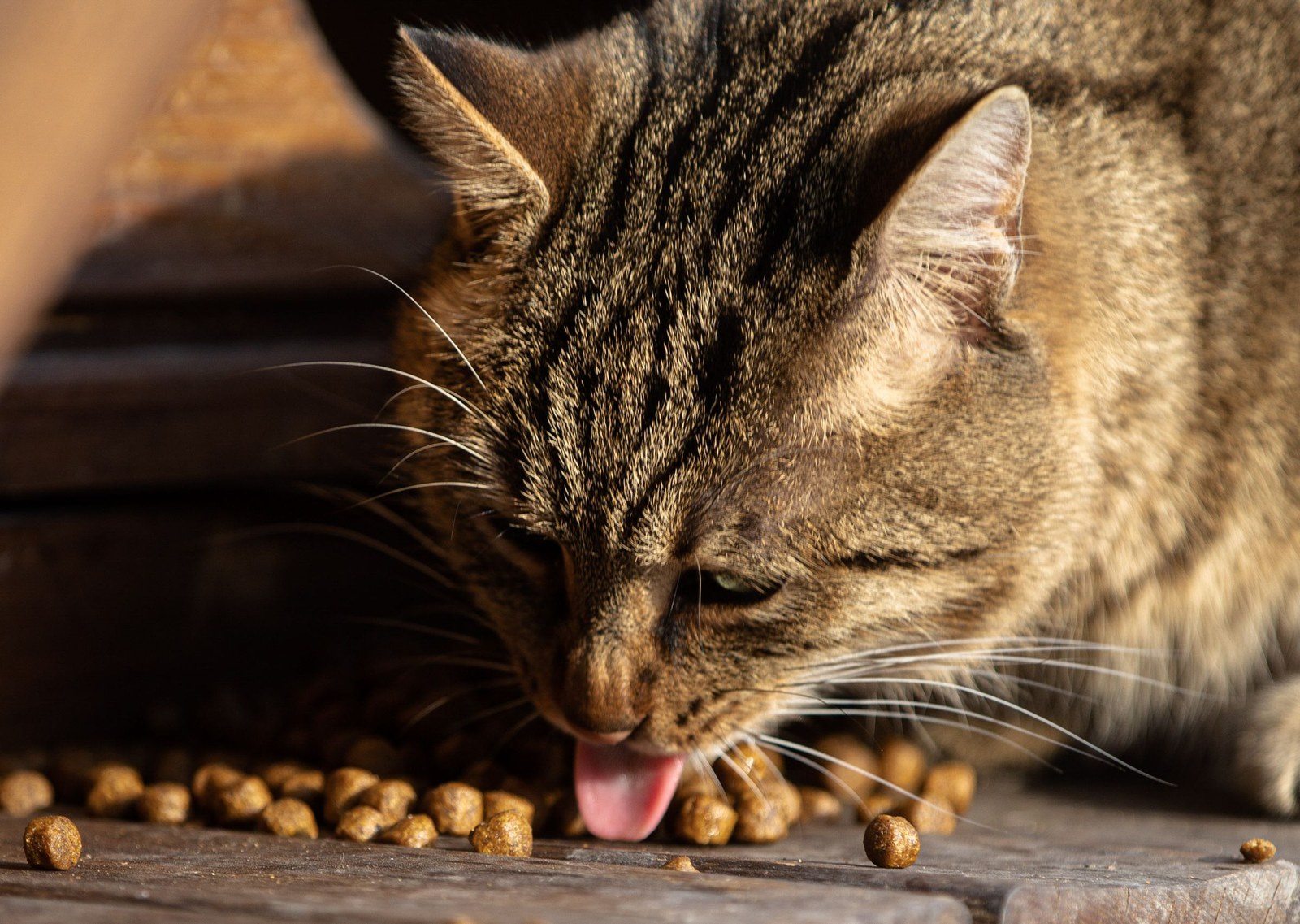
You can free-feed dry food, and a small number of naturally light, self-regulating cats stay slim doing it — but for most cats, an always-full bowl quietly leads to weight gain and hides the appetite changes that are often your earliest health warning. Measured meals are the safer default for the typical indoor cat.
Why the full bowl is so tempting — for both of you
Free-feeding is genuinely convenient. No schedules, no hungry cat weaving around your ankles at dawn, no guilt when work runs late. For a single cat in a calm home who nibbles a few kibbles at a time and walks away, it can appear to work beautifully for years.
The problem is that appearance deceives. Dry food is calorie-dense, and boredom is a powerful seasoning. Indoor cats with little to do often visit the bowl the way people open the fridge — not from hunger, but because it is there and the day is long. A few extra mouthfuls daily is all it takes to add a pound over a year, and on a ten-pound cat, a pound is a lot.
What free-feeding hides
Appetite is one of the most useful health signals a cat gives you, and grazing erases it:
- You cannot tell whether your cat ate today, yesterday, or barely at all this week.
- In multi-cat homes, one cat may be quietly eating for two while the other goes short.
- Weight gain creeps in without any single moment that looks like overeating.
- Prescription or weight-management diets become impossible to deliver accurately.
Veterinarians regularly meet cats whose illness was noticed late simply because the household genuinely could not say when the cat last ate properly. Scheduled meals turn that fog into clear information.
If you want to switch to measured meals
Move gradually rather than confiscating the bowl overnight. Start by measuring what your cat actually eats in 24 hours with the bowl out, then serve that amount split into two meals. Remove leftovers after about 30 minutes. Most cats adjust within a week or two once they learn food appears reliably at set times.
Puzzle feeders and scatter-feeding a portion of kibble can soften the transition for a cat who loved grazing — the food is still "found" through the day, but the total is measured and the hunting instinct gets real work. A timed feeder preserves the convenience for days when your schedule does not.
The exceptions worth knowing
Kittens still growing, nursing mothers, underweight rescues, and cats under a veterinarian's specific feeding plan may legitimately need food available more freely. Grazing is a tool, not a sin — it just suits far fewer adult indoor cats than it is used for. If your free-fed cat has held a healthy weight for years with regular vet checks confirming it, you may be in the lucky minority.
Sharing her profile with family
Measured feeding fails when one household member quietly refills the bowl "because she looked hungry." KinsLe's Family Sharing lets you share her profile with the relatives you choose, so the cat whose bowl draws so much debate is a familiar face to family around the home. And with Family Sharing through KinsLe, that profile access can be passed to family you select, extending who at home can open her profile beyond the person filling the bowl.