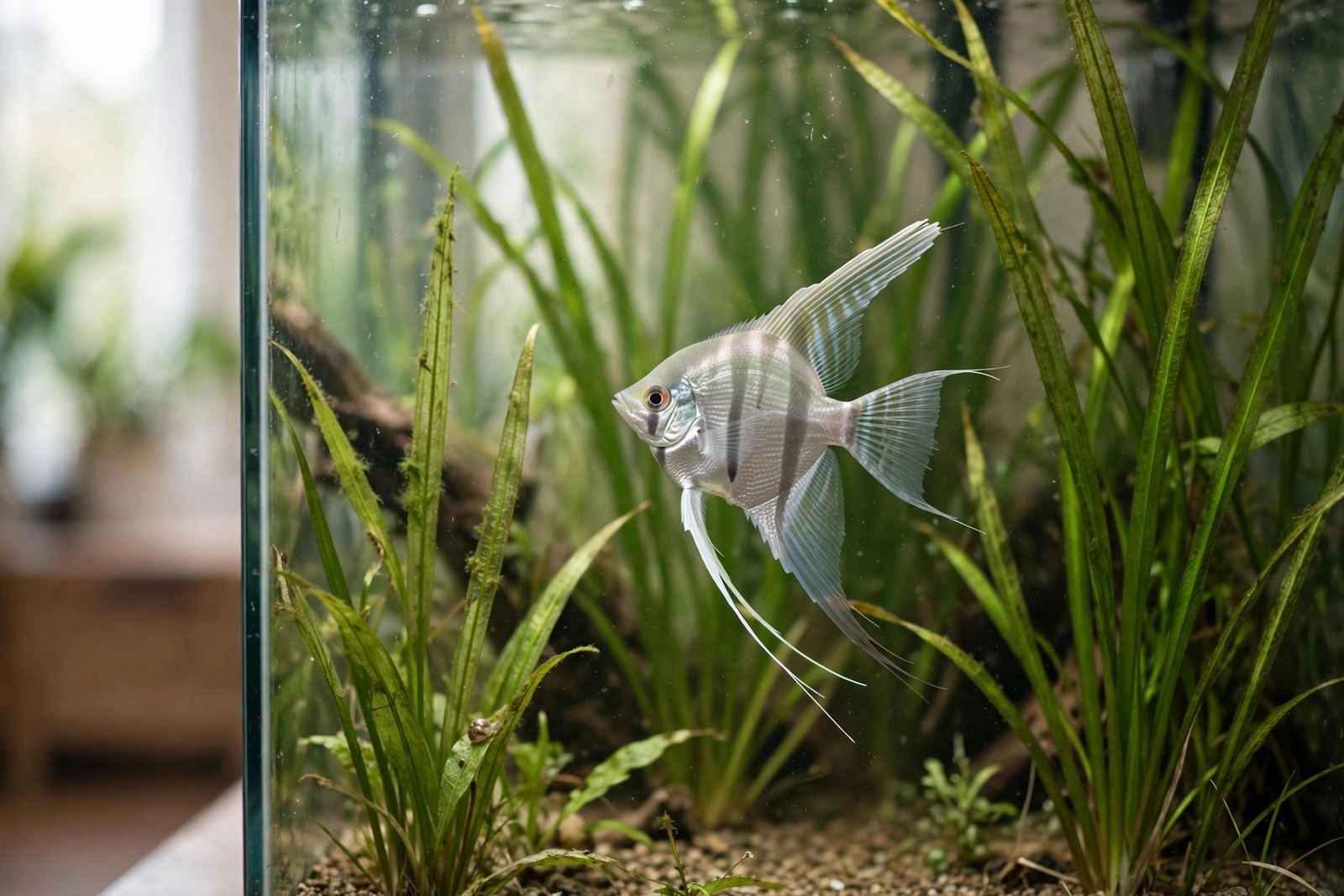
Yes, you can keep one angelfish on its own, and you do not need to add more of its kind to keep it content. Angelfish look gentle as they drift between plants, yet they are cichlids, and cichlid social life runs on rank, territory, and pairing. A single fish skips all of that politics. It settles into the tank, claims a favourite area among tall plants, and behaves as a settled adult rather than as a rival waiting for a challenge.
Why Groups and Pairs Can Turn Difficult
Juvenile angelfish sold together in a shop tank look harmonious because they are young, crowded, and unsettled. As they mature at home, the picture changes. Two fish may form a bonded pair, lay eggs on a leaf or on the filter intake, and then drive every other fish into the far corner for days. Fish that do not pair off may chase, lip-lock, and fray each other's long fins, especially in a tank without enough height or visual breaks. A group can work in a large aquarium with several fish, tall planting, and a keeper ready to rehome a bullied individual, but that is a management project, not a requirement for the welfare of one fish.
A single angelfish also avoids a hard pairing problem: shop staff cannot reliably sex young angelfish, so a hoped-for pair may turn out to be two mature females or two rival males. Buying one fish removes that gamble entirely.
What a Single Angelfish Needs Instead
Company is not the need; space and structure are. Choose a tall tank rather than a long, shallow one, because an adult angelfish grows deep-bodied, with long trailing fins that need vertical room. Plant tall plants or arrange tall wood so the fish can drift behind cover and reappear, and leave open swimming water at the front. Keep the flow gentle, since strong current pushes those tall fins around and tires the fish.
Feed a varied diet of quality flakes or small pellets with occasional frozen foods, in amounts eaten within a couple of minutes. Watch body condition along the belly: a healthy adult looks filled out without a pinched forehead or a swollen stomach. Note the foods accepted and any foods refused in your records, because appetite changes are an early sign that water quality or health needs attention.
Tankmates That Suit a Lone Angelfish
A single angelfish can share a tank; it simply does not need another angelfish. Suitable companions are calm, mid-water or bottom-dwelling fish that are too large to fit in its mouth and too peaceful to nip fins. Avoid tiny slender fish that an adult angelfish may treat as food once fully grown, and avoid known fin-nippers that cannot resist trailing fins. Add companions gradually, watch the first days closely, and be ready to separate any fish that is chased persistently or that stops feeding. One centrepiece fish with a quiet supporting cast usually gives the display owners imagine, without the spawning aggression a pair brings.
Choosing Your Fish
Look for a fish that swims level and upright, with clear eyes, smooth and untorn fins, and an active interest in food. Ask the seller how long the fish has been in the shop, where it came from, and what it is eating now, and record the arrival date, the source, and the diet in your own notes. Aquarium fish are not vaccinated, so health questions centre on feeding, behaviour, and time in the shop, not on vaccination records. Quarantine a new fish in a separate tank where you can, and observe it before it joins an established aquarium.
A lone angelfish rewards steady, simple care for years, and KinsLe Pet Passport keeps its arrival details, feeding notes, and water records in one portable packet, so any future keeper or adviser can see how this fish has actually been kept.