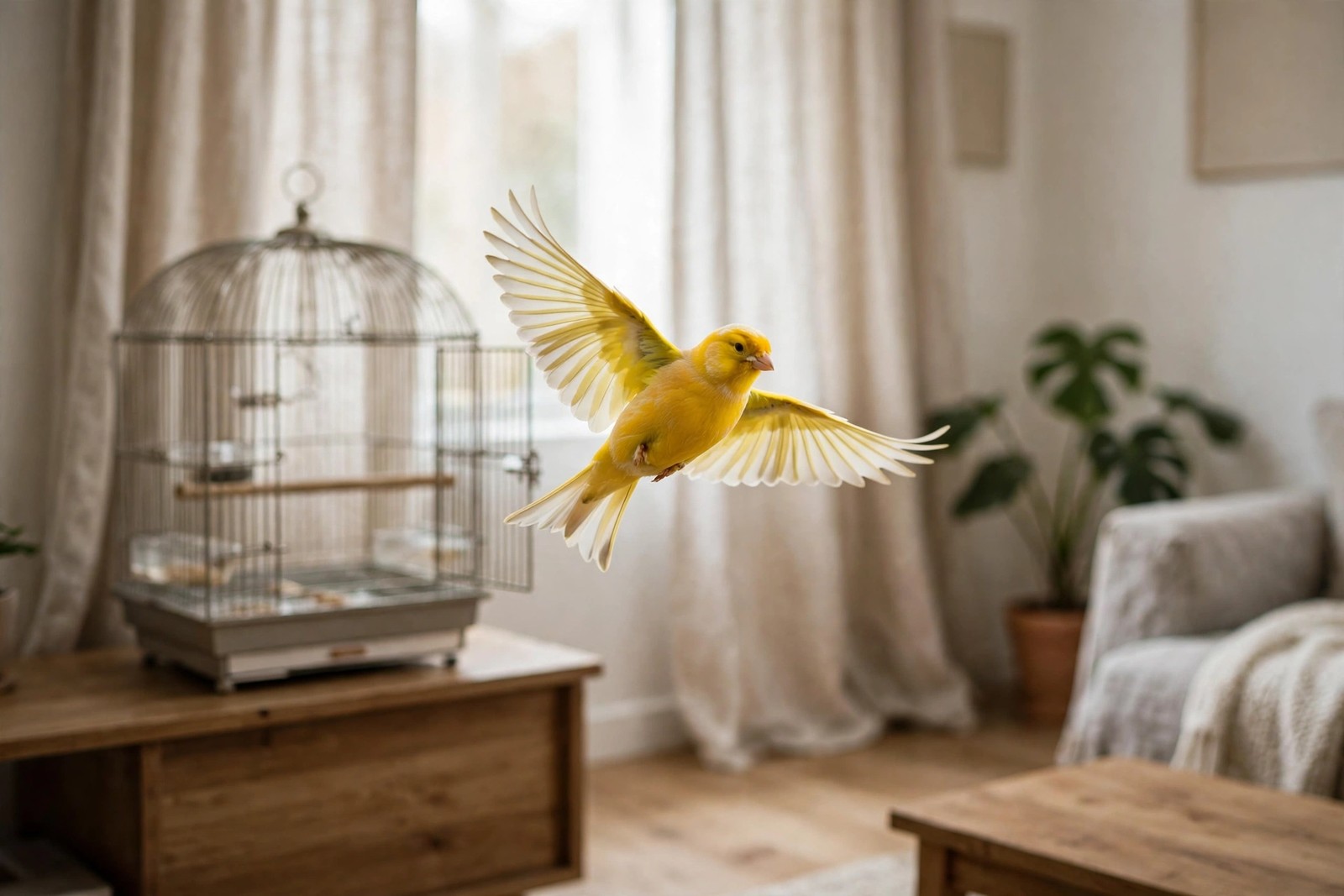
Yes, most healthy canaries enjoy flying around a room, and the exercise supports fitness, confidence, and normal flocking and exploring behaviour. A canary is small, fast, and fragile, though, so free flight is safe only in a room you have prepared on purpose, with you present from release to return. Treat the preparation as a fixed routine, not a quick glance around.
Make the Room Safe Before You Open the Cage
Work through the same checks in the same order every time. Close all windows and doors, and pull curtains or blinds across the glass so the canary does not fly into a clear pane it reads as open air. Cover large mirrors for the same reason, because a reflection looks like another bird and a route onward. Switch off ceiling fans completely and let the blades stop before the cage door opens, and turn off portable heaters, stoves, and candles. Move hot drinks, pans of water, vases, and open containers off surfaces, because a small bird that lands in deep water can become chilled and unable to climb out. Take dogs and cats out of the room and close the door behind them, even if they usually ignore the cage, because a fluttering bird at floor level can trigger a chase instinct in seconds. Finally, check for gaps behind heavy furniture and for open chimneys or vents that a startled canary could slip into.
The First Flights
Place the cage in the room where flight will happen, open the door, and step back. Let the canary come out on its own rather than reaching in and lifting it out, and expect the first flights to be short, high circuits ending on a curtain rail, a picture frame, or the top of the cage. Keep your voice low, move slowly, and avoid waving hands or nets. Offer a familiar perch or a small sprig of leafy food near the cage to encourage a landing close to home. Most canaries return to the cage by themselves when they want food, water, or rest, especially if the cage stays in exactly the same position for every session.
Start with about twenty to thirty minutes and build up gradually as the bird learns the room. A canary that has rarely flown may tire quickly and land low, so keep a soft, lightweight cloth nearby to place gently over a grounded bird if you must lift it, rather than grabbing at it with bare hands.
Supervision and Recall Realities
Canaries are not recall-trained like some larger parrots, and most will not fly to your hand on cue. Your supervision is the safety system: stay in the room, keep track of where the bird lands, and make sure nobody opens the door mid-session without warning. Tell everyone in the house that flight time is happening, because the most common accident is a second person walking in and leaving the door open behind them.
End the session by dimming excitement rather than by chasing. Put fresh food and water in the cage, sit quietly, and give the bird time to go home on its own. Chasing a tired canary around furniture teaches it that release ends in panic, and the next session starts harder.
When to Skip Flight
Skip free flight if the canary is moulting heavily and unusually subdued, is recovering from illness, has clipped or damaged flight feathers, or if the only available room cannot be closed off from pets and cooking. A young canary new to your home needs a week or two to learn its cage as home base before its first release, so it has somewhere it actively wants to return to.
A written room check that the whole household follows, with one person owning each step, stops the one forgotten fan or open door that causes an accident, and KinsLe Care Teams lets you assign that check, the supervised session, and the cage refresh so nothing rests on memory alone.