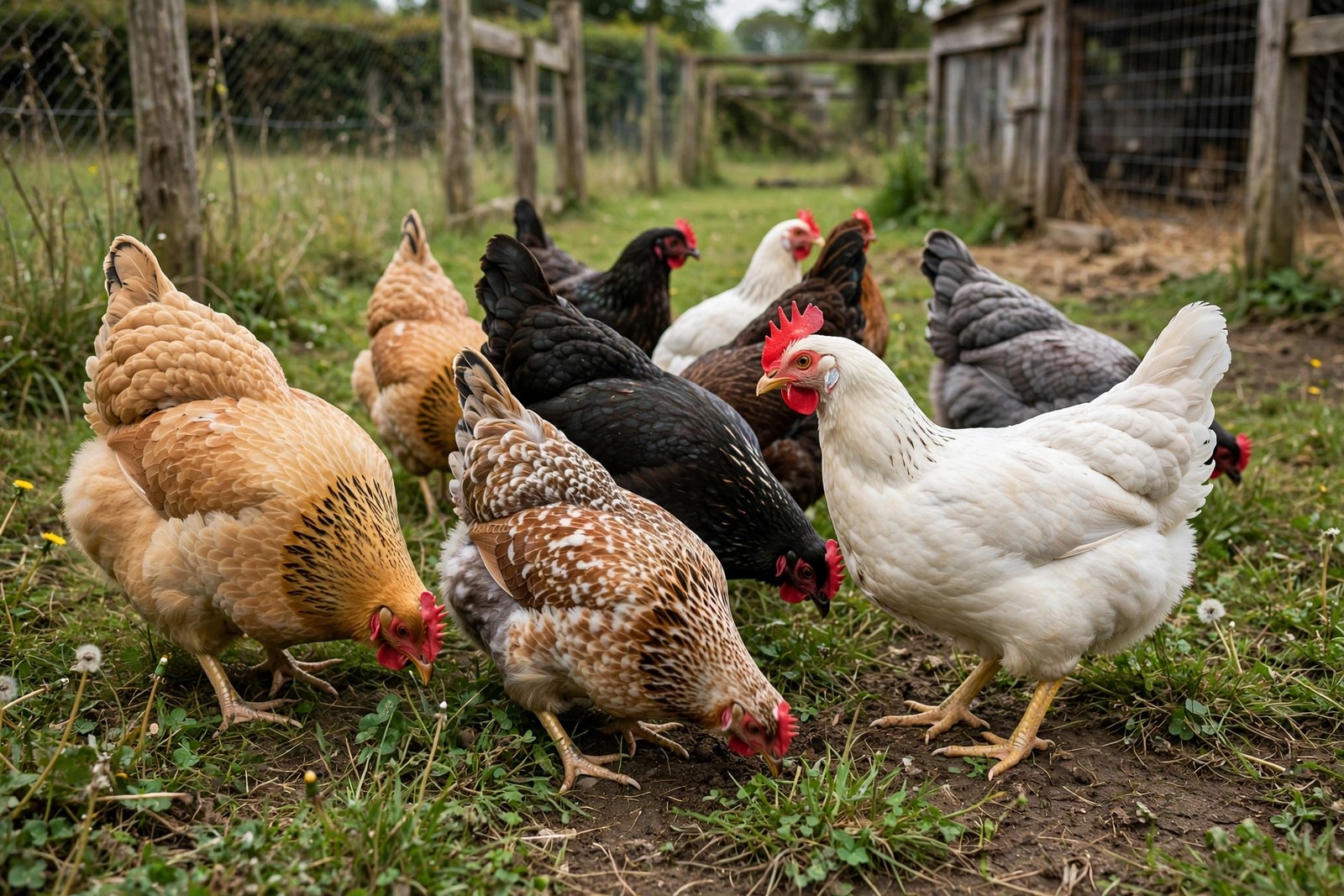
Yes. A mixed flock is the ordinary backyard flock, and a run holding a fluffy Orpington, a brisk Leghorn, and a couple of hybrids is a common and happy sight. Breeds differ in size, confidence, laying rate, and looks, but chickens organise themselves by pecking order, not by breed loyalty. Mixing goes wrong for predictable reasons, mostly size gaps, temperament clashes, and rushed introductions, and all three are manageable once you know them.
Match size and temperament first
Large, confident breeds can bully small ones without meaning harm, simply by owning the feeder. Keep bantams with other small or famously gentle birds rather than with big, assertive hens, and be extra careful mixing very young or very small newcomers into an established group of adults. Docile heavy breeds such as Orpingtons and Sussex usually slot in almost anywhere. Flightier Mediterranean breeds keep themselves apart and rarely bully, but they can be the birds pecked by bolder flockmates if space is tight.
Crested breeds deserve a special note. Polish and similar breeds carry a fountain of head feathers that limits their vision, so they startle easily, miss warnings from other hens, and attract curious pecking at the crest itself, which can turn bloody. Many keepers house crested birds together, trim crests carefully so the birds can see, or skip crested breeds in a busy mixed run. Feather-footed breeds also suffer in muddy runs, where their foot feathers mat and chill, so ground conditions count as a mixing factor too.
Introduce newcomers properly
Never simply drop new hens into the coop at midday. Quarantine newcomers away from the flock for a couple of weeks first to watch for illness, lice, and mites. Then house them where the flocks can see and hear each other without touching, in a pen inside or beside the run, for several days. Mix them at dusk, when birds are settling to roost and are at their calmest, and be present early the next morning when the real negotiations happen. Some chasing, squawking, and brief scuffles are normal pecking-order work. Sustained attacks, a bird cornered and pecked, or any drawn blood means separate them and slow the process down; a wounded bird must come out until healed, since chickens peck relentlessly at blood.
Numbers help: adding two or three birds at once spreads the attention, while a single newcomer absorbs all of it alone.
Space and stations settle most disputes
Most mixed-flock friction is competition in disguise. Give more than one feeder and more than one drinker, set well apart, so a low-ranking hen can always eat somewhere. Provide perches at varied heights, dust-bathing spots, and visual breaks such as straw bales or pallets that let a hen step out of sight. Generous run space per bird matters more in a mixed flock than a single-breed one, because temperaments differ in how much crowding they tolerate. Broody hens, whatever their breed, turn fierce for a few weeks and are best given their own corner until the mood passes.
Mixed flocks also mix laying patterns: a Leghorn may lay through seasons when a heavy breed pauses, which many keepers count as a quiet benefit of variety.
A flock watched daily settles faster, because small injuries and bullying get caught on day one. In KinsLe, Care Teams lets you split those daily flock checks, feeds, and egg rounds between keepers and timestamp each completed job, so a newly mixed flock gets consistent eyes on it until the pecking order is calm and proven.