
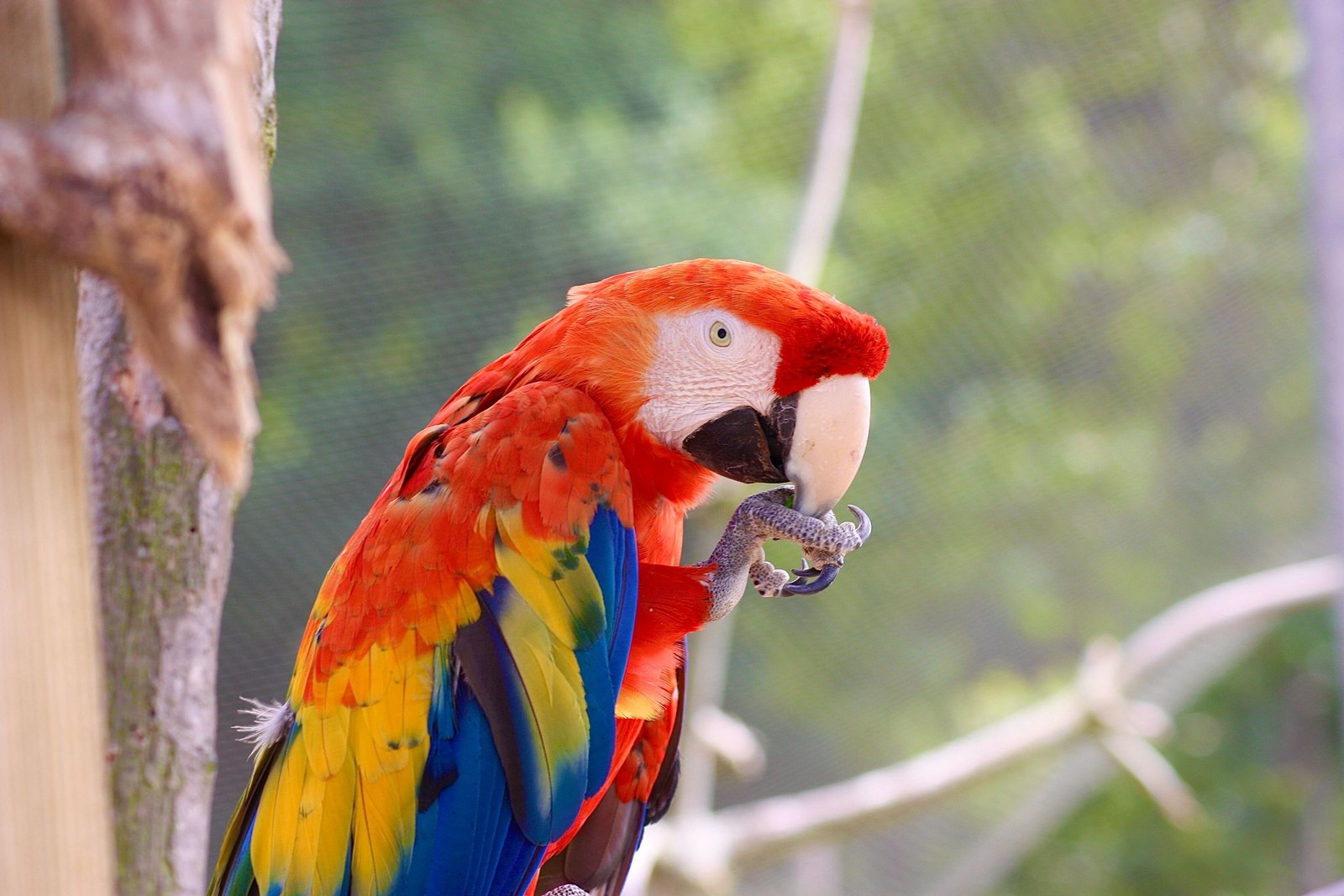
You can share a little of your breakfast with your parrot — a plain bite of cooked egg, a spoonful of unsweetened oatmeal, or a piece of fruit makes a safe, sociable treat. What you must leave off the shared plate is the seasoning: butter, salt, jam, syrup, coffee, and anything containing chocolate can all harm a bird.
Breakfast Foods That Are Fine to Share
Plain cooked egg is the breakfast star — scrambled without butter or salt, or a bit of boiled egg, shell-on for large parrots to crack for fun. Unsweetened oatmeal cooked in water is another favorite, served warm, never hot. A small corner of plain whole-grain toast, dry, goes down well. Cooked sweet potato, a blueberry or two, a slice of banana, or a strip of melon all make good shared bites. For many parrots the ritual matters as much as the menu: eating when the flock eats is deep social wiring, and a safe shared plate feeds that instinct properly.
Foods to Keep on Your Side of the Table
- Coffee and tea — caffeine is dangerous for birds, full stop
- Anything chocolate — cocoa, chocolate spreads, and mocha flavors included
- Buttered, salted, or fried items — bacon, sausage, and buttery eggs carry fat and salt a bird handles poorly
- Avocado — the avocado on your toast is toxic to parrots
- Onion-heavy omelets and sugary cereals or jam — skip both
If a breakfast food is heavily seasoned, sweetened, or fried, it belongs to the humans alone.
Portion Sense for a Small Body
Sharing is bonding, not a meal. Keep your parrot's breakfast bites genuinely small — a teaspoon-sized taste for a small conure, a tablespoon or so for a large macaw — and count them within the day's fresh food and treats, not on top of them. A parrot who fills up at the breakfast table may skip the vegetables and pellets that carry the serious nutrition later. Set the portion on a small separate plate; it makes the limit visible to you and the ritual clear to the bird.
Table Manners and Hygiene
Serve your parrot from its own little dish rather than your plate, and never from your mouth — human saliva carries bacteria birds do not handle well. Wash hands before handling shared food, keep the bird off the cooking area where pans are hot, and clear away leftovers rather than letting them sit and spoil at room temperature. Supervise the whole visit; breakfast tables collect hazards, from hot drinks to butter knives, faster than any other surface in the house.
Write Down the Rules for Everyone Else
Your parrot will absolutely test whether the rules change when a partner, child, or guest is pouring the coffee. KinsLe's Pet Passport keeps your bird's safe and unsafe foods written down in its records packet — alongside vaccines, medications, allergies, and documents — ready to share with family, vets, and sitters, so the breakfast rules hold no matter who is hosting. One written list beats a dozen verbal warnings. Pet Passport on KinsLe stores your parrot's breakfast do-and-don't list alongside allergy notes, so guests see exactly which bites stay off the shared plate.