
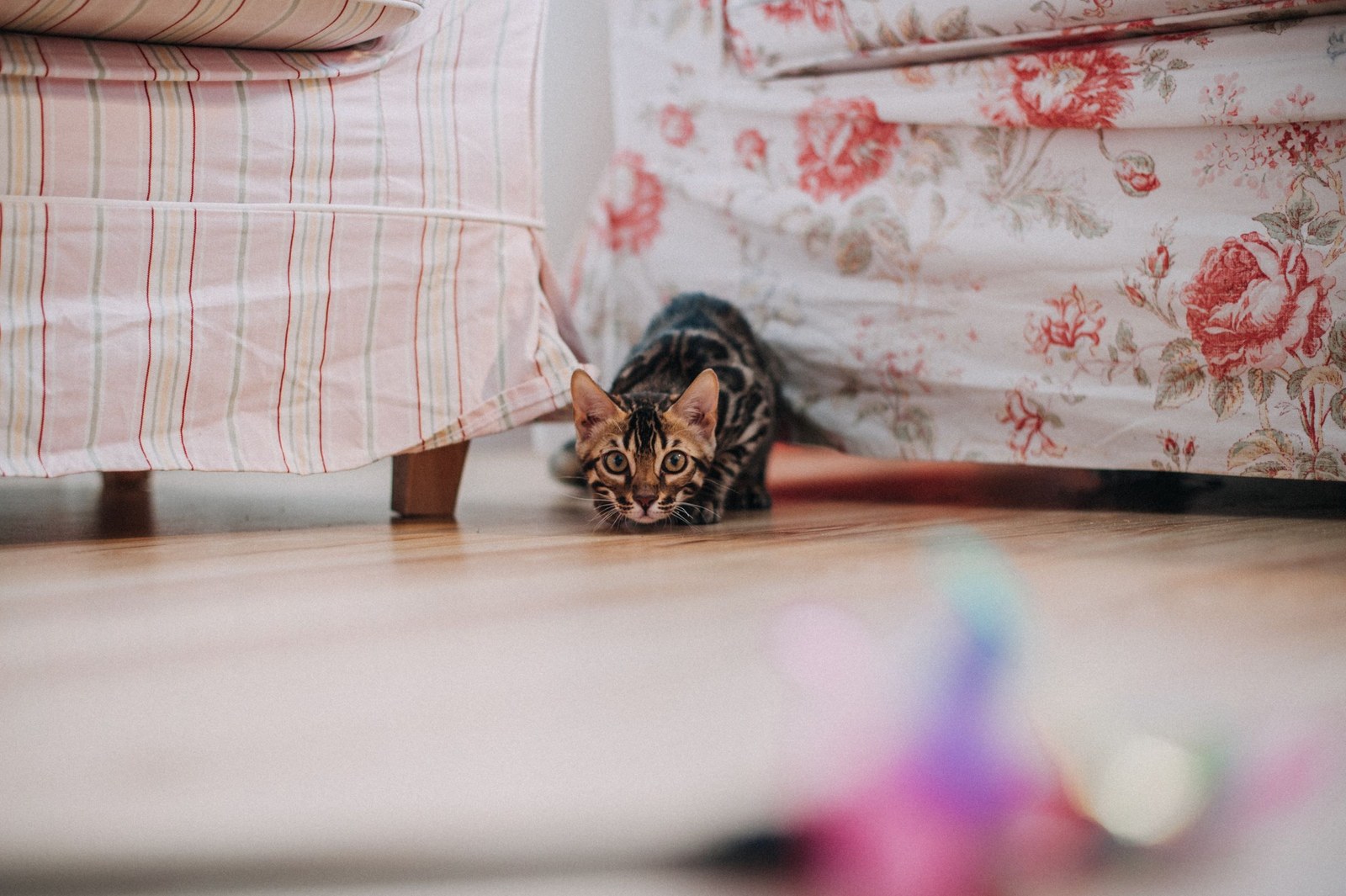
You can usually nudge your cat's sleep schedule closer to yours by reshaping when she is awake, fed, and played with during the day and evening. You will not turn a crepuscular animal into a strict nine-to-fiver, but most indoor cats will shift their biggest active window later in the evening and sleep more solidly overnight within a couple of weeks of a consistent new rhythm.
How a Cat's Clock Actually Works
Cats sleep 12 to 16 hours a day in short naps, conserving energy for bursts of hunting activity at dawn and dusk. An indoor cat with nothing scheduled will often sync her longest nap to your workday — sleeping while you are out — then be wide awake and social when you want to wind down, and again before sunrise.
That means the problem is rarely nighttime energy on its own. It is usually daytime under-stimulation. A cat who has napped from breakfast until dinner has a full battery at 10 p.m., no matter how much you hope she will settle.
Build Wakefulness Into the Day
Spread small doses of activity across the hours you want her awake. Short sessions beat one marathon:
- A five-minute wand or laser-free chase game in the morning before you leave, followed by breakfast in a puzzle feeder that takes 20 minutes to empty.
- Window time during the day — a perch by a bird feeder, a catio, or even a cardboard box rotated to a new spot gives her reasons to stay alert.
- A brief training session in the afternoon or early evening. Cats learn quickly with treats: come when called, high-five, or hop onto a stool on cue.
- If you work from home, a midday play break; if not, a timed feeder that drops a tiny snack at noon can break up the mega-nap.
If another household member is home at different hours, divide these moments rather than doubling them, so stimulation is spread out instead of clumped.
Anchor the Night With Play, Then Dinner
The most powerful anchor is the last two hours of the day. About 90 minutes before your bedtime, run a proper play session — 10 to 15 minutes that ends with a clear catch. Then serve dinner. Hunt, catch, eat, groom, sleep is the sequence cats follow in the wild, and a full stomach after exertion makes that post-meal groom-and-doze much more likely to land on your schedule.
Keep the anchor at the same time on weekends too. Sleeping in and feeding two hours late on Saturday undoes five weekdays of progress surprisingly fast. Lights, household noise, and your own routine are cues as well, so dimming the home and ending screen-side play at a similar hour helps signal night.
Be Patient With the Transition
Shift in increments. If your cat currently eats dinner at 5 p.m. and erupts at 3 a.m., move play and dinner 20 to 30 minutes later every few days rather than jumping straight to 9 p.m. Keep a simple note of wake-up times for a week — many owners find the dawn wake-up has quietly moved from 3:30 to 5:30 without them noticing day to day.
Kittens and seniors adjust more slowly, and a cat who has kept the same schedule for years will need more repetition. If she is suddenly unable to settle at night despite a solid routine, especially with appetite or litter box changes, ask your veterinarian to rule out pain or illness before pushing more training.
Keep the Rhythm With KinsLe Care Teams
A schedule only works if everyone follows it, and that is where KinsLe Care Teams help: you can assign the morning puzzle feeder, the afternoon training treat, and the evening play-and-dinner anchor to different family members, with timestamped completions so you can see the routine actually happened. If a session was missed, the day can be adjusted instead of guessed at. Care Teams on KinsLe let each person claim the morning puzzle feeder or the evening play-and-dinner anchor, with completion times visible when bedtimes drift.