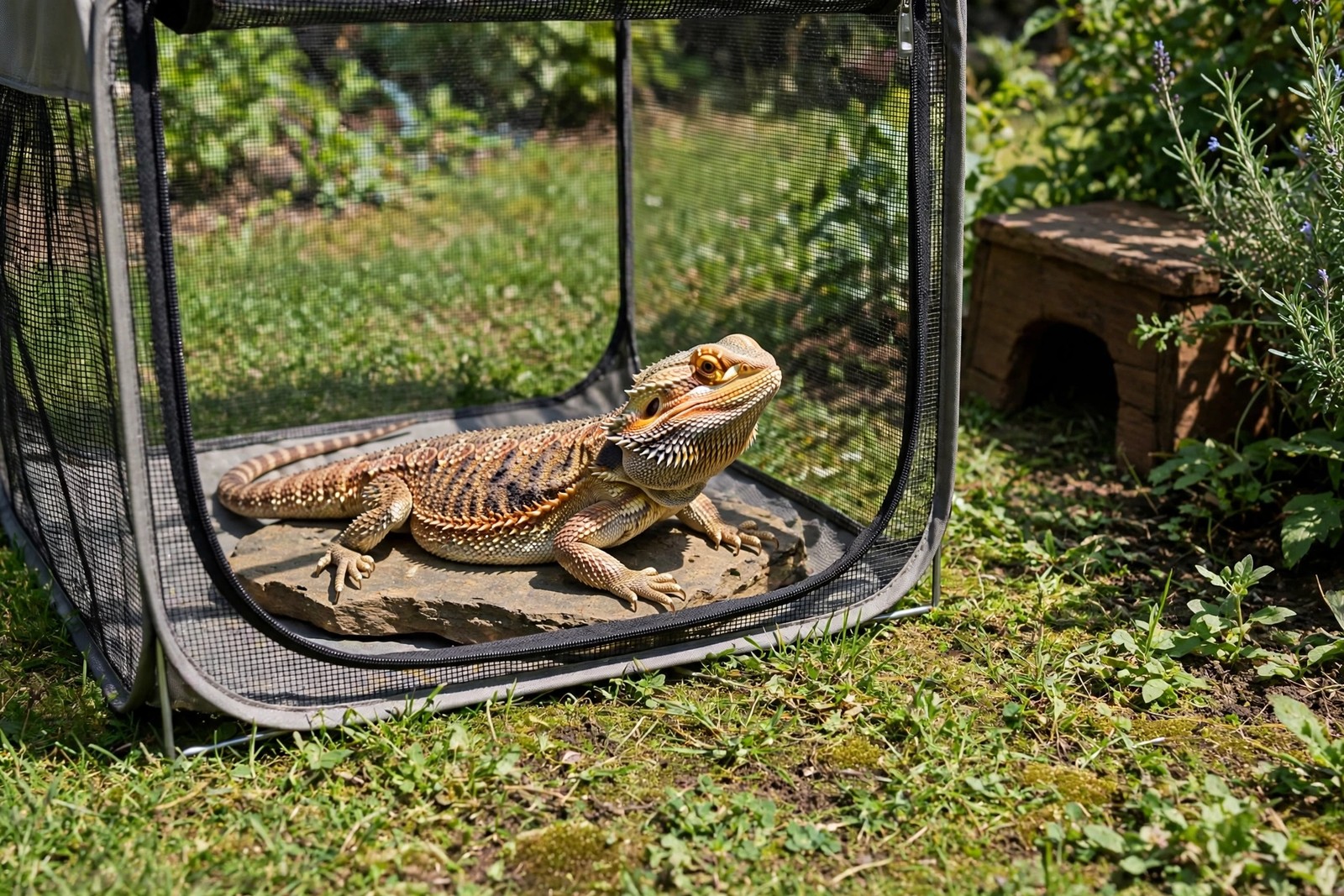
Yes, and many bearded dragons clearly relish it — real sun, real grass texture, and new sights to watch. A garden outing is enrichment, not a substitute for a properly lit enclosure, and it only works when you treat a fast, camouflaged lizard as exactly that: never a pet you set down and turn away from.
Check the weather and the ground first
Go out on a warm, settled day when the ground itself feels warm, not on a cool morning when the air temperature flatters a chilly lawn. Bearded dragons regulate body temperature by moving between warm and cool spots, so the outing spot needs both: full sun to bask in and real shade — a hide, a box on its side, or the shadow of a chair — within a few steps. Avoid very hot midday concrete and paving, which can overheat a small body and burn feet. If your dragon is gaping repeatedly, flattening, darkening in colour, or scrambling to escape, that is information, not stubbornness: bring them in.
Skip any lawn treated with pesticides, weedkiller, or fertiliser, and do not guess about a neighbour's spraying or a landlord's lawn service — if you cannot be sure the grass is untreated, use a clean pen on an untreated patio instead. Never let a dragon graze freely on garden plants or catch wild insects outside; plants may be toxic and wild insects can carry parasites or pesticide residue.
Containment is the whole job
Stay within arm's reach for the entire outing. A bearded dragon who is placid indoors can sprint, flatten, and slip under a fence or into dense planting in seconds when a bird shadow passes overhead. A secure playpen with solid or fine-mesh sides and a covered top is the safest setup, and it also blocks swooping birds and curious cats. A well-fitted reptile harness, fitted snugly before you go out and tested indoors first, suits calmer adults for short lawn sits, but it is a backup, not a lead to walk them on, and a panicked dragon can twist out of a loose one.
Keep dogs, cats, and young children out of the pen area, keep sessions short — 20 to 30 relaxed minutes is plenty to start — and do not take a dragon who is ill, recently imported, in the middle of a difficult shed, or already stressed out for a change of scene.
Coming back in
Offer water after the outing, watch appetite and droppings over the next day, and wash your hands after handling, as you would after any reptile session. Check between toes and along the belly for grass seeds, small stones, or anything picked up outside before they go back into the enclosure.
Even with a pen and your full attention, an escape plan is part of responsible garden time, and KinsLe's Lost Pet Alert System is built for that worst minute: you can send your dragon's profile and last known location to nearby members at once, while the search is still in the garden and the neighbouring fences, not hours later.