
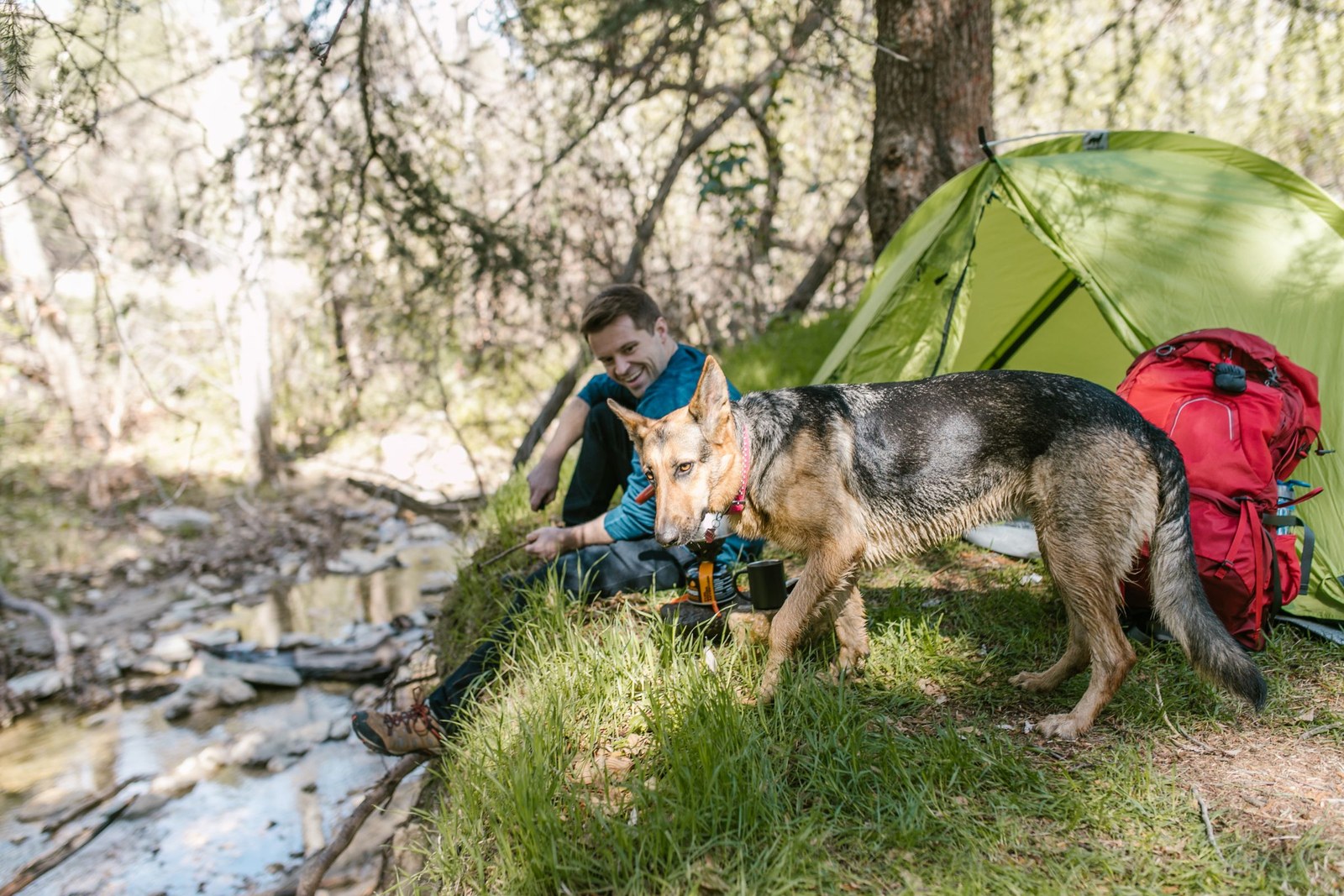
Yes, a well-prepared dog makes a wonderful camping companion — provided the campground allows dogs, your dog stays leashed or on a secure tie-out, and you plan for the unglamorous parts: water, ticks, campfire safety, and a dog who has never smelled a forest at night before. A little preparation turns a dog's first camping trip into the highlight of their year.
Before you book
Not every site welcomes dogs, and some welcome them only in certain loops, seasons, or accommodation types, so confirm the rules before reserving — including leash requirements, quiet hours enforcement, and whether dogs may be left unattended at a pitch (usually not, and for good reason). Check whether nearby trails and beaches share the same rules, since a dog-friendly campsite beside dog-banned hiking trails makes for a frustrating trip. If your dog is reactive, nervous around strangers, or a committed dawn barker, choose a spacious, quieter site rather than a packed holiday park for the first attempt.
Campsite safety basics
At the site, your dog stays on a leash or a tie-out long enough to relax but too short to reach the fire, the road, or the neighboring tent. Anchor tie-outs to something immovable, never to a camping chair your dog can drag triumphantly through the pitch. Other non-negotiables:
- Fire discipline: dogs investigate smells, and a wagging tail passes through flame height. Keep a clear no-dog zone around the fire pit and never leave a dog tethered near it.
- Food storage: campsite food attracts wildlife; store your dog's food sealed exactly like your own, never in the tent.
- Water: bring more drinking water than you calculate — dogs pant, spill, and splash. Do not let them drink from stagnant ponds, which can carry harmful bacteria and algae.
- Warmth and bedding: ground cold seeps through a tent floor at night. A blanket or insulated pad of their own matters, especially for lean, short-coated, and older dogs.
Evenings, wildlife, and ticks
Dusk is when campsites get interesting: unfamiliar animals moving, cooking smells everywhere, strange sounds carrying. Keep your dog close and settled rather than free to investigate. Each evening, run a proper tick check — ears, armpits, between the toes, under the collar — especially after walks through long grass or brush, and remove any tick promptly with a tick tool. Confirm your dog's parasite prevention is current before the trip, and ask your vet if the region you are visiting carries specific risks worth extra precautions.
Pack a small dog first-aid kit too: bandage wrap, antiseptic, tweezers, any regular medication, and your vet's phone number, plus the number of the nearest emergency vet to the campsite, saved before you lose signal.
ID and the worst-case plan
Before you leave home, check that your dog's collar ID and profile details show your current mobile number — the number you can be reached on at a campsite, not a landline at an empty house. If a dog slips away among the trees, KinsLe's Lost Pet Alert System can help in a practical way: a finder who spots your dog can message you directly through the alert — out here, a fast word from someone local beats a long drive back to search. Every dog also has a unique QR ID on their KinsLe profile, printable for their collar. When your dog is truly missing from a campsite, turn to the Lost Pet Alert System in KinsLe: it costs nothing inside each profile, displays the dog on KinsLe's map, and lets a finder reach you with a direct message.