
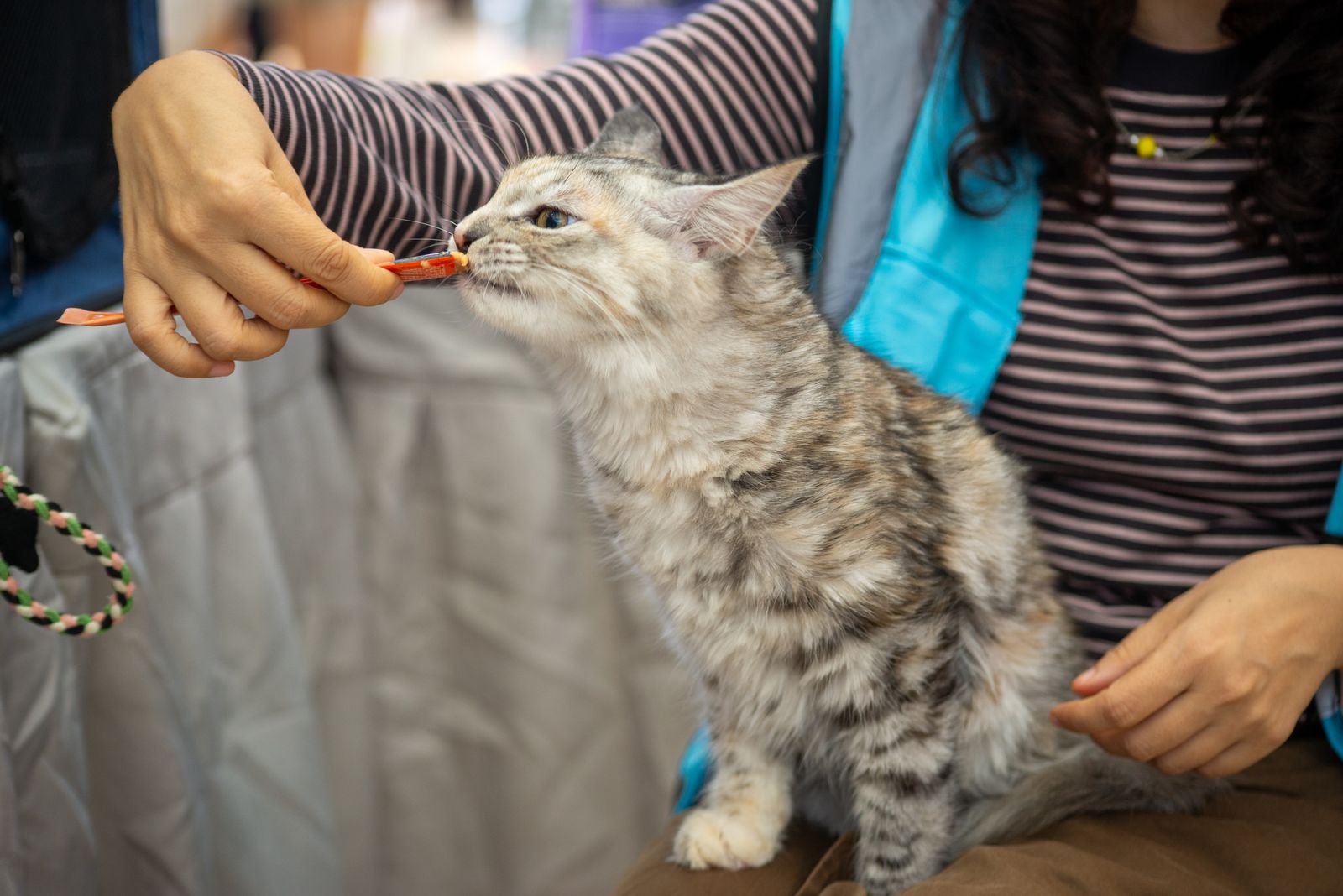
Yes — you absolutely can train a cat with treats, much like a dog, as long as you adapt to how cats learn: tiny, highly tasty treats delivered the instant your cat does what you asked, in very short sessions, with no pressure. Coming when called, using a scratching post, entering a carrier willingly, and even high-fives are all well within a healthy cat's abilities.
How Cat Training Differs From Dog Training
Dogs have been bred to watch us and work for our approval; cats cooperate when the deal is clear and worthwhile. That means timing and value matter more. The treat must land within a second or two of the behaviour, or your cat won't connect them. And the reward must genuinely excite her — for many cats, a pea-sized bit of something smelly and special beats a standard biscuit she gets anyway.
Mindset matters too. A dog may drill a behaviour twenty times happily; a cat is usually done after a handful of repetitions and will walk away mid-session when she's had enough. Walking away is information, not disobedience. End on a success, keep the whole thing to two to five minutes, and train when she's alert and a little hungry — before a meal works beautifully — rather than sleepy or just fed.
A Simple Starter Behaviour: Come When Called
Start in one quiet room. Say your cat's name and the cue once, happily, and immediately offer the treat when she looks or steps toward you. Repeat a few times. Over sessions, increase distance, then practise from another room, always paying promptly. Cats trained this way often learn a remarkably reliable recall — genuinely useful if she ever slips outdoors.
Other rewarding starter targets:
- Touching her nose to your finger or a target stick — the foundation for guiding her onto scales, into carriers, and onto furniture you choose.
- Going to a mat or bed on cue, which becomes a calm station for guests and mealtimes.
- Scratching the post: reward any interest in the post, then scratching itself, especially right after naps when cats naturally want to scratch.
Treat Maths: Keep Training Inside the Day's Food
Training treats are still food. Use very small pieces — cats are motivated by frequency and flavour more than size, and a treat the size of a pea delivered ten times beats one large treat delivered once. Count training treats within the day's overall intake, and trim meal portions slightly on heavy training days if you're working on many repetitions.
Troubleshooting When She Won't Cooperate
If your cat ignores treats, the treat isn't valuable enough, she's too full, or the environment is too distracting. Try a different texture — crunchy versus soft versus lickable pastes are very different propositions to a cat. If she won't take food from your hand, toss it at her feet or offer it on a spoon.
Kimmy Helps You Keep Little Sessions Going
Training sticks when it's a habit, and habits need prompts. Kimmy, the built-in AI assistant in KinsLe, can give you nudges to keep short daily training-and-treat sessions going — a reminder before dinner, when your cat is alert and motivated, turns good intentions into a routine. A few minutes a day compounds into a cat who comes when called and walks into her carrier, which is a remarkable return on a handful of treats. Owners practicing recall in a quiet room can pose follow-up questions about that cue to the Kimmy assistant inside KinsLe and receive answers assembled from KinsLe Answers entries.