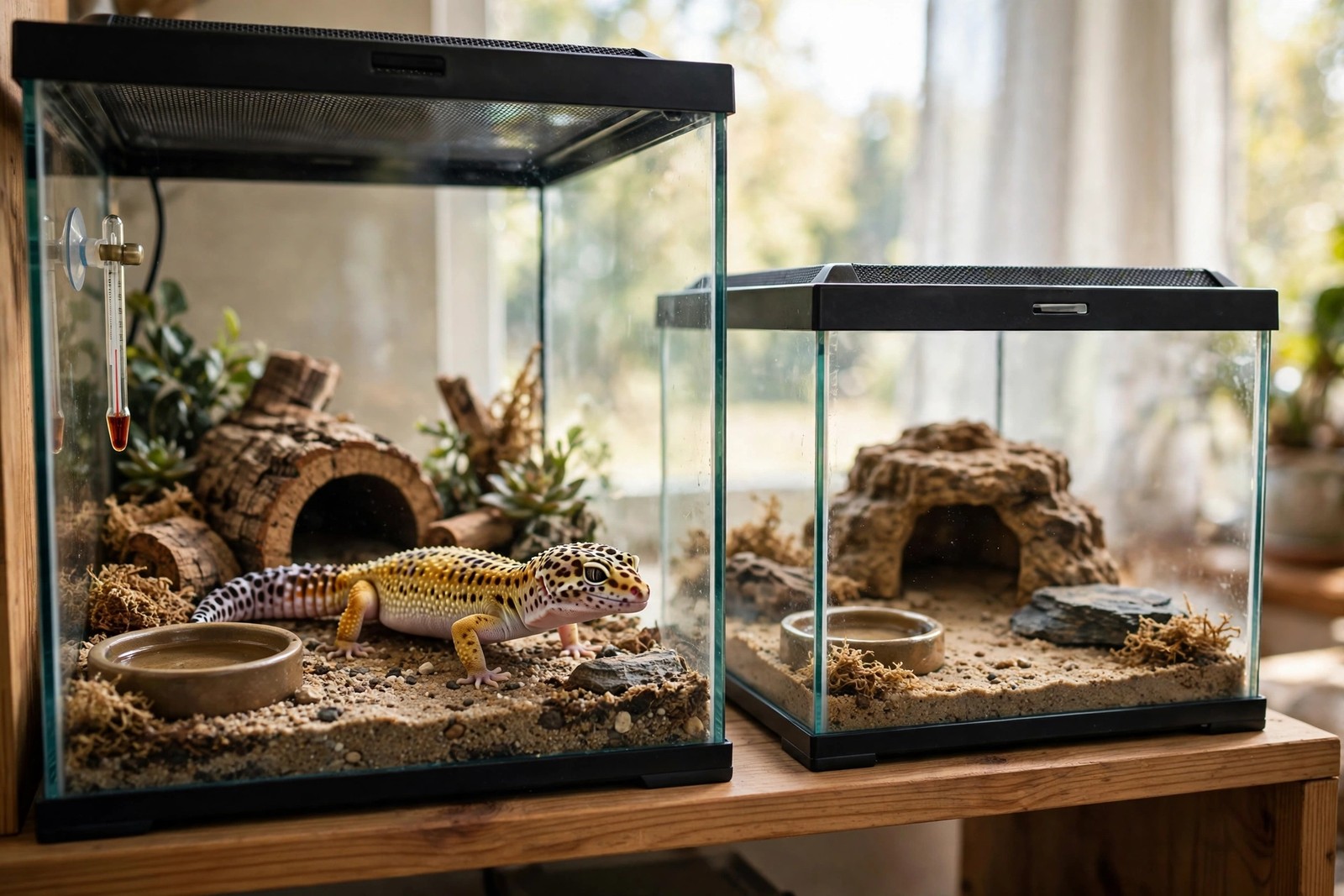
Leopard geckos tolerate neighbours in a shop tank or a breeder's rack, and photographs of two geckos resting together look peaceful. In a home enclosure kept for years, cohabitation is a gamble with a predictable loser. These geckos do not form bonds, do not groom or comfort each other, and gain nothing social from a tankmate. What looks like cuddling is usually competition for the single warmest, safest spot, with one animal lying on top of the other to claim it.
How Bullying Hides in Plain Sight
Leopard gecko conflict is mostly silent. The dominant animal takes the warm hide, eats first and fastest, and may lick, tail-wave, or body-block the other away from insects. The subordinate gecko eats less, sheds poorly, loses the fat stored in its tail, and spends its time in the cool or humid hide regardless of temperature. Because both animals are in the same tank, owners often assume equal feeding while one gecko steadily thins. Bite wounds around the head, toes, and tail, and a dropped tail after a scuffle, are the late, obvious stages of a problem that weight checks would have caught months earlier. Weighing each gecko monthly, impossible to attribute accurately in a shared tank, is one of the strongest practical arguments for separate housing.
Why Every Sex Combination Fails
Two males are the clearest no: mature males fight for territory and can inflict serious wounds. A male housed with a female will attempt to breed repeatedly, stressing and exhausting her, reducing her feeding, and risking egg production that depletes her calcium even when eggs are infertile or unwanted. Two females are the combination most often defended online, and some pairs coexist for a long time, but experienced keepers report sudden aggression after months of calm, with no change an owner can identify or prevent. Juveniles grouped briefly by sellers must be separated as they grow, and size differences make matters worse, since a larger gecko can injure or even attempt to eat a much smaller one.
The Separate Setup Each Gecko Deserves
Solo housing is not expensive duplication so much as the actual cost of a second gecko: its own enclosure, thermostat-controlled warm hide, cool and humid hides, water dish, and feeding routine where every insect offered and eaten is known. Separate feeding also lets you dust supplements accurately and notice the first missed meals, which are often the earliest sign of illness, parasites, or temperatures drifting. If you enjoy watching several geckos, enclosures can sit in the same room or on the same shelving, giving you the collection without the contact; visual barriers between glass tanks also reduce stress for males who can see a rival.
If Your Geckos Are Already Together
Plan separation now rather than after an injury. Set up the second enclosure fully, temperatures stable, before moving the quieter or thinner gecko, and monitor its weight and appetite over the following weeks, since recovery in feeding is often quick once competition is gone. Any wounds, retained shed from stress, or continued refusal to eat warrants a reptile vet. For a household where more than one person keeps geckos, KinsLe Family Sharing lets you grant access to each animal's profile individually, so a relative can open the right gecko's page without mixing the two up.