
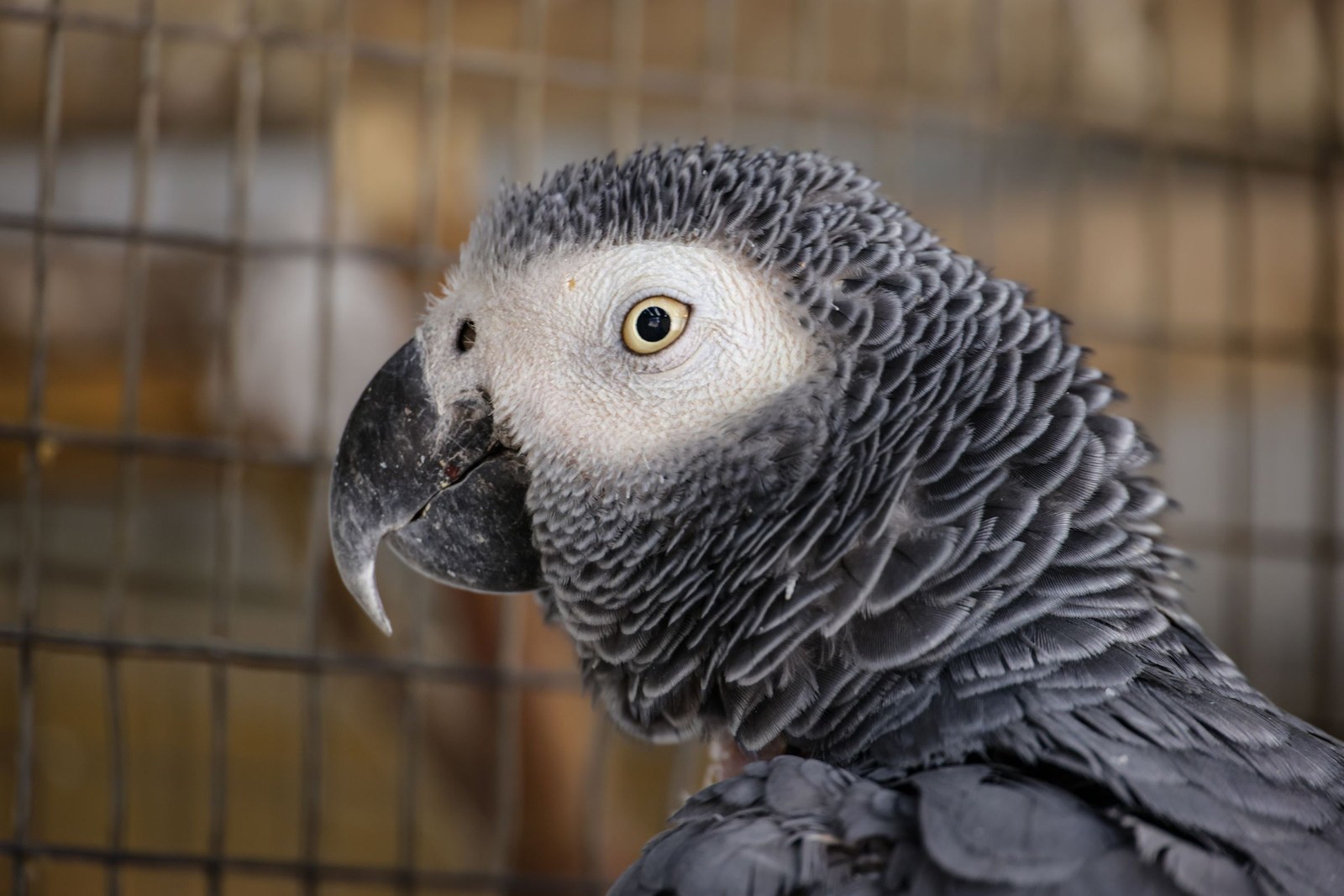
It is safest to keep your bird physically separated from cats and dogs during out-of-cage time — even the friendly ones. A sudden pounce, a playful paw, or a snap triggered by a flutter can seriously injure a bird in seconds, and the stress of being watched by a predator is hard on a bird even when nothing touches it. Enjoy flight time in a closed room with other pets settled elsewhere.
Instinct Does Not Care How Sweet Your Pet Is
This is not a judgment on your cat or dog's character. Prey drive is a reflex, not a decision: a flutter of wings triggers a chase-and-grab sequence in many dogs and nearly all cats before any "training" has time to intervene. A large, gentle dog can break a small bird's bones with one paw swipe meant as play, and a bird on the floor is at risk from a simple excited bounce.
Cats carry an added medical danger. Bacteria in cat saliva and claws can cause serious infection in birds from even a tiny puncture that you might not find under feathers. Any bird caught by a cat — even one that "looks fine" — needs prompt avian veterinary attention. That single fact is reason enough to treat cat contact as an emergency risk rather than a photo opportunity.
Stress Is a Harm Too
Even behind perfect behavior, a bird being stared at by a cat is living through a predator encounter. Chronic stress shows up as feather damage, appetite changes, screaming, or a bird that will not relax and play out of the cage. Some confident larger parrots seem unbothered, and individual animals vary — but the bird cannot leave the situation, and it only takes one bad second across years of good ones for the story to end badly. The risk calculation simply never favors mixing them loose together.
The Separation Routine That Works
Build a simple system your household can repeat without thinking:
- Bird time happens in one room with a door that closes and latches.
- Cats and dogs are settled first — fed, exercised, given a chew or a sunny spot — in another part of the home.
- One person is the bird supervisor; another, if available, is in charge of the other pets and the door.
- The door stays closed for the whole session; anyone entering calls out first and opens it only when the bird is on a perch or back in its cage.
- Sessions end with the bird caged before the other pets are let back in.
A solid cage still matters when pets share a home outside flight time: it should be sturdy enough that a cat cannot topple it or reach through the bars, and positioned where a dog cannot jump up at it.
What About "They Grew Up Together" Stories?
You will see videos of parrots riding on dogs and cats ignoring budgies. Some of those animals truly are unusually calm, and you are seeing the best thirty seconds of a long relationship — never the near misses. Your responsibility is to your bird's whole lifetime of odds, not to a highlight reel. If you want your pets to know each other, let them do it safely: the bird in its secure cage, the dog on a lead at a distance, rewarded for calm disinterest. Familiarity without access gives you the bonding moment without the risk.
Coordinating a Multi-Pet Household
Separation is a team sport in a busy home — one forgotten door undoes it. KinsLe's Care Teams help households coordinate exactly this: you can assign who has the bird out and who keeps the other pets settled in another room, alongside feeding and other duties, with timestamped completions so everyone can see the plan is being followed.
Care Teams on KinsLe give every flight session a named door watcher and a separate keeper for the cat or dog, logged before the cage opens.