
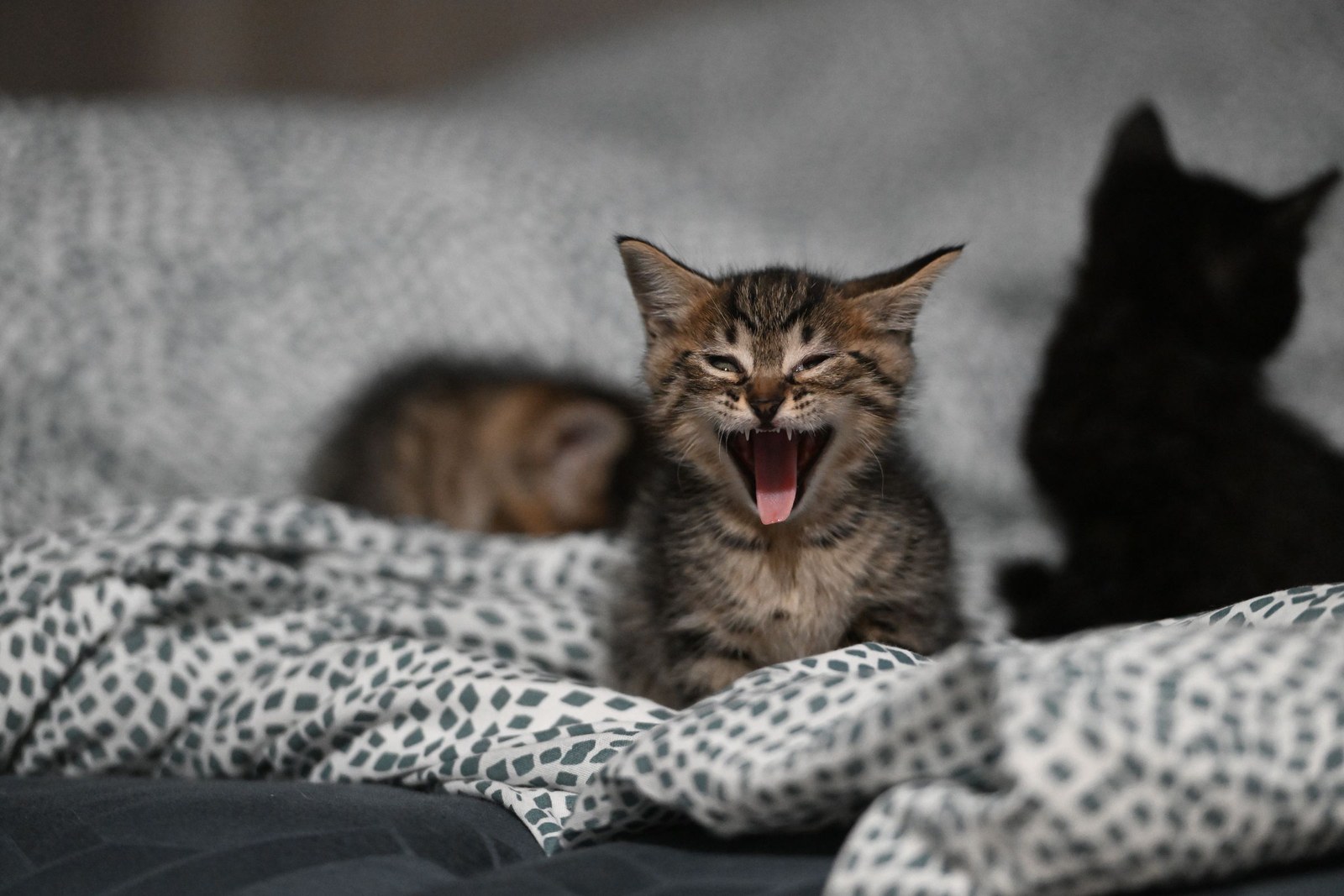
Not right away — on either count. It is safest to keep a young kitten indoors until your veterinarian says her vaccines are far enough along, and to introduce her to resident pets slowly, starting with scent swapping and short supervised meetings. Both kinds of patience protect the same thing: a small, immunologically unfinished kitten who is also still learning that the world is safe.
Why outside waits
Until her vaccine series is well underway, a kitten has partial protection at best against the diseases outdoor and community cats can carry, and she can pick up parasites from soil and contact with other animals. Add the physical risks — traffic, dogs, wildlife, getting lost or stuck at an age when she has no homing skills — and the case for waiting is easy. Indoor play, a window perch, and a harness-training plan for later will not stunt her development in any way.
When your vet gives the all-clear, 'outside' should still mean supervised: a harness and leash she has practiced wearing indoors, or a secure enclosed catio-style space. Free-roaming is a decision to make with full information when she's older, not a default for a kitten who still fits in a shoebox.
Meeting resident pets, in stages
Rushing a face-to-face meeting is the most common introduction mistake. Use the staged version instead:
- Separate quarters. Your kitten starts in one room with her own box, food, and bed, so the household's smells reach her before its animals do.
- Scent swapping. Rub a cloth on each pet's cheeks and place it near the other's food bowl; swap bedding. Calm sniffing earns treats.
- Feeding near the door. Meals on opposite sides of the closed door pair the stranger's smell with the day's best event.
- Short visual meetings. A baby gate or cracked door, minutes at a time, with play and food as distractions. Hissing at this stage is communication, not failure.
- Supervised together time. Brief, in a space with escape routes and high perches, lengthening only as everyone stays relaxed.
With a resident dog, add a leash for the early meetings, reward calm indifference generously, and never let chasing happen — one chase can define the relationship for months.
Watch the kitten's signals
Eating normally, playing, and using the litter box are your green lights. Hiding all day, refusing food, or stress-related litter misses after introductions mean you moved a stage too fast; drop back one step for a few days. Most introductions take days to a few weeks. That timeline feels slow and is, in practice, the fastest route to animals who actually relax together.
A safety net from day one
Even a strictly indoor kitten can slip through a door held open for groceries. Your kitten's KinsLe profile gives her a unique QR ID from the start — her own verified QR ID pet profile — so if she ever gets out, a finder can scan it, see her profile, and message you directly, and her Lost Pet Alert, free in every profile, shows on the map. On KinsLe, the Verified QR ID Pet Profiles setup for a new kitten means her scannable ID exists before any door is ever left ajar during introductions.