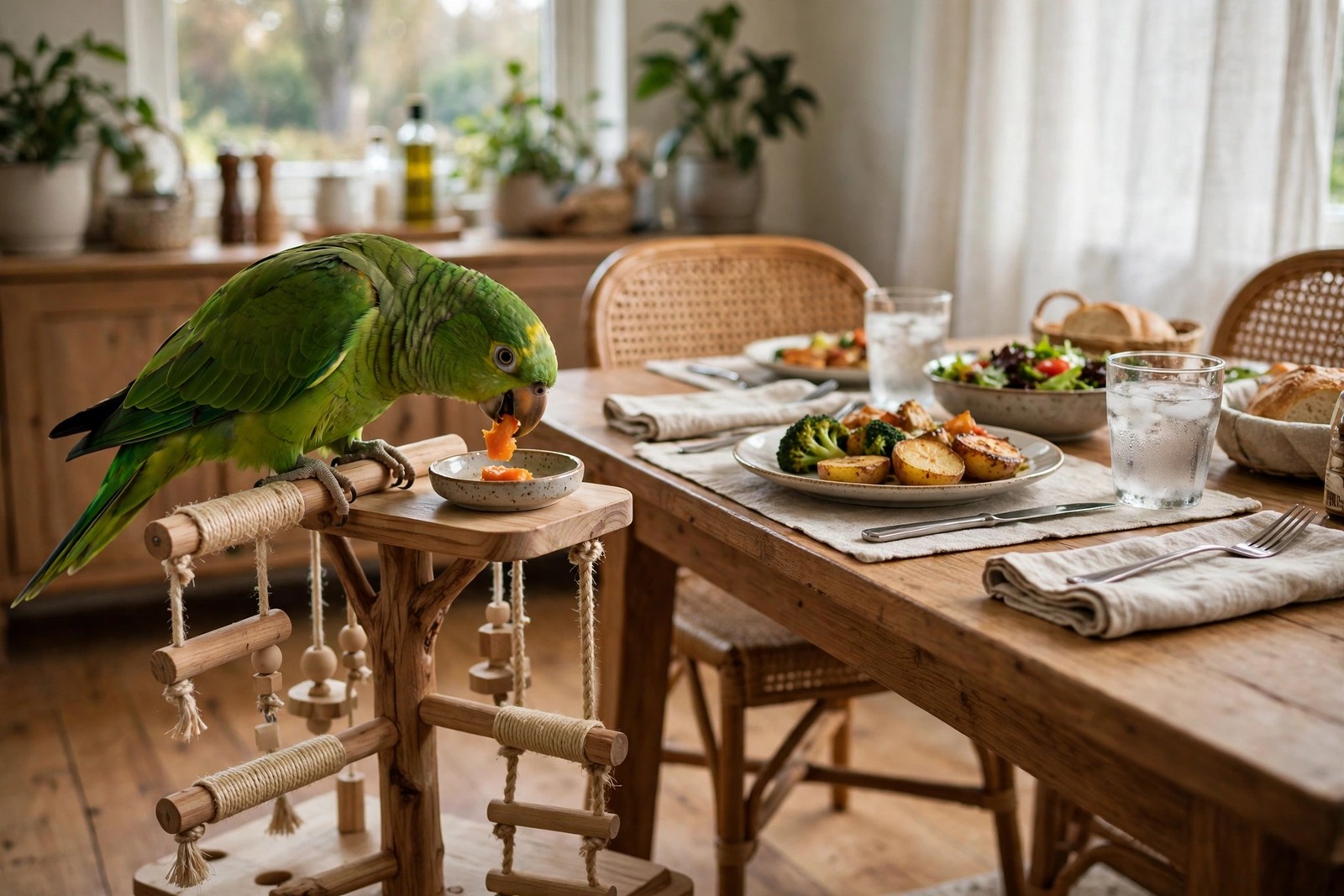
A little of your dinner can be a highlight of your parrot's day — parrots are flock animals, and eating while you eat is social behaviour, not just hunger. The sharing has to happen on the bird's terms, though: a separate small dish, plain food, and a short list of table foods that must never reach a beak at all.
The Never List Comes First
Avocado is toxic to parrots, including the flesh owners most often offer. Chocolate, coffee, tea, and other caffeine are dangerous even in small amounts. Onion and garlic, raw or cooked into a sauce, can damage a bird's red blood cells. Alcohol is never safe, even as a sip offered as a joke. Keep that list consistent: these foods do not become acceptable in tiny portions or on special occasions. Separately, ordinary human seasoning is its own problem. Parrots handle salt poorly, and fatty, sugary, buttery, or heavily sauced food loads a small body with far more energy and salt than it needs, so a food can be off-limits for richness even when it is not outright toxic.
What Sharing Looks Like When It Works
Pick plain items before your own plate is seasoned: cooked sweet potato, carrot, green beans, peas, broccoli, or corn, a spoonful of plain cooked pasta or rice, or a small piece of plainly cooked egg. Serve them at room temperature — food that feels merely warm to you can burn a parrot's crop — and put them in the bird's own dish at its cage or stand. Never feed from your mouth, since human saliva carries bacteria a bird's system is not built for, and do not let the parrot wander your plate, where a safe vegetable sits beside a toxic sauce. Keep the shared portion small, remove leftovers after the meal rather than leaving cooked food sitting out, and let the bird's measured staple diet, not table scraps, do the nutritional work each day.
Reading the Bird, Not Just the Menu
Introduce one new food at a time and watch the droppings and appetite over the next day, so a loose dropping has an obvious suspect. A parrot that lunges, screams, or refuses its regular food while holding out for dinner scraps is telling you the sharing has grown too large — shrink the portion and serve it after the staple meal, not before. If your parrot ever does eat avocado, chocolate, onion, garlic, caffeine, or alcohol, contact a veterinarian promptly rather than waiting for symptoms, because birds hide illness well and decline quickly. The rule only protects your bird if every diner follows it, including the guest who thinks one chip will not matter. At home, Family Sharing through KinsLe grants the relatives you pick access to that profile, keeping its page reachable for family at the table.