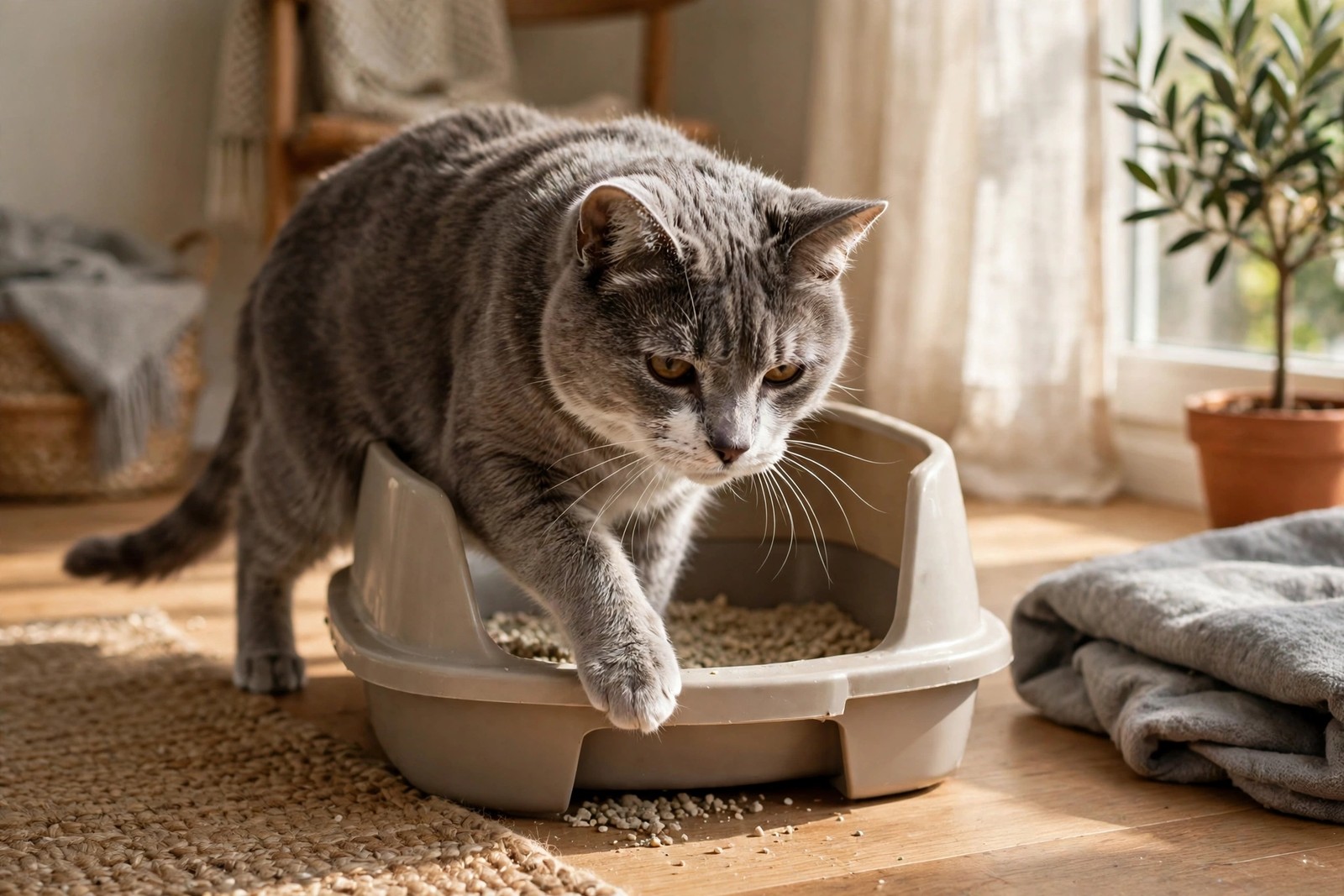
Yes, older cats can lose litter box habits they kept reliably for years, and the change deserves curiosity rather than annoyance. In a senior cat, missing the box is usually a symptom or an access problem, not spite and not forgetfulness in the simple sense. Working through the likely causes in order, starting with a vet visit, resolves many cases and catches illness early in the rest.
Start With Pain and Joints
Arthritis is very common in older cats and often hidden, because cats rest more rather than limp obviously. A cat with sore hips or elbows may urinate beside the box because stepping over a high side hurts, or defecate on a rug because crouching and straining in litter is uncomfortable. Clues include hesitating before the box, perching with the front end in and the back end out, new reluctance to jump or climb stairs, and accidents that happen close to the box rather than far away. Your vet can assess pain and discuss safe ways to make your cat more comfortable, and the home fix is immediate: swap to a box with one low entry side, or cut a low doorway into a spare box and smooth the edge.
Illness That Changes Urination
Several common senior conditions make a cat urinate more, or need to go urgently, so the box is simply missed sometimes. Kidney disease and an overactive thyroid both increase thirst and urine volume, and diabetes can do the same. A bladder infection or bladder inflammation can make a cat strain, pass small amounts often, and associate the box with discomfort. Blood tests, a urine sample, and a hands-on examination are how your vet sorts these apart, which is why a new litter problem in an older cat always earns a vet appointment rather than only a new box. Note what you are seeing before you go: urinating versus defecating outside the box, large puddles versus small spots, and whether it happens at night, because those details genuinely help the diagnosis conversation.
Confusion and Cognitive Change
Some older cats develop cognitive decline: they may wake disoriented at night, forget the route to a box in another room, or toilet where they happen to be when the urge arrives. Night-time yowling, staring, changed sleep patterns, and getting stuck in corners can appear alongside the litter changes. There is no home test for this, so describe the full pattern to your vet. Practical support helps regardless of cause: add a second box near where the cat now sleeps, keep a soft night light on the route, and keep furniture and box positions fixed rather than rearranging the room.
Access, Litter, and Household Changes
Sometimes the cat has not changed and the setup has. A box moved to a basement asks stiff legs to manage stairs many times a day. A new covered box, a strongly scented litter, or a shallower layer of litter can quietly put a fastidious older cat off. A new pet who ambushes or guards the route can have the same effect. Return to the litter and box style your cat used happily, scoop at least daily, put boxes on the floor where the cat actually spends time, and follow the simple guide of one box per cat plus one spare where space allows.
Punishing or scolding a senior cat for accidents never helps and can add anxiety to pain or illness. Clean soiled spots with an enzymatic cleaner so the scent does not invite a repeat, protect the vulnerable floor area with a washable mat while you work on the cause, and expect improvement to track with treating the cause rather than with retraining.
Keeping a dated note of accidents, appetite, thirst, and weight alongside test results gives your vet a clear timeline instead of a vague worry, and KinsLe Pet Passport keeps that senior record in one packet you can bring to every appointment.