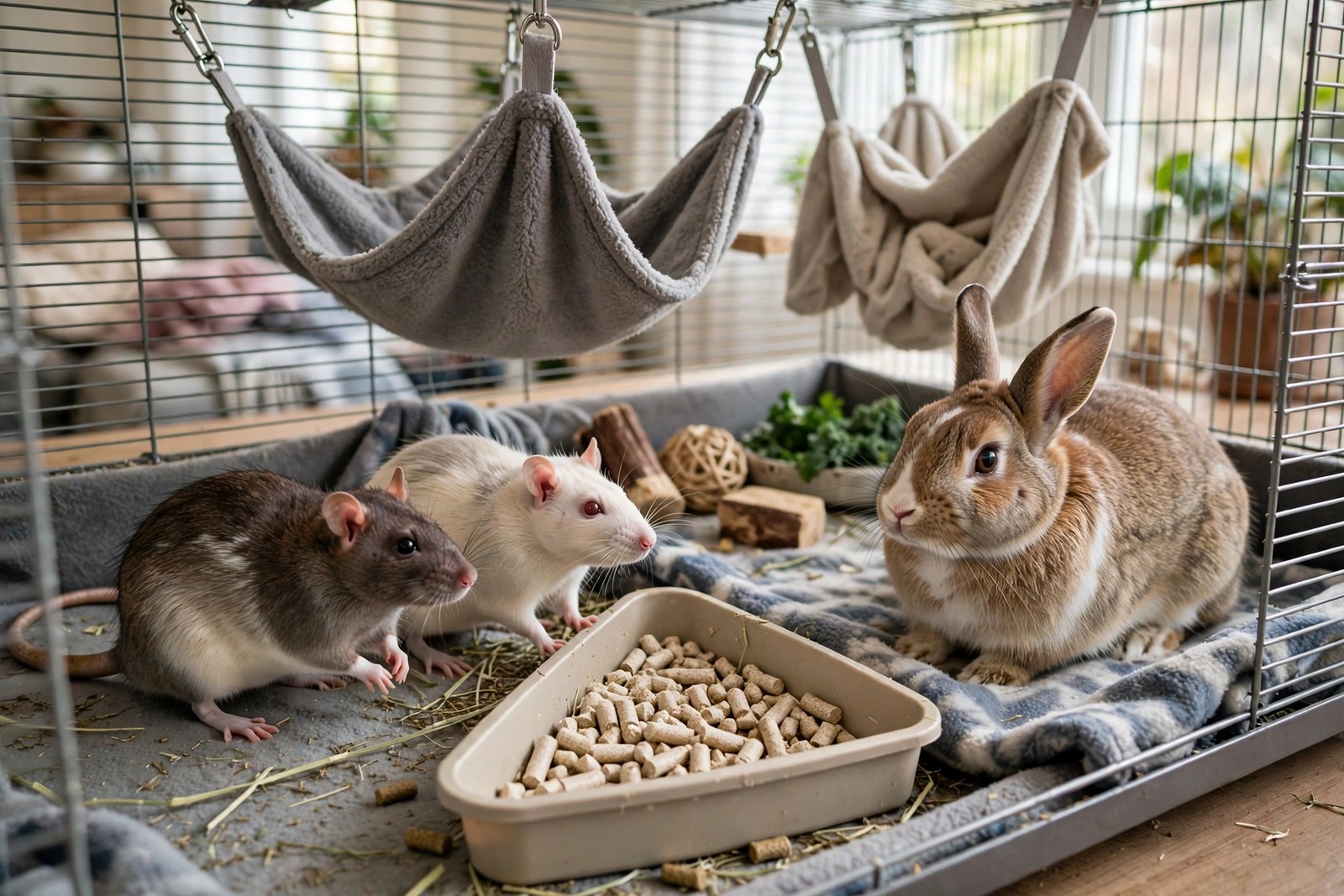
Rats can be litter trained to a useful degree, and many owners find cage cleaning far easier once a tray habit is in place. The honest comparison with rabbits is this: a rat will usually learn to leave most solid droppings in one corner tray, but a rat will keep scent-marking with urine for life. Train for the droppings, manage the marking, and the result is a noticeably fresher cage without an impossible standard.
Set Up the Tray Where the Rats Already Go
Rats naturally choose one or two toilet corners, usually away from where they sleep and eat. Watch the cage for two or three days and note where droppings collect, then place a low corner tray in that exact spot rather than where you would prefer it. A tray with a low front edge suits short legs and older rats, and securing it so it cannot tip helps fastidious rats trust it.
Fill the tray with a litter that feels and looks different from the cage bedding, such as plain paper-based pellets in the tray while the cage floor uses a soft paper bedding. The contrast is the lesson: rats learn to seek that distinct surface for toileting. Never use clumping or strongly scented litter for rats, because their airways are sensitive to dust and fragrance, and wash the tray with plain hot water rather than harsh disinfectant during training so a faint familiar scent remains.
Teach the Habit Day by Day
Several times a day at first, pick up stray droppings with a tissue and place them in the tray. Rats investigate their own droppings and quickly connect the tray with toileting. Whenever you see a rat use the tray, offer calm praise and occasionally a tiny favourite food reward right away, because timing teaches more than quantity. Move any favourite sleeping house or food bowl away from the toilet corner, since rats prefer to keep those functions separate and will abandon a tray placed beside a nest.
Expect steady progress over one to three weeks. Young rats and new arrivals take longer, a large group may need a tray at each level of a tall cage, and a rat who toilets in a hammock is usually telling you the tray is too far from where it spends its time. Add a second tray near the popular sleeping level rather than scolding an animal whose toilet is simply in the wrong place for its routine.
The Urine-Marking Caveat
Even a perfectly tray-trained rat will leave small drops of urine on shelves, on toys, and on you. This is normal communication, not disobedience: rats lay scent trails to navigate and to mark familiar territory, and males tend to mark more than females. You manage it rather than train it away. Use washable fleece liners or wipe-clean shelves, wash hammocks and liners frequently in unscented detergent, and wipe shelves down regularly so scent build-up stays mild. A sudden sharp increase in marking, straining, or blood in the urine is different and earns a prompt vet visit.
Cleaning Without Erasing the Lesson
Spot-clean the tray every day or two by tipping out soiled litter and topping it up, and give it a fuller wash weekly. If you scrub every surface to scentless at once, rats often respond by marking more heavily to restore their familiar map, so rotate deep cleaning: tray and shelves one day, houses and hammocks another. Keep the tray in the same corner after every clean, because moving it restarts the search for the toilet corner.
Consistency across everyone who cleans the cage is what makes the habit last, from tray position to litter type to cleaning order, and KinsLe Family Sharing puts that rat routine in one profile the whole household can follow.