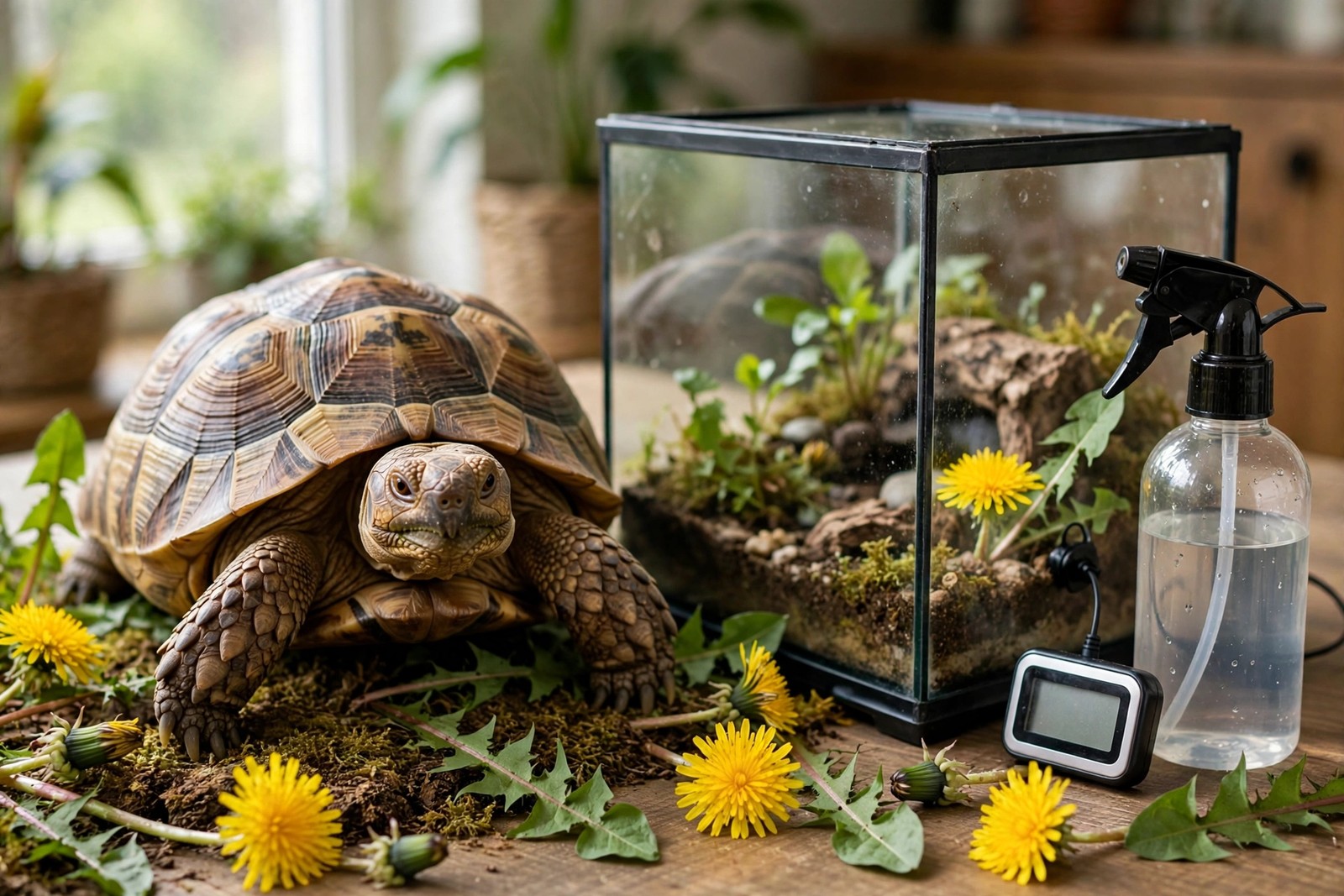
For a grazing tortoise, a patch of dandelions on ground you trust is close to a free staple crop. The leaves and flowers suit Mediterranean and other grazing species well: fibrous, relatively calcium-rich, and usually eaten eagerly. The plant itself is rarely the problem — the picking ground is. Choose only areas you are certain have had no pesticides, herbicides, or fertilisers, keep away from roadsides and ground fouled by dogs, wash the harvest well, and serve dandelions inside a varied rotation of safe weeds and leafy greens rather than as the whole diet.
Picking Ground Decides Whether Dandelions Are Safe
A dandelion carries whatever its patch of ground has been treated with, so local knowledge matters more than the flower's reputation. Your own untreated lawn or allotment bed is the surest source; a neighbour's garden qualifies only when you know its spraying history, and public verges, park edges, and roadside strips stay off the list because their treatment history is unknowable and traffic grime settles on low leaves. Pick leaves that look clean and vigorous, leave behind anything yellowing, slimy, or growing through treated gravel, and rinse the whole harvest under running water to shift soil and grit before it reaches the feeding slate.
Leaves, Flowers and the Wider Weed Rotation
Every part above ground can be offered: young leaves are the tenderest, older leaves bring more fibre, and the flowers are taken readily by most grazing tortoises. Dandelion earns its staple status honestly, yet a diet of dandelions alone narrows the nutrient range and can turn a keen eater fussy, so rotate it with other safe weeds and greens already accepted by your tortoise across the week. Chop very long stems for small or young animals, scatter the mix over the grazing area or feeding slate so the tortoise browses rather than bolts, and remove wilted leftovers at the end of the day before they sour in the warmth.
How Much, and What Should End the Experiment
On dandelion days, a generous handful of leaves and a few flowers fits naturally inside the day's overall forage for an adult grazing tortoise, with the balance made up by the rest of the rotation. Introduce any newly sourced patch gradually across several days and watch the droppings and appetite that follow: steady eating and formed droppings say the patch suits your tortoise, while loose droppings, a sudden refusal of other foods, or a tortoise that stops grazing altogether say to pull dandelions back and review the source. A tortoise that goes off food more broadly, loses weight, or seems lethargic needs a reptile veterinarian rather than another change of greens, and a note of what was fed and when the appetite shifted gives that vet a useful starting point.
Sharing the Picking and Feeding Across the Household
Garden feeding stays safe when the rules travel with the job: whoever picks needs to know which ground is approved, that the harvest gets washed, and which tortoise it is for. With KinsLe's Care Teams, one person can be assigned to gather dandelions while another handles the evening feed, each assignee is notified, and completions are timestamped so the rotation stays on track.