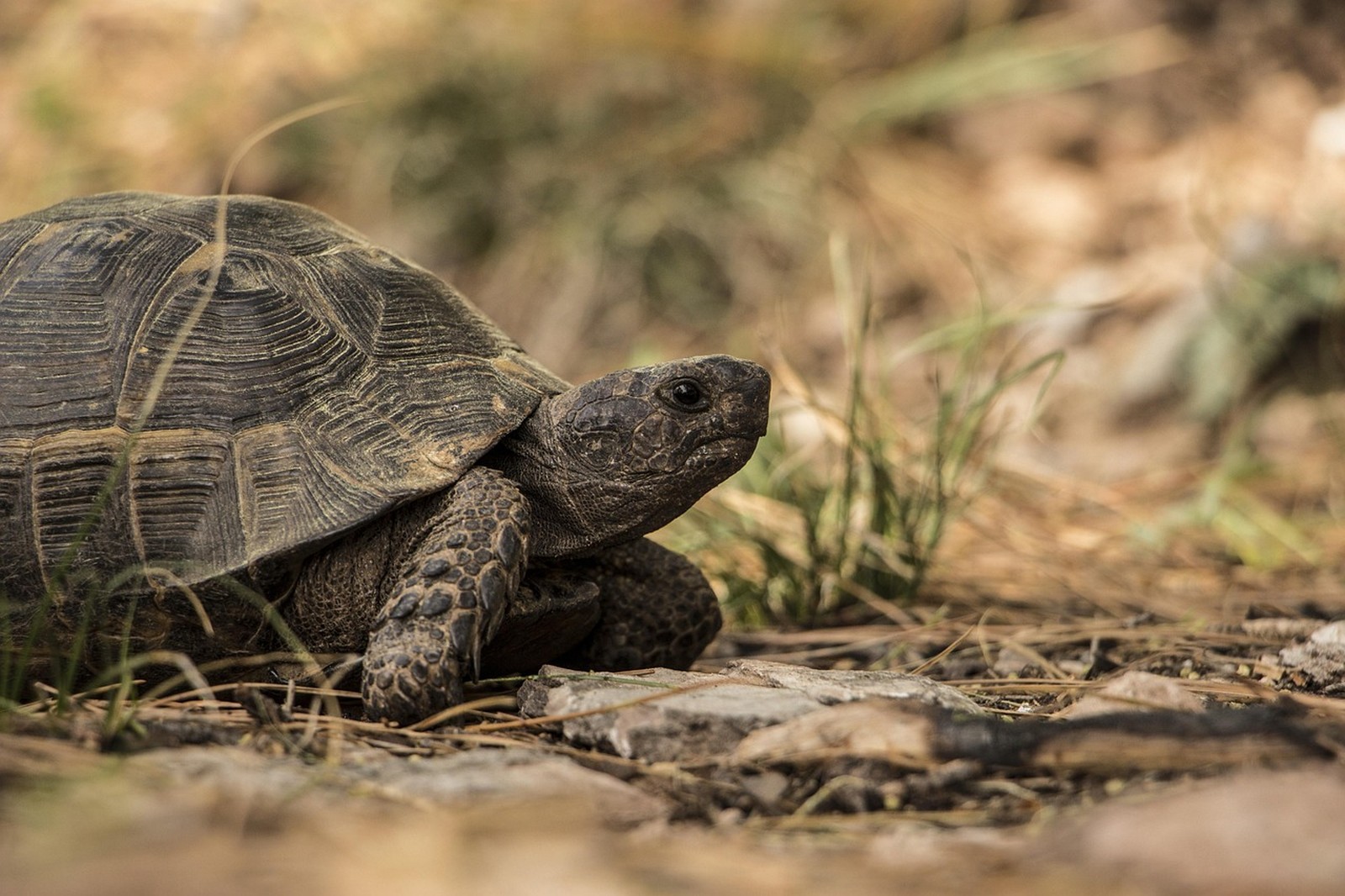
Keepers notice it within the first season. The tortoise crosses the enclosure when its person appears, stretches its neck up at the fence, and settles by the feeding slab, while a visitor standing in the same spot gets ignored or watched from inside the shell. That difference is real, and it is not imagination or wishful thinking. A tortoise's world is slower and quieter than ours, so recognition there does not look like excitement. It looks like a deliberate walk in your direction, made by an animal that has decided, from experience, that you in particular are worth walking toward.
Learned at the Food Bowl
Nearly all of this recognition is built at feeding time. A tortoise learns by association: this shape, this scent, these footsteps at this hour mean food arrives. Tortoises see well, including colour, and many learn visual cues as specific as the person who carries the food bowl or wears a familiar bright top. Scent plays its part, since tortoises investigate the world through smell, and so does vibration, because the tread of a regular keeper lands through the ground before the person is even in view. Repeat the pairing often enough, at roughly the same times of day, and the keeper stops being scenery. The keeper becomes the signal the whole morning is organised around, which is why a tortoise may appear at the fence before you have reached it.
What Recognition Looks Like
Expect it in tortoise language. A tortoise that knows you comes out of its hide when you arrive instead of retreating into it. It approaches the fence or the edge of the table, follows alongside as you move, and holds its head high and steady rather than pulling in. Many station themselves at the feeding spot and wait with a patience that looks remarkably like expectation. Some will take a leaf from familiar fingers while refusing the same leaf from a stranger's hand. Compare that with the response to an unknown person: a freeze, a slow withdrawal, or a shell presented to the world. The contrast between the two greetings, from the same animal on the same day, tells you plainly that the recognition is personal rather than general boldness.
Recognition Is Not Mammal-Style Affection
It helps to be truthful about what has been learned. A tortoise is not greeting a beloved companion in the way a dog does, and expecting tail-wagging devotion sets both of you up for disappointment. What the tortoise has built is trust with a prediction attached: you are safe, you are familiar, and good things follow you. That shows as calm rather than excitement. A tortoise that trusts you eats near you instead of waiting for you to leave, rests with its limbs relaxed rather than tucked tight, and tolerates your hands nearby without flinching. Some individuals go further and seem to seek out company at the fence, while others, even after years of kind care, remain reserved animals who merely accept their keeper. Species vary, and so do personalities within a species, and neither end of that range means you have done anything wrong.
Building It Steadily
Familiarity grows from sameness, so let one person give most of the feeds while the bond forms, at steady times, arriving by the same route and speaking quietly as they come. Hand-feed an occasional favourite leaf so your hand itself becomes part of the good prediction, and move slowly around the enclosure, because sudden looming shapes read as predators to a prey animal. Avoid making being picked up the main event of your visits; many tortoises tolerate handling without enjoying it, and trust grows faster when your appearances mostly mean food, warmth checks, and calm. If several people in the house feed the tortoise, recognition spreads across the group, which is its own kind of success. Family Sharing through KinsLe grants relatives you pick access to its profile, so the faces it has learned to trust can also reach its page.