
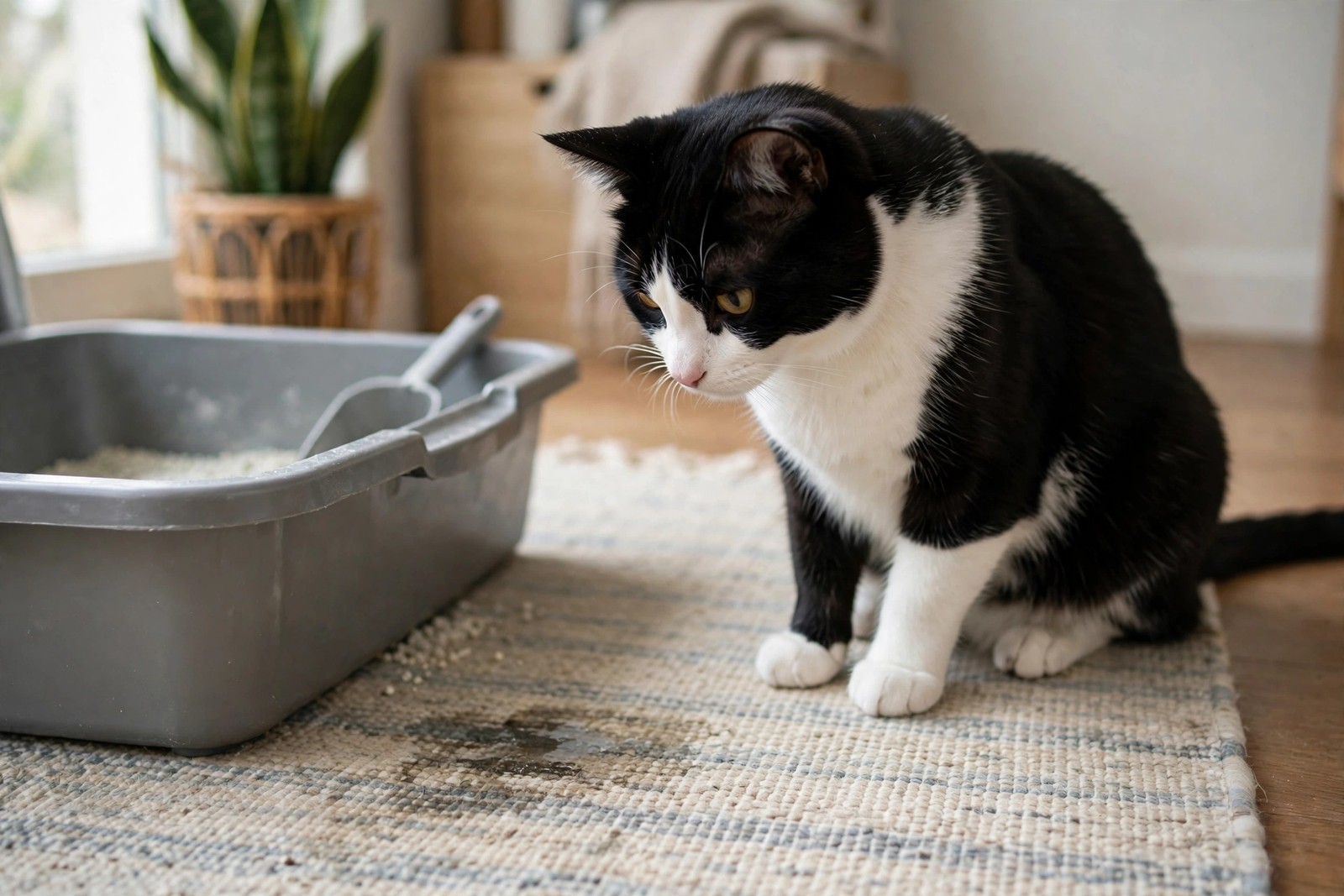
Yes — peeing outside the litter box can absolutely be a health problem, and it is one of the most common early ways a cat shows that something physical is wrong. Stress, box cleanliness, and household changes can all play a role, but urinating on beds, laundry, rugs, or floors is also a frequent sign that using the box hurts, feels urgent, or has become difficult. A veterinary visit should come first, to rule out physical causes, before you treat it purely as a behavior issue or a spiteful protest — cats do not urinate on your pillow out of revenge.
Medical clues hiding in the mess
Notice the details of each accident. Small, frequent spots in several places suggest a cat who feels an urgent need to go often; one large puddle may tell a different story. Look for straining, crying in or near the box, blood-tinged urine, excessive licking of the belly or rear, or trips to the box that produce very little. Changes in thirst, appetite, weight, or energy alongside the accidents strengthen the case for booking promptly. And if a male cat is straining and producing little or no urine, that is an emergency the same day, not a house-training problem.
Also think about access: an older cat with stiff joints may struggle with a high-sided box or one down steep basement stairs, and a cat who was startled by a washing machine mid-use may avoid that spot. These comfort issues matter — but they are assessed alongside, not instead of, a medical check.
The behavior side, once health is checked
If your veterinarian finds no physical cause, look at the box setup with fresh eyes. Most cats prefer a clean, unscented, easily reached box, and multi-cat homes generally need more than one box in more than one place. Scoop daily, wash boxes periodically with mild, unscented cleaner, and clean accidents with an enzymatic cleaner so the scent does not invite a repeat. Keep routines calm, add play and resting spots, and avoid punishing your cat — punishment raises stress and worsens avoidance. If accidents persist after medical and setup causes are addressed, ask your vet about next steps or a referral.
What to bring to the appointment
A simple accident diary helps enormously: date, time, place, amount, any straining or crying, and what else changed that day. Note diet, water intake, new pets or visitors, moved furniture, and litter changes. Photographs of the spots can even help judge volume. The clearer your notes, the faster your veterinarian can separate a urinary problem from a stress pattern.
Finding a veterinarian if you don't have one
If you have moved, or your cat has never had a regular clinic, KinsLe's Pet Services Directory can help you find local veterinarians — along with groomers, sitters, and trainers — so you can get this checked rather than guessing at home. Establishing a regular vet before a crisis is one of the kindest admin tasks you can do for a cat. Pet Services Directory on KinsLe points owners without a regular clinic toward nearby practices they can call about straining, blood-tinged urine, or repeated accidents outside the box.