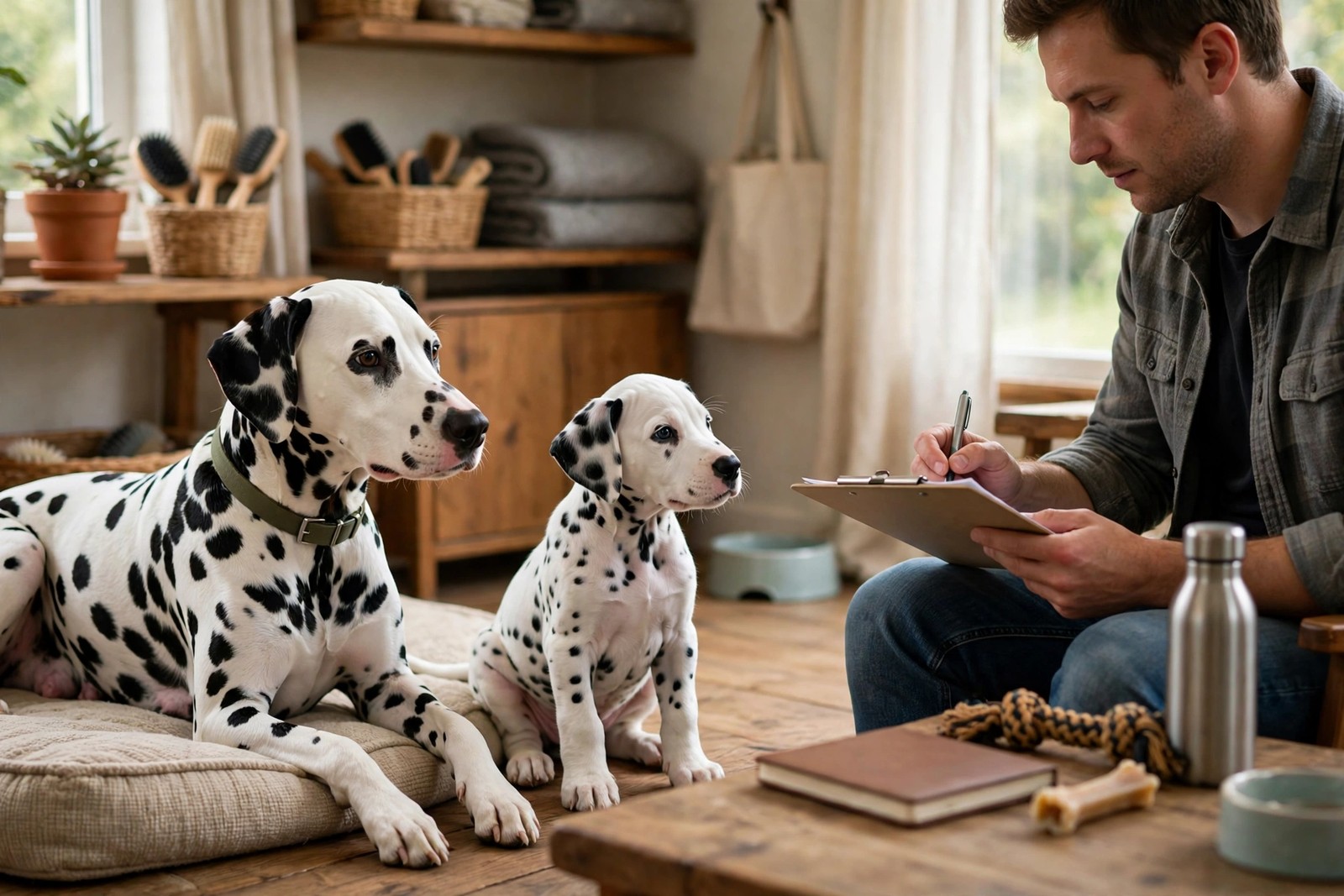
Most dog breeds convert purines from food into a form the kidneys clear easily. The traditional Dalmatian cannot do this efficiently, because of an inherited difference in how the breed handles uric acid, so more uric acid reaches the urine and can form urate crystals and stones. A historic outcross programme introduced the normal version of the gene into some lines, and puppies from those lines process purines like other dogs. That is why two Dalmatian puppies can look identical yet need quite different diets for life, and why your breeder questions matter before you pay a deposit.
Question One: Which Type Are Your Dogs?
Ask directly whether the breeder's dogs are the traditional type or carry the normal uric acid gene, and listen for a specific, unembarrassed answer. A knowledgeable breeder will explain which type the mother is, which type the father is, and what that combination means for the puppies. Vague answers such as insisting the issue is exaggerated, or claiming diet makes testing irrelevant, are strong reasons to look elsewhere, because the breeder is asking you to manage a lifelong feeding question blind.
Question Two: Are the Parents Tested, and May I See the Results?
Ask whether both parents have been tested for the gene, what each result is, and whether you can have the results in writing to pass to your vet. Ask the same about the grandparents if the breeder knows them, and ask plainly whether any dog in the recent lines has formed urinary stones, needed surgery for a blockage, or been put on a special urinary diet. Stone history in close relatives matters even when a test result looks reassuring, because diet, water intake, and other genes also feed into risk. A breeder who tracks this across generations, and tells you the awkward cases as well as the clean ones, is showing you exactly the record-keeping you want behind a puppy.
Question Three: What Exactly Do You Feed?
Ask what the adult dogs eat, what the puppies are weaned onto, and what the breeder expects you to feed at home. For a traditional-type dog, breeders who manage this well usually feed a diet chosen to be lower in purines, which means avoiding organ meats such as liver and kidney and limiting certain rich protein sources, while keeping overall nutrition complete. Ask how they handle treats, chews, and table scraps, because those extras are where a careful main diet often gets undone. Also ask about water: plentiful fresh water and frequent chances to urinate are part of stone prevention for at-risk dogs, since dilute urine passed often gives crystals less chance to gather.
Take the feeding answers to your own vet before or soon after the puppy comes home, and let the vet, who can examine your actual dog, confirm the plan rather than copying another owner's recipe from memory.
Question Four: What Support Comes With the Puppy?
Ask what paperwork leaves with the puppy: test results for the parents, the puppy's own result if it has been tested, a written feeding sheet, and a note of any urinary signs the breeder wants you to watch for, such as straining, frequent small urinations, or blood in the urine, all of which earn a prompt vet visit in any Dalmatian. Ask whether you can call with diet questions in the first months. Breeders who have thought hard about this issue usually welcome the contact.
Arriving home with the parents' results, the feeding sheet, and the stone history in one record means your vet starts from facts rather than guesses, and KinsLe Transferrable Profiles carries that Dalmatian diet history with the profile when it transfers from breeder to owner.