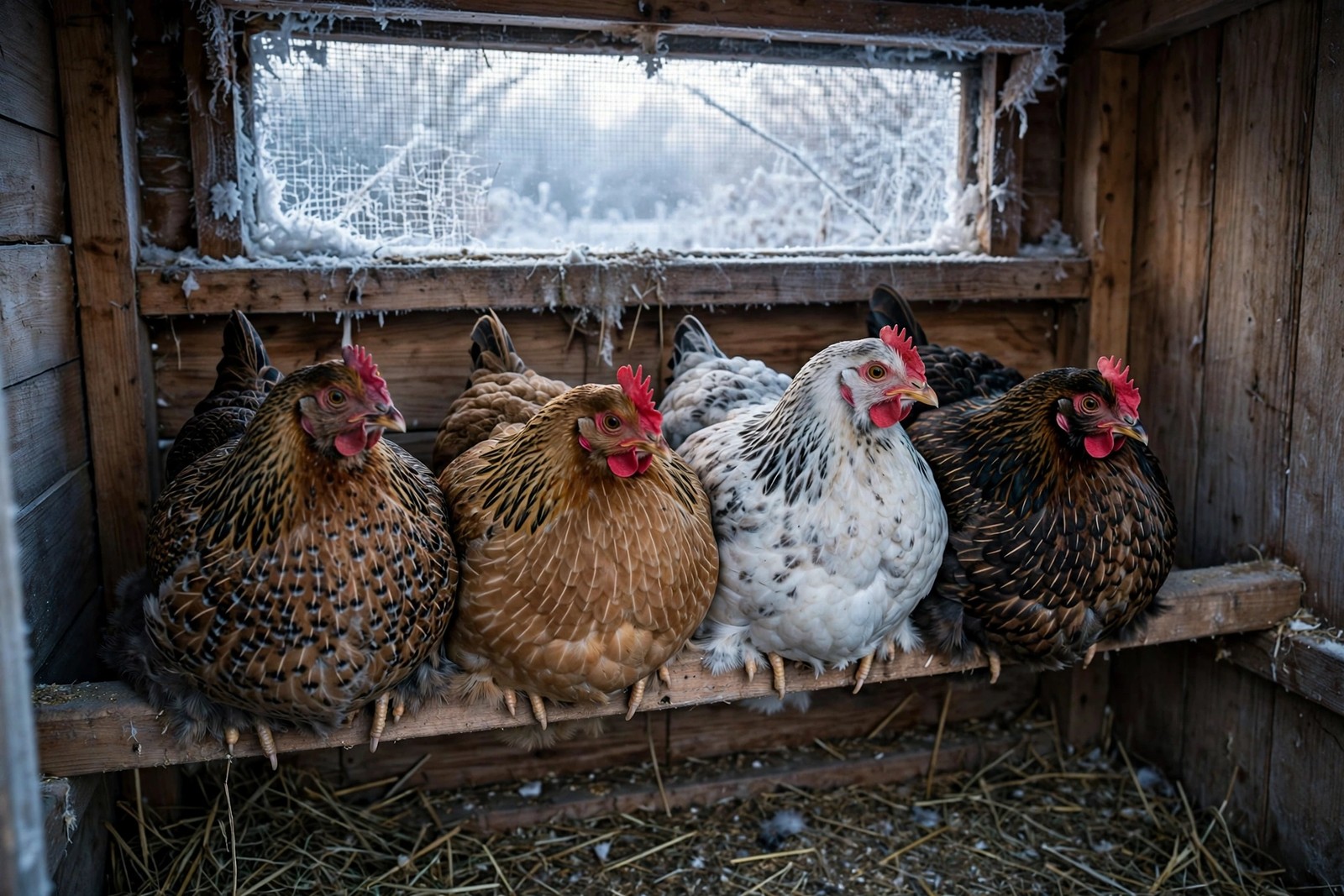
For a healthy adult flock, the answer is generally no — and reaching for a heat lamp can make your chickens less safe, not more. Chickens are not small mammals waiting to be warmed. A fully feathered bird carries its own insulation, and winter losses in backyard flocks trace back far more often to damp, poor ventilation, and frozen water than to cold air itself.
How a Chicken Actually Stays Warm
Feathers trap a layer of still air against the body, and a cold chicken fluffs those feathers to thicken it. On the roost, hens sit down over their feet, tucking bare toes into warm body feathers, and huddle flank to flank with flockmates. That is why roost shape matters: a wide, flat roost lets a hen cover her feet fully, while a narrow round perch leaves toes exposed and invites frostbite. Birds also acclimate gradually as autumn cools, growing denser feathering and adjusting to the season. A lamp interrupts that process — the flock never hardens off, and if a storm then cuts the power, pampered birds face the coldest night of the year with the least preparation. A lamp burning through the night also removes the darkness hens need for proper rest.
The Fire and Moisture Problems Lamps Create
A coop concentrates everything a fire wants: dry bedding, feather dust on every surface, and birds that flap and knock fittings loose. A fallen or dust-caked heat lamp can ignite bedding, and coop fires are a recurring winter disaster for backyard keepers. The safer engineering is passive. Seal drafts at roost height, where moving air strips feather insulation, but keep vents open high in the coop, above the hens' heads. Warm air rising from the flock carries moisture and ammonia with it; if it cannot escape, that moisture settles on combs and wattles, and damp cold — not dry cold — is what causes frostbite. Deep, dry bedding on the floor adds insulation without a single watt.
Winter Care That Actually Helps
Check water at least twice a day in freezing weather, breaking ice or refilling with fresh water, because a hen that cannot drink will not eat, and eating is what fuels her body heat. Offer the day's feed so hens go to roost with full crops, keep a windbreak on the run so birds will come outside and move, and watch big-combed breeds and any hen mid-molt for pale or blackened comb tips. The genuine exceptions to the no-lamp rule are chicks, which cannot regulate their temperature, and sick, injured, or nearly featherless birds — those individuals need individual help and veterinary advice, not a lamp over the whole flock. Splitting the winter rounds helps them happen daily, and KinsLe's Care Teams feature lets you assign the morning unfrozen-water check and the evening roost headcount to different household members, with each completed check timestamped so a frozen morning is never missed.