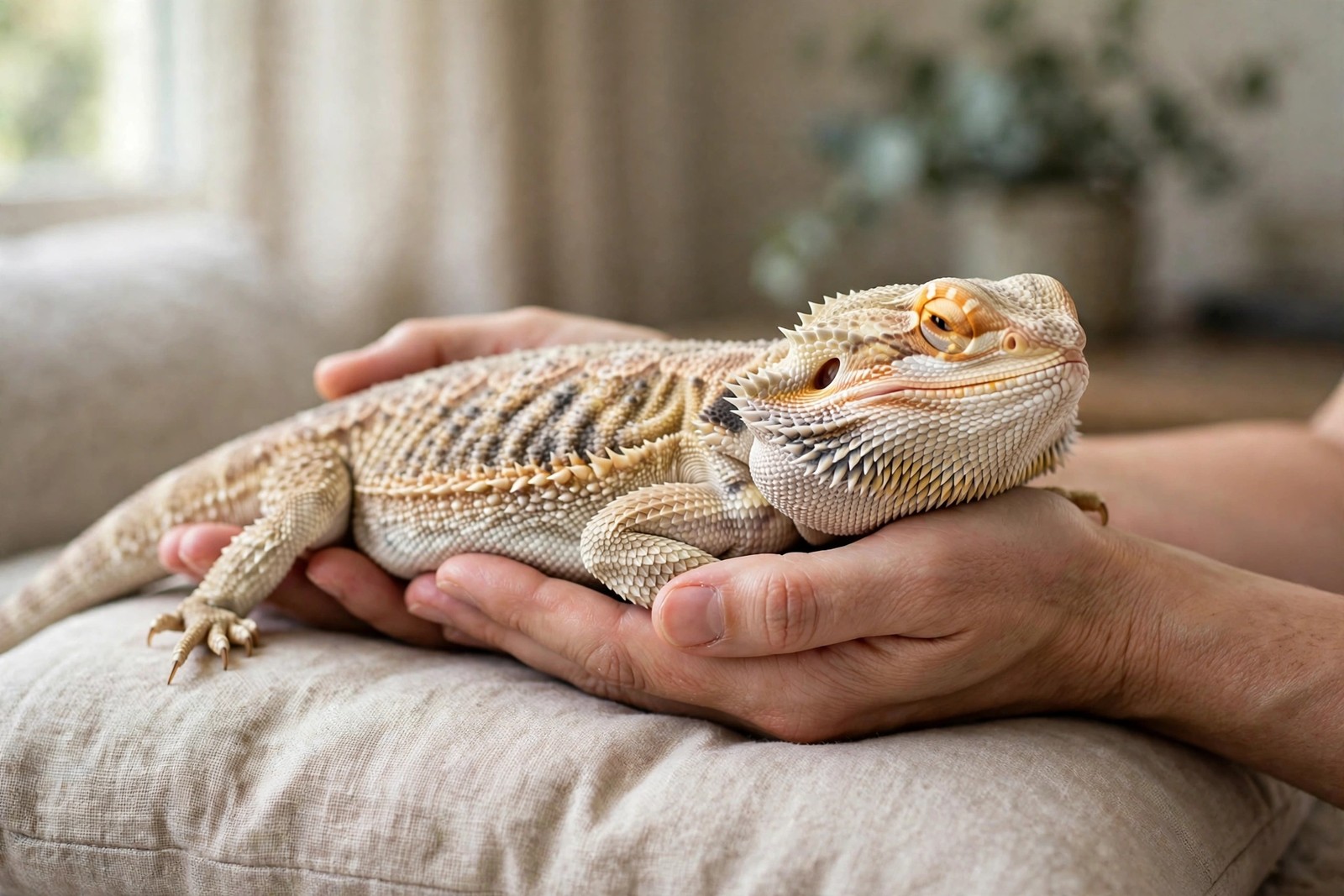
Bearded dragons have a reputation as the lapdogs of the reptile world, and compared with most lizards they are unusually easy-going about human contact. The honest answer underneath the reputation is that dragons vary, and even a confident dragon is usually tolerating or calmly accepting handling rather than enjoying it as affection. That distinction matters, because an owner reading real signals will stop at the right moment, while an owner assuming enjoyment can push a stressed animal through long sessions day after day and never understand why it stops eating.
Signs of a Relaxed Dragon Versus a Stressed One
A relaxed dragon being held shows a pale, normal-coloured beard, slow blinking or eyes that close briefly while it stays warm and still, a body that flattens comfortably against a hand or chest, and unhurried breathing. Some dragons will sit on a lap for a whole television programme in this state, especially older, well-socialised adults. Stress looks different: the beard darkens or turns black, the mouth gapes, the body puffs up, and the dragon hisses, scrambles, tail-whips, or tries repeatedly to run and hide. Glass-surfing or frantic movement back in the enclosure after handling, and refused food the next day, are delayed signs that yesterday's session was too much. A dragon that freezes completely is not necessarily relaxed; stillness is also a fear response in a prey animal, so judge it alongside colour, breathing, and what happens when you move.
How to Hold One Safely
Approach from the front or side where the dragon can see your hand, never swooping from above like a bird of prey, which triggers instinctive panic. Slide one hand under the chest and belly and support all four feet; an unsupported dragon whose legs dangle will thrash, and a fall of even a short distance onto a hard floor can break bones. Support the base of the tail, stay seated or low, and keep the dragon close to your body rather than held out at arm's length. Wash hands before handling to avoid passing anything from other animals, and afterwards as basic hygiene. Children can hold a calm dragon while seated on the floor, with an adult's hands underneath as backup, and should never carry one around the house.
Building Tolerance and Choosing Session Length
Start with a settled dragon that has eaten and warmed up, not one just woken, shedding uncomfortably, or digesting in its basking spot. Begin with two or three minutes inside or beside the enclosure, return the dragon before it struggles, and lengthen gradually over weeks. Many adults manage fifteen to thirty calm minutes, but out-of-enclosure time is also cooling time for a cold-blooded animal, so a long session on a chilly evening ends early regardless of temperament. Skip handling for the first days after arrival, during illness, and for roughly a day after a large meal. Hand-feeding a favourite green during sessions builds a positive association faster than simply repeating longer holds.
What Handling Is Really For
Regular gentle handling keeps a dragon calm for health checks, weighing, bathing, and vet visits, which is its practical value beyond pleasure. Use sessions to feel the belly, look at toes and tail tip, and notice weight change early. Writing your dragon's preferred support method, its personal stress signs, and its usual session length into a KinsLe Care Pass means a holiday sitter gets those specifics in a temporary care link instead of a guess, and your dragon's handling stays consistent in hands it does not know.