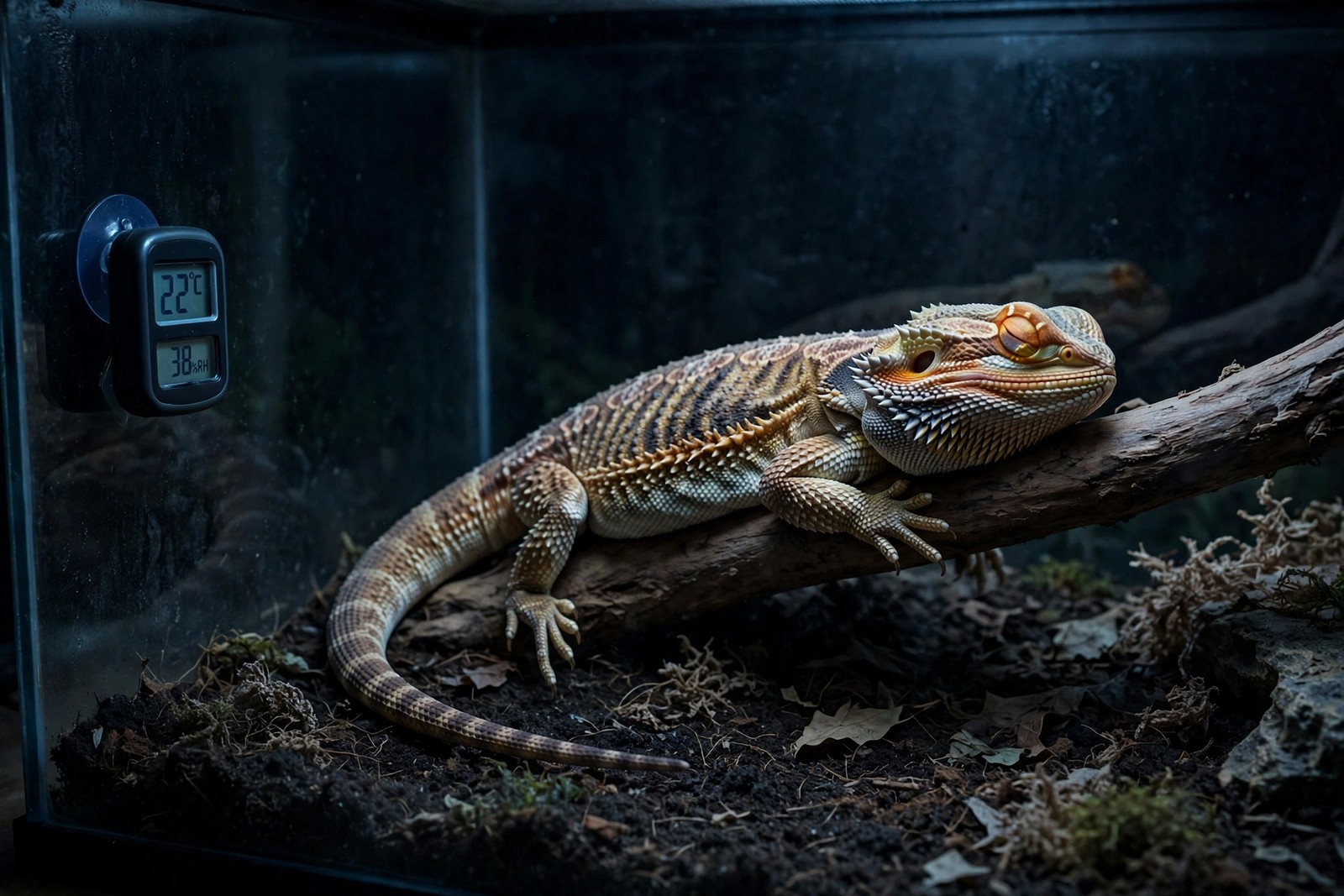
No. A bearded dragon's night should be dark and noticeably cooler than its day, mirroring the desert it comes from, where temperatures fall sharply after sunset. Leaving a heat lamp glowing overnight solves a problem most homes do not have, and creates one — a dragon that never gets true darkness — in the process.
Why Night Needs to Be Dark and Cooler
Bearded dragons are strictly daytime animals. They bask, hunt, and digest under bright light, then sleep through the dark hours, and that light-dark cycle regulates their appetite, activity, and rest. A bright bulb left on overnight blurs the cycle: the dragon dozes fitfully, starts the day less hungry, and over time drifts into the lethargy owners then mistake for illness. Coloured bulbs sold for night viewing do not fix this. A bearded dragon can see red light, so a red or dark-tinted lamp still lights its world, even if the room looks dim to you. The nighttime temperature drop itself is healthy, not a hazard — a dragon digesting nothing overnight has no need of basking heat.
The Number That Decides It
Measure before you buy. Put a thermometer at the cool end of the enclosure and read it on the coldest recent night, or check the overnight low over a few days. Most keepers work to this rule: if the enclosure stays above about 65°F at night, no supplemental heat is needed at all, and most heated homes sit comfortably above that. Only when the room regularly drops below that mark — an unheated room in a cold climate, for example — does added night heat earn its place. A dragon in a house that feels comfortable to you in the evening is almost never a dragon freezing at 2 a.m.
When Heat Is Needed, Make It Light-Free
The right tool is a ceramic heat emitter: a screw-in element that produces heat and no light at all. Run it through a thermostat so it maintains the nighttime floor rather than cooking the enclosure, position it so the dragon cannot touch it, and recheck the overnight low once it is fitted, because the goal is the minimum warmth that keeps the tank above that threshold, not a second daytime. Never use a heat rock, which can burn a sleeping dragon's belly. If your dragon is restless at night, first check that every light — including room light spilling through the glass — is actually going off. KinsLe's Care Teams feature lets you put the nightly lights-out and thermometer check on a household rota and stamps each completed check, so the one evening nobody verified the setup does not become a pattern.