
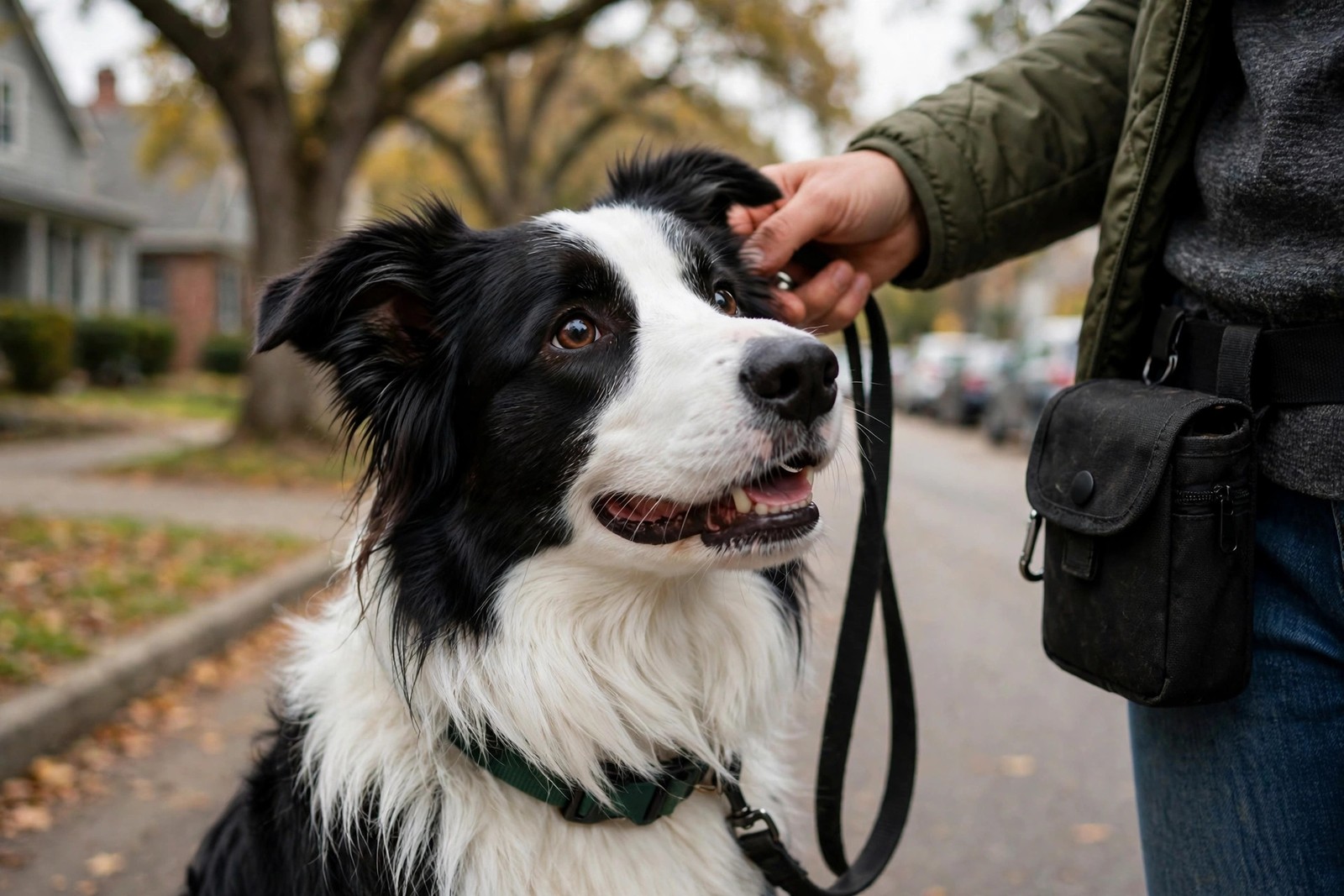
Border Collies can be seriously vocal, but their barking rarely means what barking means in a guard breed. A Collie typically barks in quick, excited bursts while locked onto something moving: the post van pulling away, a cyclist passing the fence, children racing across the park, or the family cat crossing the room. It is the vocal slice of the herding sequence — the hard stare, the crouch, the stalk, the chase — and the bark often erupts exactly when the dog cannot complete the rest of the sequence, which is why fences, leads, and windows produce so much of it.
Movement Is the Trigger, Frustration Is the Fuel
A Border Collie notices motion faster than almost any breed and feels a genuine pull to control it. Held back by a lead while a jogger passes, the dog may lunge and bark in frustration rather than aggression, and the distinction matters because the fix is different: this dog needs distance from the trigger, a job to do with its eyes and feet, and rewards for disengaging, not punishment for losing control. Barking also spikes at transitions the dog finds thrilling — leads coming out, car doors, the start of a walk — because anticipation with no outlet spills straight into noise.
A Tired Body Is Not Enough
The classic mistake with this breed is adding more physical exercise to fix behaviour. A fitter Collie is simply a fitter loud Collie. What settles them is mental work that uses the herding brain in legal ways: learning names for toys and fetching specific ones, pattern games with cones or markers, controlled ball work with a start line and a settle between throws, scent searches, and short trick-training sessions that demand concentration. Ten focused minutes of that kind of work can quiet a Collie more than an extra hour of walking, and rest matters just as much, because an over-tired adolescent Collie barks at everything.
Teaching an Off Switch
Collies learn cues at startling speed, including the wrong ones, so train the alternative before you need it. Build a rock-solid settle on a mat away from windows, reward heavily for watching movement and choosing to look back at you, and manage the environment while training catches up: cover the lower window film-line, move the dog from the front room when the school rush passes, and avoid rehearsing fence-chasing with the neighbour's dog. If barking comes with hard staring, snapping at heels, or herding children around the house, bring in a qualified trainer early, because those are herding behaviours that can tip into nipping.
Owners who thrive with this breed run the dog's day like a small working schedule rather than hoping free time will fill itself. KinsLe Care Teams suits that style well, letting you assign the morning training session, the midday scent game, and the evening settle practice to different people, each stamped complete, so your Collie's brain gets its full programme even on the household's busiest days.