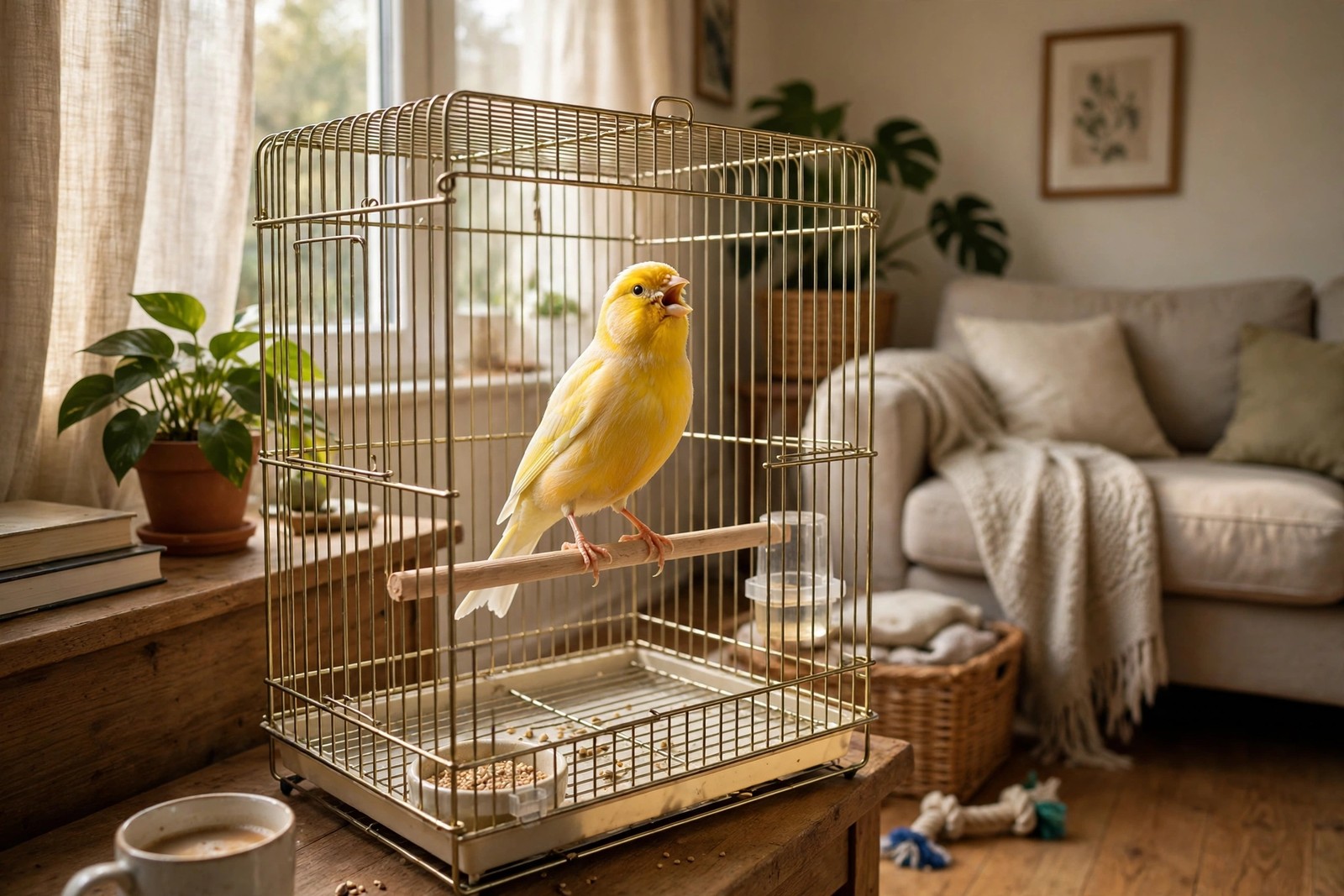
Canaries need company, but company means two different things for this species, and confusing them causes most of the trouble. Every canary needs a lively environment and daily human presence around its cage. Not every canary needs, or even tolerates, another bird inside that cage. Canaries are not deeply pair-bonded in the way budgerigars or lovebirds are, and their social rules are built around song and territory rather than constant physical contact.
Why Males Are Often Kept Singly
The male canary's song is the reason most people keep one, and that song is territorial advertising. A male sings to claim his space and to attract a mate, and he typically sings most strongly when he is the only male in his territory. Put two adult males in one household cage and the likely results are chasing, feather plucking, fighting over perches and food, or one bird going silent under pressure from the other. This is why experienced keepers house a pet singing male on his own without any welfare guilt, provided his human company is real: his cage in a room where the household spends its day, people talking, whistling, and moving about, and a predictable routine of feeding, cleaning, and quiet nights.
A single male kept in a spare bedroom or a hallway that nobody uses is a different story. That bird has territory and no audience, no flock sounds, and no stimulation, and listlessness and silence follow. Company for a canary is mostly sound and activity at a comfortable distance, not handling: canaries are watch-and-listen pets who generally dislike being held, so your presence is the companionship.
Pairings and Groups That Work
Females are usually more tolerant of each other, and a pair of hens, or a group in a large flight cage or aviary, can live peaceably with enough perches, duplicate food and water stations, and room for a chased bird to get out of sight. A male and female pair outside the breeding season often coexists calmly, but be honest about consequences: a pair given a nest and breeding conditions may produce eggs and chicks you must be prepared to care for, and a male in breeding condition can harass a hen who is not. Mixed aviaries with other small finches can also work where space is generous and species are chosen carefully, but a standard pet cage is too small for experiments in mixing, because a bullied bird has nowhere to retreat.
Introduce any new bird gradually. Quarantine a newcomer in a separate room first for the sake of health, then place cages side by side so the birds can hear and see each other before any shared space is attempted, and watch feeding access closely for the first days together.
Daily Company for a Lone Canary
For the single pet canary, build company into the day deliberately. Site the cage at about eye level in the living room or kitchen where the household gathers, out of draughts and cooking fumes. Talk and whistle to the bird during feeding and cleaning, play gentle music or leave a radio on at low volume when the house empties, and offer small daily enrichments: a sprig of leafy greens to pick at, a shallow bath of clean water, and occasional supervised flight time in a prepared room. Keep the night genuinely quiet and dark for a long, settled sleep, because a canary's daytime energy and song rest on proper rest.
Watch what the bird tells you. A content canary sings or chirps daily, bathes willingly, eats steadily, and moves brightly between perches. A bird that goes quiet, sits fluffed for long periods, or stops bathing may be lonely, unwell, or unsettled by a change in the room, and persistent change earns a vet visit rather than an instant new cage mate.
Sharing the feeding, cleaning, bathing water, and social check-ins across the household keeps a lone canary's day rich even when one person is away, and KinsLe Care Teams lets you assign those daily canary jobs and confirm each one was done.