
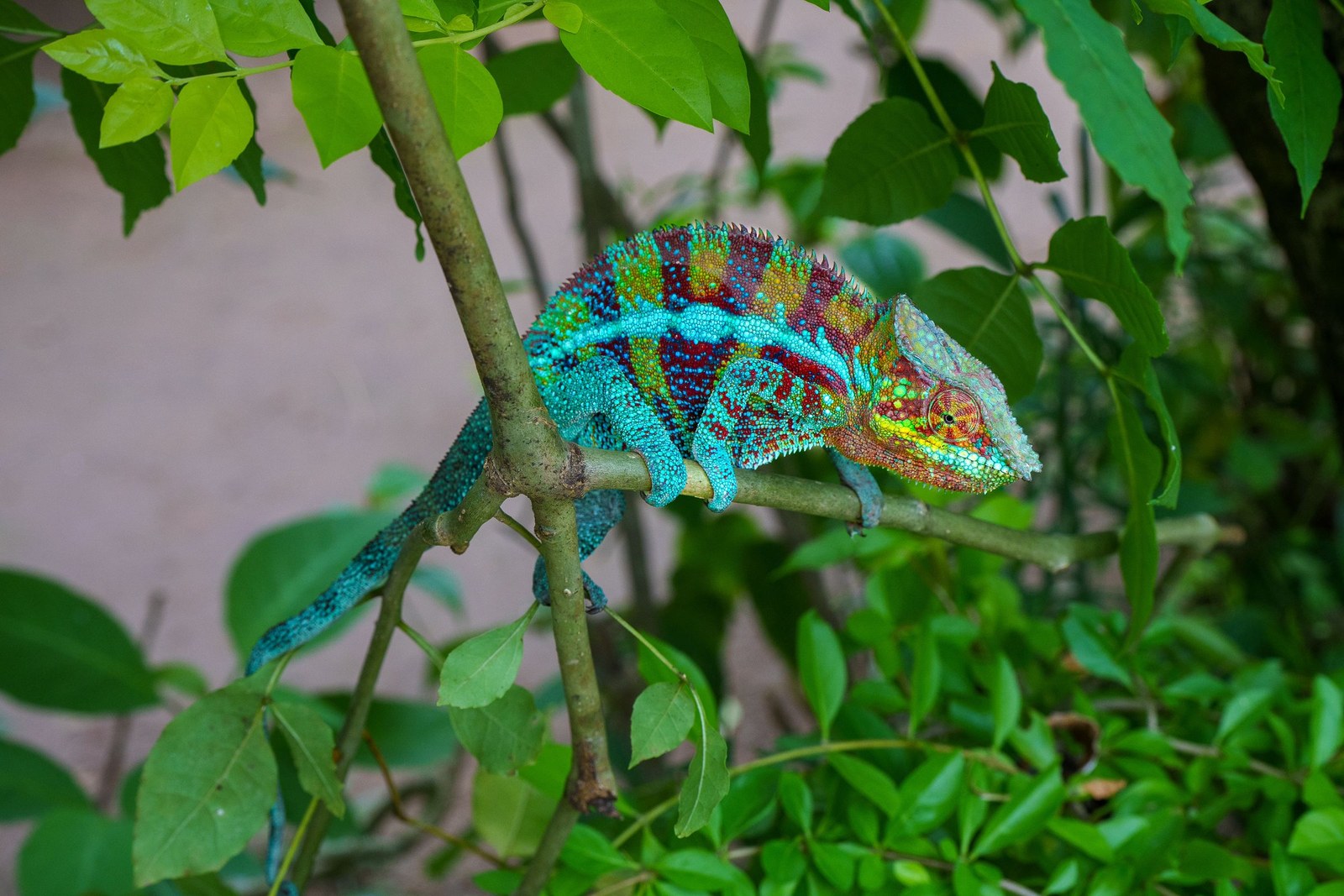
Yes — chameleons need dusted feeders just as much as other pet lizards, and arguably more, because they eat an insect-only diet and are especially prone to calcium problems. Wild insects alone don't deliver balanced calcium and vitamins, so keepers coat feeders with calcium at most feedings and rotate in a multivitamin on a schedule, working alongside correct UVB lighting.
Why chameleons are high-stakes dusting subjects
A veiled or panther chameleon eats nothing but live insects, and staple feeders like crickets are naturally low in calcium with an inverted calcium-to-phosphorus ratio. Chameleons also grow fast, and females produce large clutches of eggs that drain calcium heavily. When intake falls short, the body borrows from bone, and keepers may see a soft jaw, wobbly grip, tremors, or a casque that looks sunken — signs of metabolic bone disease that need a reptile veterinarian, not just extra powder. Prevention through consistent dusting is far kinder than treatment.
A typical dusting rhythm
Schedules vary by species, age, and lighting, but a common keeper pattern looks like this:
- Plain calcium (no D3) at nearly every feeding when the chameleon has strong, proper UVB.
- Calcium with D3 on a limited rotation, since UVB already drives D3 production and oversupplementing has its own risks.
- A reptile multivitamin roughly every other week, covering vitamin A in a form chameleons can use.
Keep the coating light — feeders should look faintly frosted, not ghost-white. Heavily caked insects get refused by picky chameleons, and excess powder ends up on the leaves instead of in the lizard. Your vet can adjust the rotation for a growing juvenile or a gravid female, whose needs climb sharply.
Gut-loading: feeding the food
What the insect ate becomes part of the meal. Gut-load crickets and roaches for a day or two on dandelion greens, collards, squash, sweet potato, and other nutritious produce before feeding. Variety helps at the feeder level too: rotate black soldier fly larvae (naturally calcium-rich), silkworms, hornworms for hydration, and roaches alongside crickets rather than relying on a single insect.
Dusting can't fix lighting
Supplements and UVB are a partnership. Without a quality UVB source at the right distance, replaced on schedule, a chameleon cannot produce vitamin D3 properly and cannot absorb calcium efficiently — the dusting passes through unused. Basking branches should let the animal reach the correct UV gradient, and a vet familiar with chameleons can review your whole setup — lights, temperatures, and supplement calendar together — at a wellness visit.
Keep the schedule in KinsLe
A chameleon's supplement rotation has more moving parts than most pets' care, and it must survive weekends away. KinsLe's Pet Passport keeps your chameleon's supplement schedule with its other records — vaccines don't apply here, but feeding notes, medications, and documents do — ready to share with a vet or sitter. Pet Passport on KinsLe carries the calcium, D3, and multivitamin rotation in one packet a substitute keeper can read before dusting a single cricket.