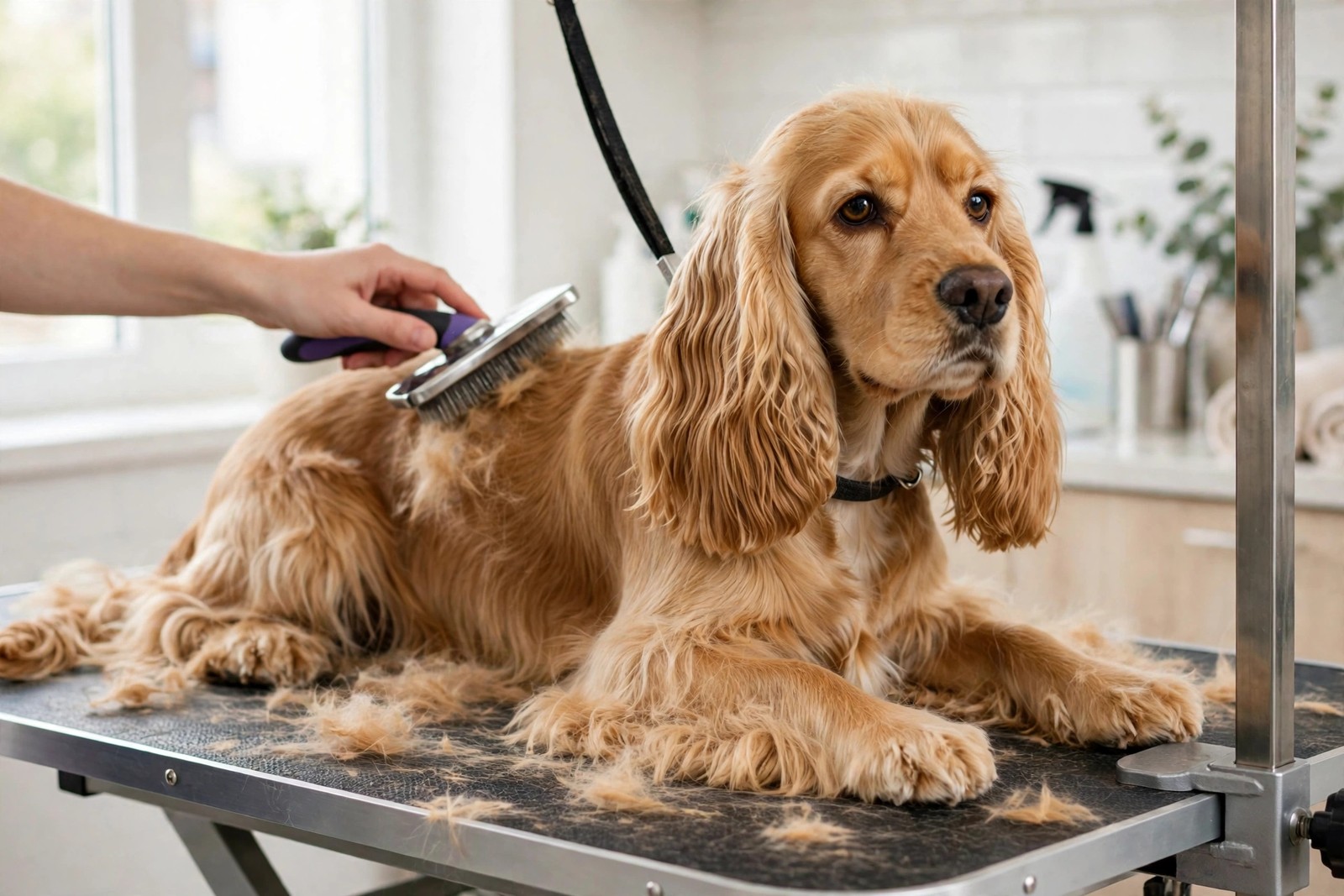
A Cocker Spaniel is a moderate shedder, and the full picture matters more than the single word. The breed's long, silky coat releases loose hair steadily through the year, so you will find hair on clothes, bedding, and furniture as a permanent feature of Cocker ownership, and there is usually a noticeably heavier shed in spring and again in autumn as the coat adjusts to the seasons. Nobody should choose a Cocker expecting the light shedding of a poodle-type coat, and nobody should rule one out imagining the dense double-coat fallout of a husky-type breed either. Moderate and constant is the honest description.
Why the Coat Sheds the Way It Does
A Cocker carries a single silky topcoat with a lighter undercoat beneath it, richest where the coat is longest: the feathering on the chest, belly, legs, and ears. Long hair has a long growth cycle, which is why the shedding reads as steady rather than explosive, but the feathering adds a second problem that short-coated moderate shedders do not have. Loose hair does not always fall free. It catches in the surrounding feathering, works into tangles, and forms mats behind the ears, in the armpits, and along the skirt, where friction is highest. A Cocker brushed rarely can look tidy on top while hiding felted mats against the skin underneath, and those mats pull, trap moisture, and can sore the skin if left.
Spaying and neutering can change coat texture in this breed, often making it thicker, softer, and more woolly over time, which increases both the visible shedding and the matting tendency. Diet, general health, and central heating also play a part, and sudden heavy hair loss, bald patches, or shedding paired with itching and flaky skin is not ordinary coat change at all and earns a vet visit.
The Brushing Routine That Controls It
Brush thoroughly two or three times a week in normal weeks, and step up to brief daily sessions during the spring and autumn peaks. Thoroughly is the operative word. Work in layers with a slicker brush and a comb, parting the coat so you reach the skin, and always finish with the comb: if the comb glides through from root to tip, including behind the ears, under the collar, in the armpits, and through the leg feathering, the job is done. If it snags, that section needs more work, because surface brushing over tangles is how mats form under a glossy top layer.
Wash hands after, and expect the brush to collect a satisfying wad of loose hair: that is hair on the brush instead of the sofa, which is the entire bargain of grooming a shedding breed. Bathe as needed with a dog shampoo, rinse extremely well because residue dulls this coat and irritates skin, and dry the feathering fully rather than leaving it to air-dry in tangles. Keep the hair trimmed around the feet and under the ear flaps tidy, and have a groomer maintain the coat shape if you keep it long, or clip it shorter if your life suits a lower-maintenance version, knowing a clipped coat still sheds its shorter hairs.
Living With the Hair Honestly
Around the home, washable throws on the dog's favourite furniture, a lint roller by the door, and hard floors rather than deep carpet in the dog's main rooms keep a moderate shedder's fallout unremarkable. Vacuum the dog's sleeping area weekly, wash bedding regularly. Allergy-sensitive households should spend real time with adult Cockers before deciding, because a moderate, constant shedder keeps hair and dander circulating year-round, and no Cocker should be described as hypoallergenic.
Set against that work is a genuinely beautiful, practical sporting coat that dries reasonably fast, protects the dog in cover, and feels as good as it looks when it is kept combed. Owners who enjoy the grooming ritual rarely resent the hair. Owners who do not should choose a lighter-shedding breed with open eyes.
Splitting the brushing sessions, the baths, and the groomer appointments across the household keeps the coat on schedule instead of in crisis, and KinsLe Care Teams lets you assign that Cocker grooming rota and see each session marked complete.